
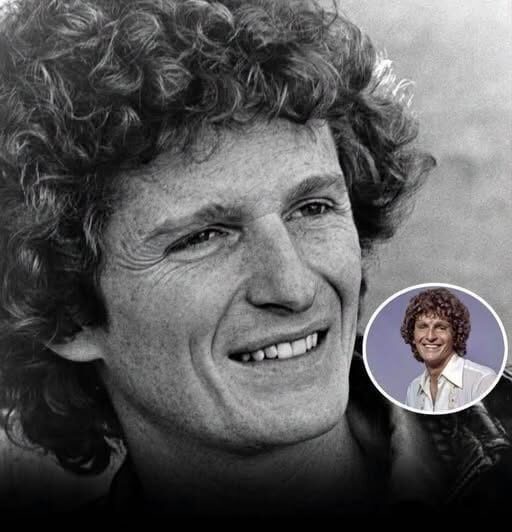
Marjoe Gortner Dies at 82—The Child Preacher Who Exposed His Own Fame and Became a Hollywood Star
From Delivering Sermons at Just Four Years Old to Revealing the Secrets of His Religious Upbringing in an Oscar-Winning Documentary, Marjoe Gortner Lived One of Hollywood’s Most Unusual Lives. His Family Has Now Confirmed His Death in New Mexico.
Hollywood has lost an entertainer whose extraordinary life began long before he ever appeared in a movie.
Marjoe Gortner, the former child evangelist who became an actor, producer, and the central figure in an Academy Award-winning documentary, has died.
He was 82 years old.
Gortner died on Friday, October 2, 2026, in Santa Fe, New Mexico.
His family confirmed that his death followed complications from congestive heart failure, a condition he had reportedly experienced for several years.
The news prompted tributes from people who remembered his work in film, television, and charity.
But Gortner’s story was unlike that of almost any other Hollywood performer.
Before he became an actor, he was one of America’s most famous child preachers.
At an age when most children were learning to read, he was standing before crowds delivering elaborate religious sermons.
His parents had introduced him to the world of Pentecostal revival meetings when he was only four years old.
He became a sensation.
Audiences traveled to hear him speak.
His family reportedly earned enormous sums through the preaching circuit.
But as he grew older, Gortner became increasingly uncomfortable with the world in which he had been raised.
Eventually, he decided to reveal what he knew.
That decision resulted in the groundbreaking documentary Marjoe, released in 1972.
The film exposed the business practices and performance techniques behind his own revival career.
It went on to win the Academy Award for Best Documentary Feature.
Gortner then made another remarkable career change.
He entered Hollywood and appeared in films including Earthquake, Starcrash, and When You Comin’ Back, Red Ryder?
He also became familiar to television audiences through his role on Falcon Crest.
Now, following his death at 82, fans are looking back on a life that moved from the pulpit to the movie screen—and eventually into philanthropy.
Marjoe Gortner Died on October 2, 2026
Gortner’s death was confirmed by his wife, Susan Magestro.
He died in Santa Fe, New Mexico, where he had spent his later years.
According to family information reported by Variety and The Hollywood Reporter, he had lived with congestive heart failure for several years.
Complications from the condition were cited in connection with his passing.
Entertainment publications began reporting his death on October 4.
He had celebrated his 82nd birthday earlier that year.
The announcement brought renewed attention to a career that included television appearances, Hollywood films, documentary history, and charitable fundraising.
His Wife Shared a Moving Tribute
Susan Magestro remembered her husband as someone with a remarkable imagination and an ability to bring people together.
In the family’s memorial statement, she described a life shaped by creativity and human connection.
The tribute reflected the many different roles Gortner had occupied over the decades.
He had been a nationally recognized child evangelist.
He had become a documentary subject whose revelations attracted enormous attention.
He later developed a career as a performer.
And he organized charitable events that brought celebrities together to support different causes.
His wife’s words emphasized the person behind those public achievements.
His Real Name Was Hugh Marjoe Ross Gortner
Gortner was born on January 14, 1944, in Long Beach, California.
His full name was Hugh Marjoe Ross Gortner.
The unusual name Marjoe was created by combining the biblical names Mary and Joseph.
His father, Vernon Robert Gortner, came from a family with a background in evangelical preaching.
His mother, Marge, also played an important role in developing his childhood public identity.
Religion and public performance became central parts of his life almost immediately.
Long before he could make independent decisions about his future, his parents had begun preparing him for a career in front of audiences.
He Became a Preacher When He Was Only Four
Gortner’s childhood was extraordinary by almost any standard.
At the age of four, his parents arranged for him to become an ordained preacher.
He learned to deliver sermons with the confidence and intensity of an experienced evangelist.
Audiences were fascinated by a child who could speak with such dramatic authority.
His performances attracted attention beyond the churches and revival meetings where he appeared.
Newsreels and magazines helped introduce him to a wider audience.
He was frequently described as a remarkable young religious speaker.
But much of his success depended on extensive preparation and training directed by adults.
His Parents Carefully Developed His Public Image
As Gortner later explained, his childhood performances did not emerge entirely on their own.
His parents taught him how to hold an audience’s attention.
He learned when to raise his voice.
He learned how to pause for effect.
He learned how to use gestures and facial expressions to make sermons more dramatic.
Those skills helped him attract large crowds despite his young age.
His public image combined childhood innocence with the commanding speaking style of an adult preacher.
For audiences unfamiliar with the preparation behind his performances, the result could appear extraordinary.
He Even Performed a Wedding Ceremony as a Child
One of the most unusual moments from his early fame involved a wedding ceremony.
In 1949, when he was four years old, Gortner participated in a marriage ceremony recorded for a Paramount newsreel.
The appearance brought additional attention to the young evangelist.
It also demonstrated how his parents presented him as an exceptional child.
At a time when television was still developing as a mass medium, newsreels helped make such performances visible to audiences across the country.
The ceremony became part of the story that followed him throughout his life.
He Spent His Childhood Traveling Between Revival Meetings
Instead of experiencing a conventional childhood, Gortner spent much of his early life traveling.
His family visited churches and religious gatherings in different parts of the United States.
He appeared before audiences expecting an emotionally powerful religious experience.
His sermons became the central attraction.
People came to see the boy whose speaking abilities seemed far beyond his years.
The schedule demanded considerable discipline.
Gortner had to remember his material, perform before unfamiliar crowds, and fulfill the expectations surrounding his unusual public role.
The experience also taught him how audiences responded to storytelling, movement, and emotional expression.
Those skills would later prove useful in Hollywood.
His Family Reportedly Earned Millions
Gortner later estimated that the family preaching operation generated approximately $3 million during his childhood.
That was an enormous amount of money for the period.
The figure came from his own accounts of the business rather than a complete independently audited financial record.
Nevertheless, it illustrated the scale of the revival career his family had built around him.
Religious gatherings often included fundraising appeals and donations.
Gortner would later explain how emotional performances could influence audiences to contribute money.
Those revelations became an important element of his documentary.
His Father Allegedly Took the Family’s Earnings
According to Gortner’s later account, his father took much of the money generated through the preaching operation before Gortner turned sixteen.
The alleged loss of the family’s earnings became another difficult part of his childhood history.
Gortner was left needing to support himself.
He had already spent years working as a performer, but the skills he had developed were closely associated with preaching.
As a teenager, he continued appearing on the revival circuit.
By then, however, his personal relationship with religion had changed significantly.
He Became Disillusioned With the Preaching Business
As Gortner grew older, he began questioning the religious world in which he had been raised.
He no longer shared all the beliefs he had been taught to present publicly.
Yet preaching remained a source of income.
He continued performing for audiences while becoming increasingly aware of the difference between his public role and private convictions.
That contradiction shaped the next major chapter of his life.
Rather than simply leaving the revival circuit behind, he eventually decided to allow filmmakers to document it from the inside.
The result would become one of the most unusual documentaries of the 1970s.
The Documentary Marjoe Changed Everything
In 1972, audiences were introduced to Marjoe, a documentary directed by Howard Smith and Sarah Kernochan.
The film followed Gortner during what was presented as his final revival tour.
It showed him performing before religious audiences.
But it also included candid discussions in which he explained aspects of his public persona and the techniques used in revival preaching.
That combination made the documentary especially striking.
Viewers could see the energetic preacher onstage and then hear the same man discussing his performance methods away from the crowds.
The film challenged assumptions about his career and brought widespread attention to the commercial aspects of certain revival operations.
He Openly Discussed How He Worked an Audience
One of the documentary’s defining features was Gortner’s willingness to explain how he created emotional responses.
He described the speaking techniques and theatrical methods he had learned as a child.
These included changes in rhythm, gestures, and audience interaction.
He also discussed fundraising practices associated with the revival meetings in which he participated.
His explanations were controversial because they revealed the deliberate performance techniques behind experiences that many worshippers understood in deeply spiritual terms.
The film was not a comprehensive account of every religious organization or preacher.
It was an examination of Gortner’s own experience within a particular revival tradition.
The Film Won an Academy Award
Marjoe went on to win the Academy Award for Best Documentary Feature at the 1973 Oscars.
The award recognized the work of filmmakers Howard Smith and Sarah Kernochan.
Gortner himself was the documentary’s central subject and participant, not the recipient of an individual acting Oscar for the film.
The distinction is important because some retrospective accounts describe him as an Oscar-winning personality.
More precisely, his life and revelations were featured in an Oscar-winning documentary.
The award helped establish the film as an important entry in American documentary cinema.
Why Marjoe Was Such an Unusual Documentary
Most films about religious figures are made from the perspective of observers examining a subject from outside.
Marjoe offered something different.
Its central subject actively participated in revealing the system that had made him famous.
Gortner understood the language, customs, and performance methods because he had spent his life inside that world.
His cooperation gave the filmmakers access that would otherwise have been difficult to obtain.
The documentary therefore functioned as both a personal confession and a behind-the-scenes examination of religious entertainment.
Its impact extended beyond Gortner’s individual story.
It encouraged discussion about persuasion, celebrity, faith, and the commercialization of religious experience.
The Documentary Opened the Door to Hollywood
After Marjoe attracted critical attention, Gortner began receiving opportunities in acting.
His appearance in the documentary had demonstrated his confidence before a camera.
He also possessed years of experience performing in front of live audiences.
Those qualities translated naturally into film and television.
He signed a contract with Universal Pictures and began establishing himself as a screen performer.
His new career was very different from the religious work that had made him famous.
But his ability to command attention remained a recognizable part of his performances.
His Acting Career Began With a Kojak Connection
One of Gortner’s earliest major screen roles came in the 1973 television movie The Marcus-Nelson Murders.
Directed by Joseph Sargent, the production served as the pilot for the television series Kojak.
It starred Telly Savalas in the role that would become one of his most recognizable characters.
Gortner portrayed Teddy Hopper.
The performance introduced him to television audiences as an actor rather than a preacher.
It also provided an early opportunity to work within a major Hollywood production.
He Appeared in the Disaster Film Earthquake
In 1974, Gortner appeared in Earthquake, the disaster movie directed by Mark Robson.
The film featured an ensemble cast including Charlton Heston, Ava Gardner, George Kennedy, Lorne Greene, and Victoria Principal.
Gortner played Jody Joad, a grocery store manager who becomes involved in the chaos following a devastating earthquake.
His character added tension to the film’s dramatic storyline.
Earthquake became one of the notable disaster films of the 1970s.
It also introduced Gortner to a much wider mainstream movie audience.
His Role in Earthquake Became One of His Best Known
The 1970s were a major period for disaster movies.
Large-scale productions combined recognizable casts with elaborate special effects.
Earthquake followed that formula while exploring the consequences of a catastrophic event in Los Angeles.
Gortner’s role was distinctive because his character was not simply another person trying to survive.
Jody Joad becomes a threatening figure during the disorder following the disaster.
The performance demonstrated Gortner’s ability to portray unsettling characters.
That quality helped shape several of his later screen appearances.
He Starred Opposite Lynda Carter
In 1976, Gortner appeared in Bobbie Jo and the Outlaw alongside Lynda Carter.
The action-oriented film followed characters drawn into a dangerous criminal journey.
It was released during the period when Carter was becoming widely recognized for her television portrayal of Wonder Woman.
Gortner’s role added another leading film credit to his career.
The movie later developed interest among viewers who enjoy 1970s exploitation and action cinema.
It also became part of the varied filmography that distinguished Gortner from actors associated with only one genre.
He Appeared in the Cult Science-Fiction Film Starcrash
Another memorable role came with Starcrash, the 1978 Italian-American science-fiction adventure.
Gortner played Akton, a mysterious character who assists the film’s heroes.
The movie starred Caroline Munro and included appearances by Christopher Plummer and David Hasselhoff.
Starcrash became a cult favorite among science-fiction enthusiasts.
Its imaginative designs, unusual story, and energetic performances contributed to its enduring reputation.
For fans of cult cinema, Gortner’s portrayal of Akton remains one of his most recognizable appearances.
He Continued Taking Unusual and Challenging Roles
Gortner did not restrict himself to one type of character.
He appeared in action films, thrillers, science-fiction productions, and television dramas.
His screen work often involved characters with intense or unpredictable personalities.
One notable performance came in When You Comin’ Back, Red Ryder?, released in 1979.
He portrayed a disturbing Vietnam veteran who becomes involved in a hostage situation.
The role required a darker performance than some of his earlier appearances.
It demonstrated his willingness to take on difficult material.
Falcon Crest Introduced Him to Television Viewers
During the 1986–1987 television season, Gortner joined the CBS drama Falcon Crest.
The prime-time soap opera was known for its complicated family relationships, business rivalries, and dramatic storylines.
Gortner portrayed Vince Karlotti.
The character was a colorful figure whose identity involved religious and spiritual showmanship.
He appeared in 17 episodes.
The role was particularly interesting because it drew on themes familiar from Gortner’s real-life experience as an evangelist.
For television audiences who did not know his earlier story, Falcon Crest offered another introduction to his distinctive screen presence.
His Falcon Crest Character Echoed His Past
Vince Karlotti was presented as a flamboyant, manipulative character with connections to spiritual performance.
That role gave Gortner an opportunity to draw on the speaking style and theatrical experience he had developed long before becoming an actor.
His real-life history made the casting particularly memorable.
Few performers could claim such direct personal experience with the world their fictional character was designed to evoke.
The series became one of Gortner’s most recognizable television credits.
It also demonstrated how his unusual childhood continued to influence his acting career.
He Also Appeared in Other Popular Television Programs
Beyond Falcon Crest, Gortner appeared in several other television productions.
His credits included T.J. Hooker, Fantasy Island, and Police Story.
These appearances placed him alongside established television performers and introduced him to different audiences.
His career moved between feature films and episodic television.
That flexibility was valuable in an industry where opportunities often change from year to year.
He continued working as an actor through the 1980s and into the 1990s.
His Later Film Roles Included Action and Adventure
Gortner’s later credits included Jungle Warriors, Hellhole, The Survivalist, and American Ninja 3: Blood Hunt.
He also appeared in the 1990 action-adventure production Fire, Ice and Dynamite.
Although these films did not all achieve major mainstream success, they contributed to his reputation among fans of action and cult cinema.
Some developed audiences through home video and later television broadcasts.
His willingness to appear in varied genres helped sustain a career that lasted well beyond the publicity surrounding Marjoe.
Gortner Also Recorded Music
Acting and preaching were not his only creative pursuits.
In 1972, Gortner released a music album titled Bad but Not Evil.
The title reflected an expression associated with his public persona during the documentary period.
The record represented another attempt to explore performance outside the religious world in which he had been raised.
His musical work was not as commercially prominent as his film and television appearances.
Nevertheless, it demonstrated his interest in multiple forms of entertainment.
He Eventually Became a Producer and Charity Organizer
In later years, Gortner became increasingly involved in organizing celebrity events.
He produced charity sports invitationals that brought entertainers and public figures together.
These events included activities such as golf and skiing.
The gatherings raised funds for charitable causes.
His work behind the scenes allowed him to use the professional relationships he had developed in the entertainment industry.
It also revealed another side of his career.
Rather than performing in front of audiences, he was helping create events that brought people together for fundraising.
Ian Ziering Paid Tribute to His Charitable Work
Following Gortner’s death, actor Ian Ziering shared a remembrance of the entertainer.
Ziering recalled knowing Gortner through the celebrity sports invitationals he produced.
He emphasized Gortner’s ability to gather well-known people for charitable activities.
His tribute also recognized how unusual Gortner’s career had been.
Few entertainers had moved from childhood religious celebrity to award-winning documentary subject, Hollywood actor, and charity organizer.
Ziering’s message highlighted the importance of Gortner’s philanthropic efforts during the later stages of his life.
Victoria Principal Also Remembered Him
Actress Victoria Principal, who worked with Gortner on Earthquake, also paid tribute after his death.
She reflected on their introduction during the production of the 1974 film.
Her remembrance acknowledged the complexity of his personality and the connection they had formed through their work.
For fans of Earthquake, the tribute brought renewed attention to the actors who had helped make the film memorable.
It also reflected the lasting relationships that can develop during major film productions.
His Life Was Marked by Reinvention
One of the most striking aspects of Gortner’s life was his ability to move between very different careers.
He began as a child preacher.
He became a nationally recognized religious performer.
He later questioned the system that had made him famous.
He participated in a documentary that exposed its inner workings.
Then he pursued acting.
Eventually, he became involved in charitable production and fundraising.
Each chapter required different skills, but performance and communication remained recurring themes.
His Childhood Fame Came at a Personal Cost
Although Gortner’s early career made him famous, it also placed unusual expectations on a very young child.
He spent much of his childhood performing for adults and traveling between religious gatherings.
The activities were organized by his parents.
He later described practices that caused him to question the honesty of the revival business.
Those experiences became central to his adult understanding of his past.
The documentary allowed him to address that upbringing publicly.
His story remains an unusual example of childhood celebrity created through a religious performance environment.
Why the Documentary Remains Important
More than fifty years after its release, Marjoe continues to attract interest from documentary viewers and film historians.
It is remembered for its unusual access to the world it examines.
Gortner did not simply sit for an interview about the past.
He allowed cameras to accompany him during actual revival appearances.
That approach provided a striking contrast between public performance and private explanation.
The film also raised questions about the responsibilities of performers and the vulnerability of audiences.
Its central themes remain relevant to discussions about celebrity, persuasion, and public trust.
He Was More Than the Subject of a Famous Film
Although the documentary may be the most historically significant part of his career, Gortner continued building a public life afterward.
He appeared in major Hollywood productions.
He worked alongside recognizable film and television stars.
He became part of science-fiction cult cinema.
He performed in one of the most popular prime-time soap operas of the 1980s.
And he devoted time to charitable events.
Those accomplishments demonstrate that his career did not end when the documentary exposed his former profession.
Instead, that film became the beginning of another chapter.
His Story Also Raises Questions About Child Performers
Gortner’s early life offers an unusual perspective on the responsibilities adults have toward children in entertainment.
He became a public figure before he was old enough to choose that role independently.
His speaking style, schedule, and public image were shaped by his parents.
As an adult, he reassessed those experiences.
His story illustrates how childhood fame can affect a person’s sense of identity and relationship with their own upbringing.
Although his career was very different from those of child television or movie stars, some of the broader questions are similar.
What happens when a child’s public identity becomes a family business?
And how does that person redefine themselves as an adult?
Hollywood Allowed Him to Build a Different Identity
For Gortner, acting provided an opportunity to move beyond the role assigned to him as a child.
He could portray fictional characters rather than stand before audiences as a religious authority.
He could work within scripted stories.
He could explore different genres and personalities.
And he could develop a professional reputation independent of the preaching circuit.
His acting career was not without challenges, but it demonstrated his ability to adapt.
He turned the performance skills he had learned in childhood toward a different purpose.
He Spent His Later Years Away From Constant Public Attention
As his acting appearances became less frequent, Gortner maintained a lower public profile.
He continued living in Santa Fe, New Mexico.
He remained connected to people from his entertainment and charitable work.
His final years were not accompanied by the constant media attention that had surrounded his childhood.
For many fans, news of his death became an opportunity to revisit his films and the documentary that had introduced him to the world.
His Death Came Just Months Before His 83rd Birthday
Gortner was born on January 14, 1944.
He died on October 2, 2026.
He was 82.
His death occurred a little more than three months before what would have been his 83rd birthday.
Family members confirmed the loss through a memorial announcement.
Complications associated with congestive heart failure were cited as the cause.
His wife, Susan Magestro, was among those who publicly remembered him.
The Tributes Reflected His Many Different Careers
Some people remembered Gortner as a child preaching sensation.
Others knew him primarily through the Academy Award-winning documentary.
Movie fans recalled Earthquake and Starcrash.
Television viewers remembered Falcon Crest.
And colleagues such as Ian Ziering recognized his charitable fundraising work.
These different memories illustrate the unusual scope of his public life.
He was not easily defined by a single occupation.
His Career Spanned Several Eras of Entertainment
Gortner’s career began during the period when newsreels helped introduce performers to national audiences.
He rose to fame through traveling religious revivals.
He became a documentary subject during the cultural changes of the early 1970s.
He entered Hollywood during the disaster-film era.
He participated in cult science-fiction cinema.
And he appeared on network television during the boom in prime-time soap operas.
Few entertainers moved through so many different areas of American popular culture.
What Made Marjoe Gortner’s Story So Extraordinary?
The unusual nature of his life was not simply that he changed careers.
It was the way he challenged the identity that had made him famous.
As a child, he was presented as a remarkable religious figure.
As an adult, he publicly discussed how that image had been constructed.
He then helped create a documentary that revealed practices from the world in which he had grown up.
Rather than remaining attached to his original fame, he built a separate career in film and television.
And later, he used his entertainment connections to support charitable causes.
That sequence made his life difficult to compare with a conventional Hollywood biography.
Remembering the Man Behind the Public Persona
Marjoe Gortner lived much of his early life in front of audiences.
He was taught to capture attention before he was old enough to understand the full consequences of fame.
He eventually became critical of the environment that had shaped him.
But his later work demonstrated that he could use the same communication skills in entirely different ways.
His performances in films and television gave audiences new reasons to recognize him.
His charitable activities created opportunities for fundraising and community involvement.
And his documentary continued to encourage discussion long after its release.
Marjoe Gortner’s Lasting Legacy
Marjoe Gortner died in Santa Fe, New Mexico, on October 2, 2026, at the age of 82.
His passing followed complications from congestive heart failure.
His wife, Susan Magestro, confirmed the news and remembered him as an imaginative person with a gift for bringing people together.
His story began in Long Beach, California, where he was born in January 1944.
By the age of four, he had become a public preacher.
His parents took him around the country to perform at religious revival meetings.
His childhood fame brought attention and reportedly substantial financial success.
But as he grew older, he became disillusioned with the world that had made him a celebrity.
Instead of quietly leaving, he helped document its inner workings.
The resulting film, Marjoe, won the Academy Award for Best Documentary Feature.
That achievement became a turning point.
Gortner entered Hollywood and built a career that included Earthquake, Bobbie Jo and the Outlaw, Starcrash, and When You Comin’ Back, Red Ryder?
He later appeared in Falcon Crest and other television productions.
He also organized celebrity sports events that raised money for charitable causes.
Following his death, actors and colleagues remembered the energy and creativity he brought to those projects.
His career reflected several different identities: child evangelist, documentary participant, actor, entertainer, and producer.
But the common thread was his ability to capture an audience’s attention.
He learned that skill as a child.
He questioned how it had been used.
And he spent much of his adult life finding new ways to express it.
For documentary historians, he will remain the central figure in one of the most unusual Academy Award-winning films of its era.
For movie and television fans, he will be remembered through his distinctive performances.
And for those who knew him personally, his legacy extends to relationships and charitable work that continued beyond the screen.
Marjoe Gortner’s life was unconventional from its earliest years.
Few people have experienced fame as a child preacher, publicly challenged that fame, and then reinvented themselves as a Hollywood actor.
He did all three.
Now, after his death at 82, his remarkable journey remains a story of childhood celebrity, personal transformation, performance, and the search for a life beyond the identity others created for him.
His name may be most closely associated with the documentary Marjoe.
But the life behind that title was far larger than one film.
And it is that extraordinary journey that audiences are remembering today.