
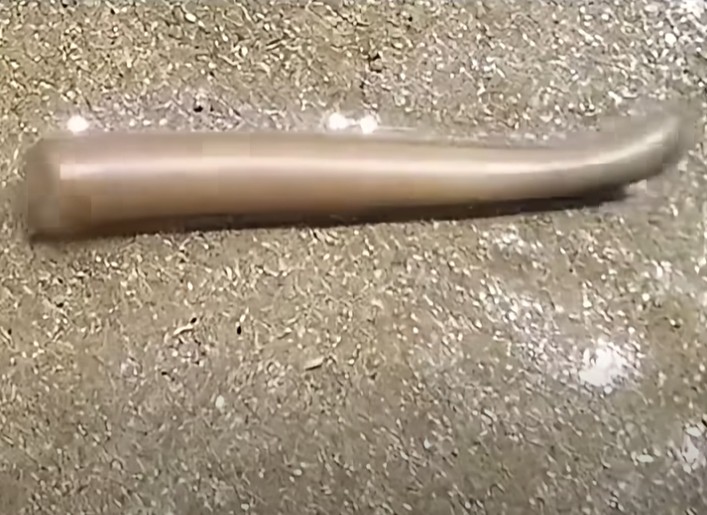
These Unusual Tubes in Beach Sand Reveal the Hidden Work of Marine Worms
A Small Coastal Discovery With a Fascinating Explanation
“I never knew something so fascinating could be hiding right beneath my feet.”
A walk along the shore can reveal far more than shells, seaweed, and footprints. Among the familiar features of wet sand and mud, small tubes sometimes rise from the surface, looking like miniature towers built from scattered particles.
For a child encountering one for the first time, the structure can present an absorbing mystery. Something appears to have constructed it, yet its occupant may remain completely hidden beneath the sediment.
Trumpet-shaped tubes associated with certain marine worms are one example of these easily overlooked formations. Their appearance offers a glimpse into how small animals create shelters from materials available around them.
The outside may resemble an irregular accumulation of sand or shell fragments. Its arrangement, however, serves practical purposes connected to protection, stability, and the animal’s daily activities.
Understanding these structures changes the way a shoreline looks. What initially seems like an unremarkable patch of sediment becomes a habitat shaped by creatures living largely out of sight.
The Segmented Animals Living Beneath the Surface
The marine animals commonly associated with trumpet worms belong to the wider diversity of segmented worms, particularly the polychaete group. They are annelids, sharing that broader classification with earthworms and other segmented species.
Many polychaetes inhabit coastal sand or mud, where their surroundings are repeatedly affected by tidal changes and moving water. Remaining beneath the surface provides a different way of living from that of animals swimming openly above it.
Their bodies consist of repeated segments and often carry small bristles called chaetae. These features can assist with movement, anchoring, and contact with the surrounding sediment.
Tube construction varies between marine worms. Some incorporate grains of sand, while others use shell fragments, secretions, or additional materials found within their habitat.
That variety matters when observing a structure on the beach. A tube’s general shape may suggest a worm-built shelter, but it does not establish that every similar formation belongs to the same animal.
Different species also use their homes in different ways. Some extend feeding structures into the water, while others have different feeding habits and relationships with the sediment around them.
The visible shelter is therefore only part of the picture. Learning about its occupant requires considering both the structure itself and the environment in which it appears.
How Loose Particles Become a Protective Tube
For tube-building worms, the surrounding seabed supplies construction materials. Particles that appear scattered and insignificant to a passing observer can become the components of a functional home.
Some species produce secretions that bind grains together. As particles are incorporated, a tube gradually develops around the animal, creating a sheltered space within an otherwise shifting environment.
Other worms arrange sediment and organic material around their bodies. The exact construction method depends on the species, so the finished tubes can differ in texture, outline, and composition.
A rough exterior does not indicate a poorly functioning shelter. The structure’s value lies in how it supports the occupant’s needs rather than in whether it appears smooth or symmetrical.
Protection is one important benefit. Remaining inside a tube can reduce the animal’s exposure to predators and other threats in its immediate surroundings.
Stability is another advantage, particularly where water movement displaces loose sediment. A maintained shelter provides a living space within conditions that may continually change around it.
Living within or beneath sediment can also help many species avoid excessive exposure as tides change. For certain tube-dwelling worms, the opening allows specialized feeding structures to reach suspended particles in the surrounding water.
These functions do not apply identically to every species. Together, however, they illustrate why such modest structures can be important to the animals that build them.
Recognizing a Worm Tube Along the Shore
Careful observation begins with the structure’s shape. Marine worm tubes may be narrow and cylindrical, slightly curved, or irregular, and some have the flared appearance that draws attention to trumpet-shaped examples.
The outer surface can offer further clues. Visible grains, fragments of shell, and other attached particles may reveal that the tube incorporates material from the surrounding habitat.
Color can also reflect those materials. Pale sand may produce a lighter appearance, while darker sediment can contribute brown or gray shades.
Location provides useful context. Tidal flats, estuaries, sandy shorelines, and muddy coastal areas can support tube-building worms, although the animals present will vary between habitats.
Occasionally, an observer may see activity at an opening. Certain species extend feeding structures from their shelters, offering a brief indication that the formation is occupied.
An absence of visible movement does not provide enough information to identify the structure. Much of the animal’s activity may remain concealed, and appearance alone can leave important questions unanswered.
Photographs and notes can help preserve details for later identification. Recording the sediment type, location, and surrounding conditions makes an observation more useful than relying on memory alone.
Where identification remains uncertain, a marine-life guide or specialist may help distinguish between similar structures. Treating an initial impression as a possibility leaves room for the diversity found along the coast.
Small Worms Have a Place in Coastal Ecosystems
Marine worms attract less attention than larger coastal animals, but their activities are part of the processes taking place within sand and mud. Their importance is often easier to appreciate once the sediment is viewed as a living habitat.
Burrowing and movement can redistribute particles. Depending on the species and conditions, these activities can also introduce oxygen into certain sediment layers and influence how nutrients move.
Such interactions affect the surroundings shared by other organisms. The seabed is continually shaped by relationships between animals, microorganisms, water, and the materials in which they live.
Some tube-building worms also create small sheltered spaces that may be used by other tiny organisms. A structure built around one animal can therefore become part of the immediate environment experienced by others.
These contributions are easy to miss because they occur on a small scale or beneath the surface. A beach visitor may notice the tube without seeing the wider interactions connected to it.
Looking more closely broadens the idea of coastal biodiversity. The life of a shoreline includes animals that remain hidden, as well as the more recognizable creatures visible above the water or moving across the sand.
Why These Discoveries Stay With Children
An unfamiliar tube in the sand can prompt a stream of questions. A child may wonder what lives inside, whether the structure is growing, or how an animal could assemble something from loose particles.
The attraction comes partly from the contrast between an ordinary setting and an unexpected detail. A familiar beach suddenly contains evidence of a hidden activity that was happening unnoticed.
Similar discoveries occur when children watch crabs disappear into openings, examine seaweed, or notice small animals beneath rocks. Each experience encourages them to pay attention to features they might otherwise pass by.
Observing a worm tube also introduces patience. Its occupant may not appear, and the explanation may require looking carefully, recording details, and learning more afterward.
That uncertainty can be a valuable part of exploration. Children do not need an immediate answer to begin developing an interest in wildlife or an appreciation for how much remains unseen.
Adults can support that curiosity while helping children understand the difference between examining a habitat and damaging it. A discovery can remain memorable without removing the animal or dismantling its home.
Observing the Structures Without Damaging Them
The desire to see what is inside a tube can make touching or pulling it apart tempting. However, an occupied structure may be damaged by that investigation, potentially injuring the animal within it.
The nearby sediment can also contain other small organisms. Leaving the area intact respects more than the single creature that first attracted attention.
Photography offers a way to study shape and texture without breaking the structure. Sketching can serve a similar purpose, encouraging an observer to notice details that a quick glance might miss.
Notes about the location and surrounding conditions can add context. Low tide may make certain formations easier to see, creating opportunities to observe them without removing them from their setting.
For families and teachers, these encounters provide a practical setting for discussing respect for wildlife. Small size does not make an animal’s shelter expendable, and curiosity can be satisfied through patient observation.
A tube rising from wet sand may occupy only a tiny part of the shoreline, yet it reveals construction, adaptation, and a connection to the wider habitat. Noticing it turns an ordinary coastal walk into a closer examination of the life beneath the surface.
The lasting appeal of these discoveries lies in that change of perspective. Once the small formations become recognizable as animal-built homes, the sand beneath our feet seems far less empty.