
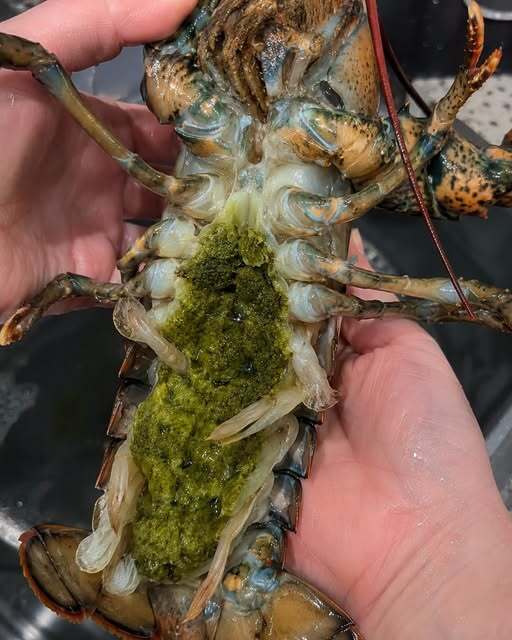
The Truth About the Green Stuff Inside Lobster and What It Really Means
The Unexpected Discovery Inside a Cooked Lobster
For many seafood lovers, opening a freshly cooked lobster is an exciting moment. The shell cracks, the rich aroma appears, and the carefully prepared meal is finally ready to enjoy.
But sometimes, that experience comes with an unexpected surprise. Hidden inside the lobster’s body is a soft green substance that immediately raises questions for anyone seeing it for the first time.
The unusual color and texture can make some people wonder whether something is wrong with their meal. Others recognize it instantly and consider it one of the most flavorful parts of the lobster.
This green substance is known as tomalley, and while its appearance may seem strange, it is actually a natural part of the lobster.
What the Green Substance Really Is
Tomalley is not a mysterious addition or a sign that the lobster was prepared incorrectly. It is part of the lobster’s internal system and functions as both the liver and pancreas.
This organ plays an important role in the lobster’s body. It helps with digestion and filtering, allowing the animal to process nutrients throughout its life.
Because of that function, tomalley has a very different texture and appearance compared with the firm white lobster meat most people are familiar with eating.
Its creamy consistency and strong ocean flavor are exactly why opinions about it are so divided. Some diners see it as a delicacy, while others prefer to remove it completely.
Why Some People Enjoy Eating Tomalley
Among seafood enthusiasts, tomalley has developed a reputation as one of the most flavorful parts of the lobster. Its taste is often described as intense, rich, and deeply connected to the natural flavor of the sea.
Some people enjoy eating it directly, while others use it as an ingredient to add extra depth to different dishes.
Its smooth texture allows it to blend into sauces, and some lobster fans spread it onto bread as part of their meal.
For those who appreciate stronger seafood flavors, the green substance can be viewed as a special part of the lobster experience rather than something to avoid.
Why Other Diners Choose to Avoid It
Although some people value tomalley for its taste, others are uncomfortable eating it because of the role it serves inside the lobster’s body.
Since tomalley helps filter and process materials during the lobster’s life, it can also collect substances from the environment where the lobster lived.
This is the main reason the green substance creates debate among seafood lovers. The same function that makes it important for the lobster is also why some diners approach it with caution.
Unlike regular lobster meat, tomalley has the potential to contain unwanted materials that may have built up over time.
A Flavorful Part That Requires Personal Choice
The decision to eat tomalley often comes down to personal preference. Some people enjoy its bold taste and consider it an important part of eating lobster.
Others decide that they would rather focus only on the familiar white meat found in the claws and tail.
Neither choice means someone is enjoying lobster the wrong way. Seafood traditions vary widely, and different diners value different parts of the same meal.
For many people, understanding what tomalley actually is removes some of the confusion surrounding it.
Eating Lobster With More Confidence
Finding green tomalley inside a lobster can be surprising, especially for someone who has never seen it before. However, knowing its purpose helps explain why it appears and why people react to it differently.
It is not simply a strange substance hidden inside the shell. It is a natural organ that has a role in the lobster’s survival.
Because it is connected to filtering and digestion, many people choose to enjoy it carefully rather than treating it like ordinary lobster meat.
Others skip it entirely and still enjoy the rest of the lobster without missing anything from their dining experience.
The Real Value Is Knowing What You Are Eating
The debate around tomalley shows how much personal preference influences the way people experience food.
One person may see the green center of a lobster as a prized delicacy, while another may see it as something they would rather leave behind.
What matters most is understanding what it is before making that choice.
Lobster has long been appreciated for its unique taste and texture, and tomalley remains one of its most discussed features.
Whether someone decides to taste it or avoid it, knowing the facts behind the green substance turns surprise into an informed decision.