
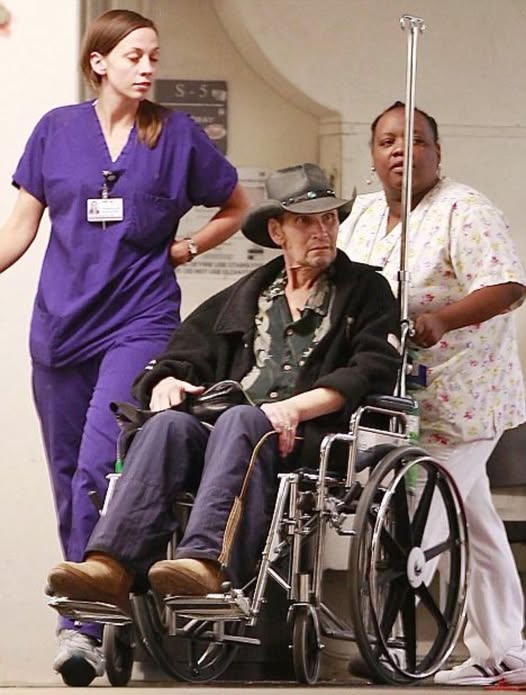
Patrick Swayze Faced Stage IV Cancer — But He Refused to Let It Define His Final Months
A Devastating Diagnosis Changed Everything
When Patrick Swayze learned in early 2008 that he had advanced stage IV pancreatic cancer, the diagnosis placed him in one of the most difficult battles of his life.
The actor, beloved around the world for films including Dirty Dancing and Ghost, was suddenly facing an illness with an extremely poor prognosis.
For many patients, such a diagnosis can completely reshape daily life.
Swayze chose a different path.
Rather than immediately disappearing from public view or abandoning his work, he continued acting and pushed himself through one of the most demanding periods of his career.
He Kept Working Through Treatment
During the summer and fall of 2008, Swayze took on the lead role of FBI agent Charles Barker in the A&E drama series The Beast.
It was not a small commitment.
The production required long days, physical effort, and the concentration needed to carry a dramatic television series.
Swayze was undergoing chemotherapy during the same period.
Even so, he continued filming.
Sixteen-Hour Days Became Part of His Routine
Accounts from the production described an actor who remained intensely committed to his work despite what his body was enduring.
Swayze worked days that could stretch to approximately sixteen hours.
That level of effort would have been exhausting under ordinary circumstances.
For someone receiving treatment for stage IV pancreatic cancer, the physical strain was even more severe.
Yet Swayze continued showing up.
He Refused to Let Illness Become His Only Identity
One of the most striking aspects of Swayze’s final professional period was his determination not to allow the disease to become the only thing people saw when they looked at him.
He was still an actor.
He was still a performer.
He was still someone who cared deeply about the work he had spent decades building.
For Swayze, continuing to act appeared to provide something beyond employment.
It gave structure and meaning to a period otherwise dominated by treatment and uncertainty.
He Continued Performing His Own Stunts
Swayze remained physically involved in the production of The Beast.
He continued performing his own stunts while undergoing chemotherapy.
That decision reflected the same physical commitment that had defined much of his earlier career.
Swayze had long been known as a performer comfortable with movement, dance, and demanding physical roles.
Even after his diagnosis, he did not entirely surrender that part of himself.
He Avoided Heavy Pain Medication During Filming
Another widely discussed part of his work on The Beast was his decision to avoid heavy pain medication while filming.
Swayze reportedly wanted to remain mentally sharp enough to perform at the level he expected from himself.
That choice illustrated how seriously he treated the work.
He was not simply appearing on set to prove a point.
He wanted to deliver a performance he considered worthy of the role.
The Beast Became More Than Just Another Television Job
Under ordinary circumstances, The Beast would have represented another major chapter in Swayze’s long career.
Because of his illness, it became something more.
The series became a visible example of his refusal to retreat completely from the life he knew.
He filmed all thirteen episodes while undergoing treatment.
Each day on set became an act of professional persistence.
His Public Honesty Was Just as Striking
Swayze’s determination was not limited to work.
He also chose to speak publicly about what he was experiencing.
In January 2009, he sat down with Barbara Walters for an ABC interview that became one of the most memorable conversations of his final year.
Rather than offering a polished or overly optimistic description of his condition, Swayze spoke directly about the reality of the illness.
“I’m Going Through Hell”
During the interview, Swayze did not hide the severity of his experience.
“You can bet that I’m going through hell,” Swayze told Walters.
The statement was powerful because it rejected the idea that courage requires pretending pain does not exist.
Swayze acknowledged the difficulty of what he was facing while still expressing determination to keep moving forward.
He Understood the Odds
Swayze was realistic about the seriousness of pancreatic cancer.
He acknowledged that surviving five years was statistically unlikely.
At the same time, he spoke about his hope that research would continue advancing and eventually produce better answers for patients facing the disease.
His attitude combined realism with determination rather than relying on false certainty.
His Interview Changed the Way People Saw His Fight
The Barbara Walters interview gave viewers a direct look at a famous actor living with a terminal illness while refusing to reduce himself to a diagnosis.
He spoke openly about fear, pain, hope, and survival.
That honesty made the conversation resonate far beyond his fan base.
Families facing similar medical battles recognized the emotional reality behind his words.
He Continued Treatment at Major Medical Centers
Swayze underwent intensive medical treatment during this period.
His care included treatment at Stanford University Medical Center and Cedars-Sinai.
The schedule required repeated medical attention while he continued trying to work and maintain as much normal life as possible.
The balance between treatment and professional responsibility became one of the defining challenges of his final year.
Lisa Niemi Remained Beside Him
Throughout the ordeal, Swayze was supported by his wife, Lisa Niemi.
The couple had been married for more than three decades.
Their relationship became one of the central sources of stability during his illness.
Away from production and treatment, they spent time together at their ranch.
That environment provided a quieter space during a period otherwise filled with demanding schedules and uncertainty.
They Worked Together on His Memoir
Swayze and Niemi also used his remaining time to work on his memoir, The Time of My Life.
The project became another way for him to reflect on his career, his relationships, and the experiences that shaped him.
Writing the memoir allowed Swayze to preserve his own perspective rather than allowing his illness to become the final and only story told about him.
He completed the memoir shortly before his death.
His Final Months Were Filled With Work, Reflection, and Love
There was no single way Swayze responded to his diagnosis.
He worked.
He underwent treatment.
He spoke publicly.
He wrote.
And he spent time with the woman who had shared decades of his life.
Together, those choices created a final chapter defined by activity rather than retreat.
He Never Pretended the Battle Was Easy
One reason Swayze’s public fight remained powerful was that he did not present himself as untouched by suffering.
His words made clear that the experience was brutal.
He endured pain, exhaustion, treatment, and the knowledge that his prognosis was poor.
But he refused to let honesty about suffering become the same thing as surrender.
His Candor Reached Far Beyond Hollywood
The 2009 ABC special drew enormous attention to pancreatic cancer.
Swayze’s willingness to discuss the disease publicly helped bring greater awareness to an illness that many people knew little about.
His celebrity made the conversation visible.
His honesty made it personal.
The result was a level of attention that extended far beyond entertainment news.
He Helped Put Pancreatic Cancer Into the Public Conversation
Terminal illness is often discussed privately.
Patients and families can feel isolated by diagnoses that are difficult to explain and even harder to experience.
Swayze’s decision to speak openly challenged that isolation.
He gave viewers a recognizable face and voice connected to pancreatic cancer.
That visibility helped increase public understanding of the disease.
Work Became a Form of Defiance
For Swayze, continuing to act was not simply about maintaining a schedule.
It became a way of asserting control over what remained within his control.
The disease could affect his body.
It could determine treatment.
It could limit his future.
But it did not automatically determine whether he could continue creating.
The Performance in The Beast Took on New Meaning
Viewers who watched The Beast knew that Swayze was working through an extraordinary medical crisis.
That knowledge added emotional weight to the performance.
Every episode represented work completed under circumstances few actors would ever face.
The role became one of the final major performances of his career.
His Career Had Always Demanded Physical Commitment
Swayze’s insistence on continuing physical performance was consistent with the way audiences had known him for years.
Dirty Dancing made his movement and dance ability central to his image.
Other roles relied on his physical presence and intensity.
Even while seriously ill, he remained attached to that same standard of performance.
His Final Year Was Not Defined by Quiet Withdrawal
Many people expected that a diagnosis as severe as Swayze’s would lead him to step away entirely.
Instead, his final year remained remarkably public and productive.
He continued acting.
He participated in interviews.
He worked on his memoir.
And he continued maintaining close relationships with the people who mattered most to him.
Patrick Swayze Died in September 2009
Swayze died on September 14, 2009.
He was fifty-seven years old.
His death came after more than a year of fighting stage IV pancreatic cancer.
By that point, his final television work had been completed and his memoir had been finished.
His final months therefore left behind more than memories of illness.
They left completed work.
His Final Message Was About More Than Survival
Swayze’s story resonated because it was not simply about trying to survive as long as possible.
It was about deciding how to use the time that remained.
He chose to continue creating.
He chose to speak honestly.
He chose to remain connected to his wife and his work.
And he chose not to allow the diagnosis to erase the identity he had built over decades.
His Fight Changed How Many People Viewed Terminal Illness
Swayze’s experience encouraged a broader conversation about living with serious illness.
His public approach challenged the assumption that someone facing a terminal diagnosis must disappear from work, public life, or personal ambition.
His choices were his own, but the visibility of those choices gave other families something to think about.
Illness can change a life dramatically without eliminating the person who existed before the diagnosis.
Dignity Did Not Mean Pretending Everything Was Fine
One of the strongest lessons from Swayze’s final year was that dignity and honesty can exist together.
He did not minimize the difficulty of the disease.
He openly described suffering.
At the same time, he continued making decisions about how he wanted to work and live.
That combination made his public struggle especially powerful.
Love Remained at the Center
Behind the work, treatment, and public attention was Swayze’s long relationship with Lisa Niemi.
Their decades together gave his final months an emotional foundation.
Whether working on his memoir or spending time at their ranch, Swayze remained connected to the person who had shared most of his adult life.
That relationship became central to the way his final chapter was remembered.
The Time of My Life Became Part of His Legacy
Completing his memoir gave Swayze an opportunity to leave behind his own account of his life.
The title, The Time of My Life, reflected a career and personal history extending far beyond the illness that eventually claimed him.
It preserved memories of work, relationships, challenges, and success.
It also ensured that his story would not end solely with a medical diagnosis.
His Final Months Became a Lesson in Purpose
Swayze could not control the disease.
But he continued controlling the choices surrounding his remaining time.
He chose to work when he felt able.
He chose to speak openly.
He chose to write.
He chose to remain engaged with life rather than waiting passively for it to end.
Why Patrick Swayze’s Final Chapter Still Resonates
Patrick Swayze’s battle with pancreatic cancer remains memorable because it contained both strength and vulnerability.
He never denied the severity of his situation.
He also refused to let fear become the only force directing his life.
His final work, interviews, and memoir showed a person determined to remain himself under circumstances that could easily have overwhelmed everything else.
He Left Behind More Than Famous Films
Swayze will always be remembered for Dirty Dancing, Ghost, and the many performances that made him one of Hollywood’s most recognizable stars.
But his final year added another dimension to his legacy.
Audiences saw not only the actor, but also the man facing an extraordinary medical crisis with directness and determination.
That honesty gave his final chapter an emotional weight separate from his film career.
A Final Reminder About What Matters
Swayze’s final months were filled with treatment, exhaustion, work, and uncertainty.
Yet they were also filled with creativity, love, and purpose.
He continued acting when stepping away would have been understandable.
He spoke publicly when remaining silent would have been easier.
And he finished telling his own story while he still had the opportunity.
His final message was not that suffering can simply be overcome through determination.
It was that even within suffering, a person can continue choosing how to love, create, and live.
That is why Patrick Swayze’s final chapter remains so powerful.