
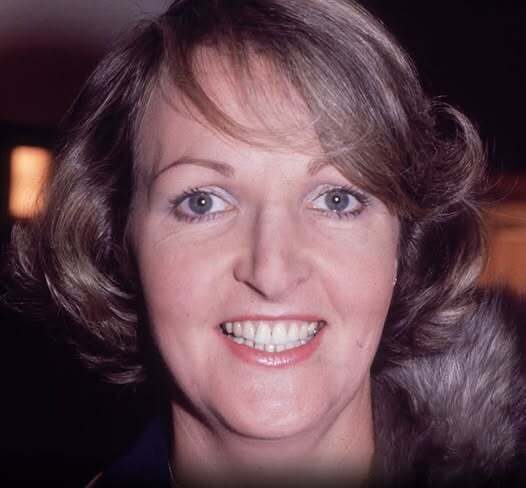
Penelope Keith Dies at 86 After Private Cancer Battle
A Quiet Goodbye to a Familiar British Voice
Penelope Keith, the celebrated British actress whose wit, elegance, and unmistakable presence made her one of television’s most cherished performers, has died at the age of 86.
Her death came after a private battle with cancer, bringing deep sadness to fans who had welcomed her into their homes for decades through some of Britain’s most memorable television comedies.
She passed away quietly at her beloved home in Surrey, a place she had known and cherished for more than half a century.
For many, the news feels larger than the loss of one performer. It marks the fading of a television era shaped by sharp writing, distinctive characters, and actors whose work became part of everyday life.
A Career That Became Part of British Culture
Penelope Keith’s name will always be closely connected with two roles that helped define British sitcom history.
As Margo Leadbetter in The Good Life, she brought a perfect mixture of social confidence, comic timing, and controlled outrage to a character who could have easily become one-dimensional in less skilled hands.
Margo was sharp-tongued, proud, often exasperated, and deeply funny. Yet Keith gave her enough humanity to make audiences laugh with her as much as at her.
Her delivery turned ordinary domestic frustrations into moments of classic comedy. A glance, a pause, or a carefully placed line could command a room before anyone else had spoken.
That rare ability made her work feel effortless, even though it was clearly built on discipline, intelligence, and instinct.
The Enduring Power of Margo Leadbetter
In The Good Life, Keith created one of British television’s most recognizable comic figures.
Margo Leadbetter represented a particular kind of polished suburban authority, but Keith never allowed the character to become merely cold or ridiculous.
She understood that comedy often works best when the person being laughed at does not know they are funny. Margo’s seriousness was part of the joke, and Keith played that seriousness with total commitment.
The result was a character who stayed in public memory long after the original episodes first aired.
Generations of viewers continued to recognize Margo’s voice, manners, and perfectly measured disapproval. She became a symbol of a particular comic style: refined, controlled, cutting, and unexpectedly warm beneath the surface.
Keith’s performance helped give The Good Life its lasting identity. She did not simply support the comedy around her; she helped shape its rhythm and emotional balance.
A Second Classic Role in To the Manor Born
Keith reached another defining point in her career with Audrey Forbes-Hamilton in To the Manor Born.
Where Margo Leadbetter was socially precise and suburban, Audrey was proud, resilient, and rooted in a world of tradition and status.
Once again, Keith found the humor in pride without stripping the character of dignity. Audrey could be stubborn, difficult, and deeply attached to her idea of how life should be, but she was never empty.
Keith’s performance gave the role charm, intelligence, and emotional weight. Audiences saw not just a woman clinging to status, but someone learning how to survive change without losing herself.
That balance helped make To the Manor Born another defining part of her legacy.
For viewers, Audrey was not simply a sitcom character. She was a familiar presence: proud, funny, flawed, and memorable in a way that only a gifted performer could make believable.
More Than a Sitcom Star
Although television made Penelope Keith a household name, her talent extended far beyond the sitcoms that brought her national affection.
Her work on stage reflected the depth of her training and the seriousness with which she approached performance.
She was associated with the Royal Shakespeare Company, a connection that underlined her range and her standing among serious actors as well as comedy audiences.
For those who knew her work only through television, it could be easy to forget how broad her artistic life truly was.
Comedy made her famous, but stagecraft helped form the precision that made her comedy so powerful.
Every movement, expression, and line reading carried the confidence of an actor who understood timing, language, and character from the inside.
An Olivier Award and the Respect of Her Peers
Keith’s stage work earned her an Olivier Award, one of the clearest signs of the respect she held within the theatre world.
That recognition reflected more than popularity. It acknowledged craft, discipline, and a career built on sustained excellence.
Colleagues admired her as both formidable and generous. Those qualities were not opposites in her case; they were part of the same professional seriousness.
She expected quality, understood the demands of performance, and brought a clear sense of purpose to the roles she accepted.
At the same time, her public image carried grace. She had the rare ability to seem both commanding and approachable, both grand and familiar.
That combination helped explain why she remained so beloved across different audiences and generations.
Honored as a Dame
Penelope Keith’s contribution to the arts was formally recognized when she was made a Dame by Queen Elizabeth II.
The honor reflected a career that had moved beyond entertainment alone and become part of national cultural memory.
For many viewers, Keith represented a kind of British performance tradition built on language, control, wit, and presence.
She did not need to dominate with volume. Her authority came from stillness, timing, and a voice that could transform the simplest line into something unforgettable.
That presence made her instantly recognizable and gave her work a lasting quality.
Even in later years, the roles that made her famous continued to feel fresh because they were built on character rather than fashion.
A Later Life Connected to Heritage and Countryside
After decades in drama and comedy, Keith also became known for documentary work that reflected her affection for the countryside and heritage.
This later chapter showed another side of her public identity.
Audiences who had first known her as Margo or Audrey encountered a woman interested in places, traditions, and the quiet details of national life.
Her documentary work suited her public persona: observant, composed, curious, and deeply connected to history and setting.
It allowed her to remain present on screen while stepping away from scripted performance into a more reflective role.
That transition also helped introduce her to viewers who may have known the classic sitcoms only through repeats, family memory, or cultural reputation.
A Private Battle and a Family’s Grief
Keith’s final illness was kept private, in keeping with the dignity and restraint that marked much of her public life.
Her family has asked for privacy as they grieve, a request that reflects the personal nature of a loss felt publicly by millions.
She leaves behind her husband, Rodney Timson, and their two adopted sons.
Behind the national tributes and television memories is a family mourning a wife, mother, and deeply loved presence in their own lives.
For the public, her death is connected to screens, stages, and shared cultural memory. For her family, it is far more intimate.
That difference matters, especially in moments when a famous life becomes the subject of widespread attention.
Why Her Absence Feels So Large
Penelope Keith’s death feels especially poignant because she belonged to a generation of performers who became part of household routine.
Her characters were watched in living rooms, discussed by families, and remembered through lines, expressions, and moments that stayed with viewers long after the credits rolled.
She had the ability to make comedy feel elegant without making it distant.
Her performances were sharp but never careless. Even when playing proud or difficult women, she found the emotional truth that made them endure.
That is why her work has survived beyond its original moment.
The best comic performances do not simply depend on jokes. They depend on character, rhythm, and recognition. Keith understood all three.
A Legacy That Will Continue on Screen
Although Penelope Keith is gone, her work remains deeply alive.
The Good Life and To the Manor Born will continue to be watched, quoted, rediscovered, and shared.
New audiences will meet Margo Leadbetter and Audrey Forbes-Hamilton and understand why Keith became such a defining figure in British television.
Those characters remain funny because they were played with conviction rather than exaggeration.
They remain moving because Keith allowed pride, vulnerability, frustration, and warmth to exist together.
That complexity is the reason her performances still feel complete.
The Curtain Falls on an Era
Penelope Keith’s death at 86 closes a remarkable chapter in British entertainment.
She was a sitcom icon, a respected stage actress, an Olivier Award winner, a Dame, a documentary presenter, a wife, a mother, and a performer whose work became woven into national life.
Her passing leaves a quiet ache for those who grew up with her voice and for those who discovered her later through classic television.
She gave audiences laughter, elegance, intelligence, and characters strong enough to outlive the eras that produced them.
Britain does feel smaller without her.
But every time those familiar episodes return to the screen, Penelope Keith’s gift will return with them: precise, brilliant, unmistakable, and forever part of the home she helped create in the hearts of viewers.