
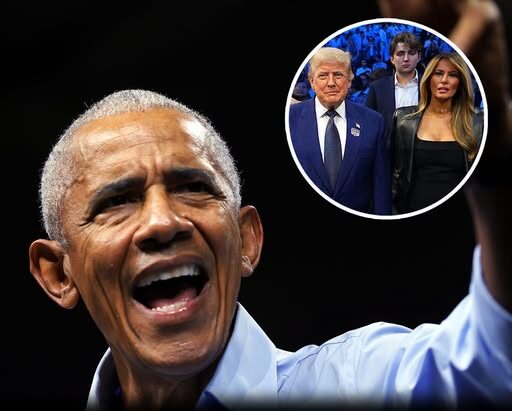
Democrats Take Control of Congress in Stunning Midterm Victory — Trump Responds as Obama Calls for a New Direction
After Democrats Win Both the House and Senate in the 2026 Midterm Elections, President Donald Trump Faces a Major Political Setback as Washington Prepares for a New Balance of Power
The political landscape in Washington has changed dramatically following the November 3, 2026, midterm elections, with Democrats winning control of both chambers of Congress and delivering a major setback to President Donald Trump and the Republican Party.
What began as a closely watched election quickly developed into a sweeping Democratic victory, extending beyond traditional battleground states into areas that Republicans had long considered favorable territory.
For Trump, who had actively supported Republican candidates during the campaign, the results present a significant challenge during the remaining two years of his presidency.
For Democrats, the victories create new opportunities to influence legislation, oversee the executive branch, and shape the national political debate.
But the celebrations also come with difficult questions about what happens next.
Trump retains the presidency and important constitutional powers, including the ability to veto legislation. Democrats, meanwhile, will need to determine how to use their congressional majorities while navigating disagreements with the White House.
As reactions emerged from political leaders, the election results quickly became part of a wider discussion about the country’s direction and the consequences for both major parties.
Democrats Win Both Chambers of Congress in the 2026 Midterms
According to election reporting from Reuters and the Associated Press, Democrats secured control of the House of Representatives and the Senate in the November 3 elections.
The victories represent a significant shift from the Republican congressional majorities that had supported much of Trump’s agenda.
By November 5, Democrats had secured a Senate majority of at least 54 seats, while the party had gained at least 30 seats in the House.
Some races remained unresolved as counting continued, meaning the final composition of Congress could still change.
The overall result, however, was already clear: Democrats had won enough seats to control both chambers when the new Congress convenes in January 2027.
That outcome gives the party control over important congressional committees, legislative priorities, and oversight responsibilities.
It also creates the possibility of significant disagreements between Congress and the White House over government spending, domestic policy, and executive actions.
Republicans Suffer Losses in Traditionally Conservative States
One of the most notable features of the election was the extent of Democratic gains outside the country’s usual competitive states.
Democratic candidates won important contests in states where Republicans had enjoyed substantial electoral advantages.
Texas, Kansas, and South Carolina were among the states that attracted particular attention as Democratic victories reshaped the Senate.
The results demonstrated that the political shift was not limited to a small number of familiar battlegrounds.
Several factors appeared to influence the electorate, according to post-election reporting and voter surveys.
Concerns about the cost of living, economic conditions, government accountability, and the war involving Iran featured prominently in coverage of voter attitudes.
These issues affected different communities in different ways, and no single explanation accounts for every race.
Nevertheless, the scale of the Republican losses has prompted questions about the party’s strategy and its relationship with voters heading toward the 2028 presidential election.
Donald Trump Responds to the Republican Election Defeat
President Trump faced questions about the results after Democrats secured their congressional victories.
Rather than accepting the outcome as a rejection of his entire presidency, Trump defended his record and emphasized circumstances that he believed had contributed to Republican losses.
He also suggested that Republican candidates had faced difficulties that would not necessarily have applied to him personally.
His response reflected a distinction between his own electoral appeal and the performance of other Republican candidates.
However, the election results demonstrated that Republican candidates had struggled across multiple states and congressional districts.
The president’s first public appearance after the election also attracted attention because it focused substantially on the White House ballroom project.
During his remarks, Trump acknowledged the political difficulties associated with the war involving Iran while continuing to defend his administration’s decisions.
The results have left Republican leaders confronting questions about how to respond to an incoming Democratic Congress.
Trump’s ‘VETO’ Message Signals Potential Conflict
Another development that attracted attention was a social media post featuring a red cap with the word “VETO.”
The image was widely interpreted as a reminder that Trump will retain the power to reject legislation passed by Congress.
Under the United States Constitution, the president may veto legislation approved by the House and Senate.
Congress can override a presidential veto, but doing so generally requires a two-thirds majority in both chambers.
That threshold is considerably higher than the simple majority normally needed to pass legislation.
As a result, Democratic control of Congress does not automatically mean the party can enact its entire legislative agenda.
Major proposals may require negotiation with the White House or sufficient support from lawmakers across party lines.
The president’s veto authority is therefore likely to remain an important factor in legislative negotiations during the final two years of his term.
Abdul El-Sayed Makes History in Michigan’s Senate Election
Among the notable individual victories was the election of Abdul El-Sayed to the United States Senate from Michigan.
El-Sayed, a former public health official, defeated Republican Mike Rogers in one of the country’s closely watched Senate contests.
His victory means he is set to become the first Muslim American to serve in the United States Senate.
The result also allowed Democrats to retain a seat previously held by Senator Gary Peters, who did not seek reelection.
Michigan had been considered an important battleground, making the contest particularly significant for both parties.
El-Sayed’s campaign focused on issues including health care and economic affordability, while Rogers emphasized national security, immigration, and other policy concerns.
The election attracted attention because of its potential impact on Senate control and the historic significance of El-Sayed’s candidacy.
His victory became one of several major developments contributing to the Democratic majority.
Barack Obama’s Message Draws Attention After Democratic Victories
Former President Barack Obama also became part of the post-election conversation as Democrats celebrated their gains.
A circulating account attributes to Obama a message emphasizing unity, practical solutions, and public service.
It also claims that he encouraged Democrats to use their newly acquired political influence to prevent further damage and prepare for the future.
However, the precise wording of those reported remarks has not been independently authenticated.
It is therefore important to distinguish the circulating account from statements confirmed through Obama’s official communications or reliable reporting.
Obama has remained an influential figure within the Democratic Party since leaving the White House in January 2017.
He has participated in campaign events, supported candidates, and spoken publicly about democratic institutions and political participation.
The broader question facing Democrats after their victory is how their congressional leaders will translate electoral success into legislative and oversight priorities.
What Democratic Control Means for Trump’s Final Two Years
The shift in congressional control could have significant consequences for the Trump administration.
With Democrats holding majorities in both chambers, congressional committees will gain new leadership and the ability to pursue different oversight priorities.
Those committees can conduct hearings, request information, and investigate matters involving federal agencies and executive branch activities.
The House also has important responsibilities concerning government funding and the initiation of revenue legislation.
The Senate plays a central role in confirming many presidential nominees, including federal judges and senior executive officials.
Democratic control could therefore complicate some of the administration’s efforts to advance legislation and secure confirmations.
At the same time, the president retains substantial executive authority and constitutional powers.
The resulting balance could produce negotiations, compromises, or prolonged disagreements, depending on the issues involved.
Democrats Face Pressure to Deliver on Their Promises
Winning congressional majorities represents a major political achievement, but it also brings responsibility for governing.
Democratic leaders will face expectations from voters who supported their candidates because of concerns about economic conditions, government accountability, and other national issues.
House Democratic Leader Hakeem Jeffries has indicated that affordability and accountability will be important priorities for the incoming majority.
Those priorities could involve proposals addressing household costs, government oversight, and federal policy decisions.
However, passing legislation through Congress is only one part of the process.
Unless lawmakers secure sufficient support to overcome a presidential veto, many major measures will require Trump’s approval.
That reality may force both parties to decide when to negotiate and when to maintain opposing positions.
The effectiveness of the next Congress will depend in part on how those choices unfold.
Republicans Begin Assessing What Went Wrong
For Republicans, the election has created an urgent debate about campaign strategy and the party’s future direction.
The losses came despite Trump’s active involvement in supporting candidates and promoting the party’s priorities.
Republican leaders must now examine why their candidates struggled in states and districts that had previously favored the party.
Economic concerns, public attitudes toward the administration, and reactions to international developments all featured in post-election analysis.
Vice President JD Vance acknowledged the political consequences of the war involving Iran, according to Reuters reporting.
Republicans also face questions about leadership, congressional strategy, and how to communicate their policy priorities while operating as the minority party in both chambers.
Those debates are likely to influence the party’s preparations for future elections.
Why the 2026 Midterm Elections Matter Beyond Washington
Although much of the attention has focused on control of Congress, the election results also carry broader implications for American politics.
Voters participated in contests involving federal, state, and local offices, with outcomes that will influence public policy in different jurisdictions.
The congressional results demonstrated that voter preferences can change significantly between presidential and midterm elections.
They also highlighted the importance of issues such as household affordability, government performance, and foreign policy in shaping electoral decisions.
For political leaders, the results provide information about the concerns and priorities expressed by voters.
For the public, the next two years will offer an opportunity to evaluate how elected officials respond to those concerns.
The new Congress will begin its work in January 2027, establishing a different balance of political power in Washington.
What Happens Next for Trump, Obama, and the Democratic Congress?
The immediate consequences of the election are already significant.
Democrats have won control of both the House and Senate, while Trump will remain president until the end of his current term.
That arrangement places the two major parties in a position where cooperation may be necessary for some legislative goals, even as political disagreements continue.
Trump’s veto authority gives him an important role in determining which congressional proposals become law.
Democratic leaders, meanwhile, will control legislative agendas and oversight committees once the new Congress takes office.
Obama remains a prominent former president whose public comments and campaign activities can attract considerable attention, although the specific quotations circulating in the original account require independent confirmation.
The coming months will reveal how congressional leaders prepare for the transition and which issues they place at the center of their agenda.
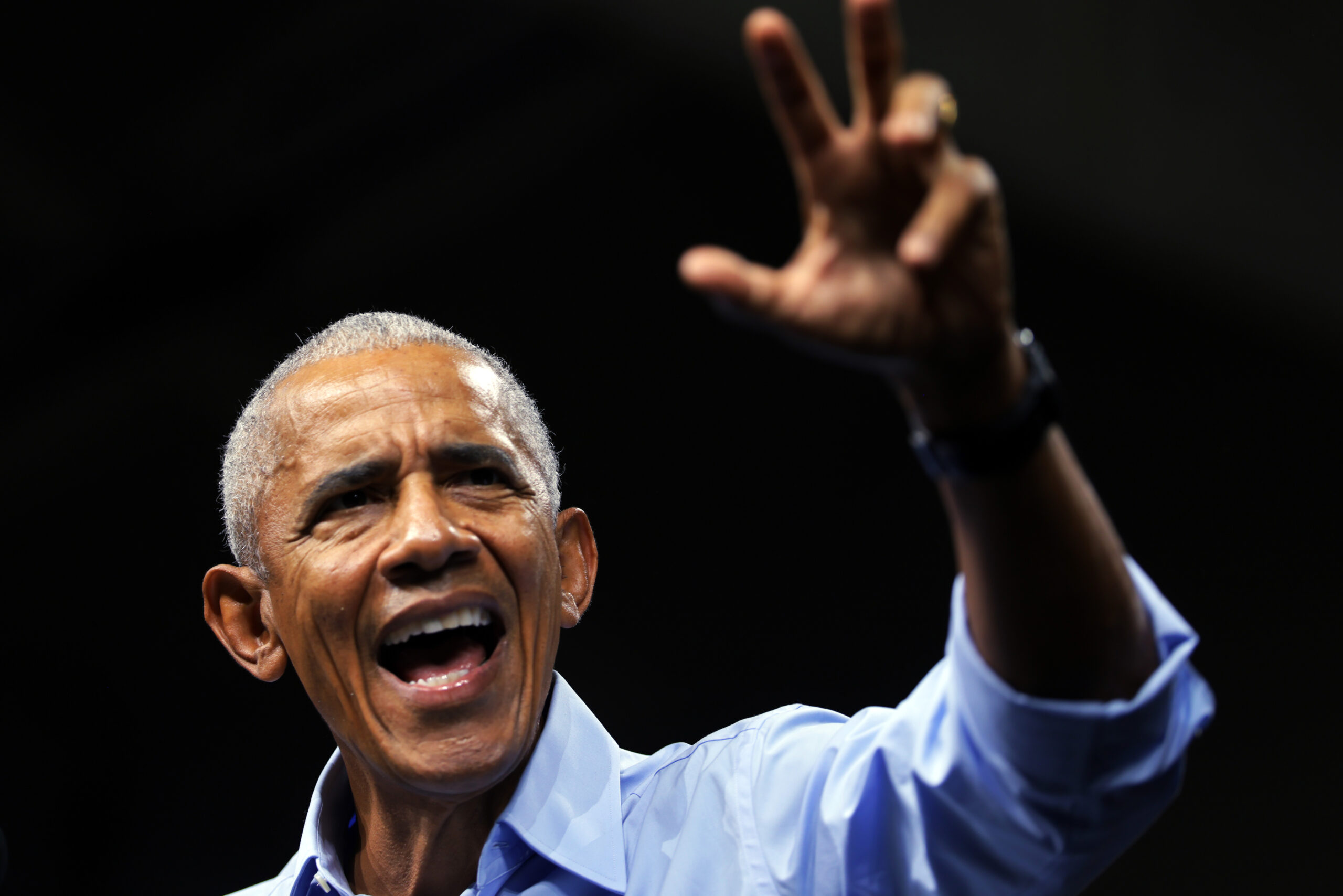
Tonight, the American people sent a clear message — they want a politics that brings people together rather than divides them, and leaders who offer concrete solutions to the challenges they face.
These results were only possible because outstanding candidates stepped forward in every region of the country — including in areas once considered long shots. They came from different backgrounds and represented a range of political perspectives, but were united by shared values, a belief in public service, and a commitment to putting the people of their districts and states first.
We also owe a debt of gratitude to the thousands of election officials and volunteers from both parties who helped ensure a smooth election and carried out one of the most essential functions of our democracy.
While this administration has another two years in office, our job now is to roll up our sleeves, make changes wherever we have the power to do so, prevent further damage, and lay the groundwork for the future.
— Barack Obama (@BarackObama) November 4, 2026
A Major Election Victory Opens a New Chapter in American Politics
The November 2026 midterm elections have produced one of the most consequential shifts in congressional control during Trump’s presidency.
Democrats secured majorities in both chambers, won competitive races across the country, and achieved notable victories in states that had previously favored Republicans.
Trump has defended his political position while signaling that he intends to use the powers of the presidency.
Democratic leaders have emphasized their plans to address affordability and increase government oversight.
Neither side can assume that the election result resolves the country’s political disagreements.
Instead, it establishes a new balance of power that will shape debates over legislation, executive authority, and national priorities.
For Americans watching the developments unfold, the central question is no longer simply which party won the midterms.
It is how the president and the incoming Congress will govern during the next two years.
What do you think the new Congress should prioritize when it takes office in January 2027? Share your thoughts in the comments.