
Trump’s Latest Online Outburst Deepens Political Tensions Across the Country
A Late-Night Flood of Posts Sparks New Controversy
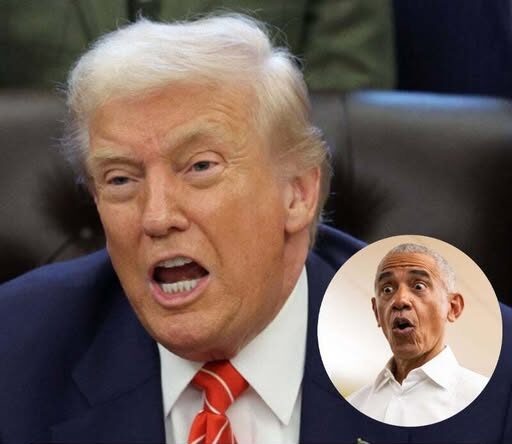
Donald Trump triggered another wave of political outrage after unleashing a series of fiery late-night messages on Truth Social targeting former President Barack Obama.
The posts quickly spread across social media platforms, reigniting fierce debate over the increasingly aggressive tone dominating American political discourse.
In the barrage of messages, Trump amplified calls demanding Obama’s arrest while repeating long-running conspiracy theories tied to past elections, government investigations, and political surveillance claims.
The language used in the posts stunned even some longtime political observers because of how directly it attacked a former president in deeply personal terms.
Accusations Escalate Beyond Political Disagreement
Trump’s comments moved far beyond traditional partisan criticism.
He described Obama as the “most demonic force” in American politics while resharing inflammatory content that portrayed the former president as a threat to the country.
The online escalation also included renewed references to old election-related grievances that have circulated for years despite repeated public disputes over their accuracy.
Critics argued the posts reflected a broader pattern in which political opponents are increasingly portrayed not simply as rivals, but as enemies deserving punishment.
Supporters, meanwhile, defended Trump’s language as an example of his willingness to confront political figures he believes harmed the country.
AI-Generated Content Adds Fuel to the Backlash
Part of the controversy centered on AI-generated material shared during the online posting spree.
One particularly inflammatory image depicted Barack Obama and Michelle Obama in a racially charged manner that immediately sparked widespread backlash online.
The image revived concerns about how artificial intelligence is being used to spread provocative political content capable of inflaming already intense divisions.
Observers warned that AI-generated attacks blur the line between political messaging, misinformation, and personal harassment.
The growing use of digitally manipulated material in political battles has become an increasingly sensitive issue as technology makes it easier to create realistic but highly controversial content.
Obama Responds With Measured Criticism
Barack Obama responded to the escalating attacks with a noticeably restrained tone.
While he largely dismissed the personal insults directed at him, he strongly criticized the decision to involve his family in the political attacks.
Obama emphasized that public figures may expect harsh criticism, but argued that spouses and children should remain outside the reach of political warfare.
His reaction focused especially on the AI-generated content targeting Michelle Obama, which many viewed as crossing a serious ethical boundary.
The response reflected a contrast in tone between the two political figures that immediately became a major point of discussion online.
Political Division Continues to Intensify
The confrontation highlighted the increasingly hostile atmosphere surrounding American politics.
Over the last several years, political rhetoric has become more personal, emotional, and confrontational across multiple platforms.
Social media has amplified that shift by rewarding outrage, conflict, and rapid-fire reactions.
Late-night posting sprees, viral clips, and emotionally charged messaging now dominate political conversation far more than traditional policy discussions.
For many Americans, the latest exchange served as another example of how deeply fractured the political environment has become.
Critics Warn About the Consequences of Escalation
Political analysts and commentators expressed concern that repeated use of inflammatory rhetoric could further damage public trust and increase hostility between opposing groups.
Some warned that language portraying political opponents as dangerous enemies rather than democratic rivals risks normalizing extreme reactions.
The repeated use of words tied to treason, criminality, or moral evil has become increasingly common in online political culture.
Critics fear that continued escalation could make compromise and civil political discussion even more difficult in the future.
Others argued that social media platforms reward the most emotionally charged content, encouraging politicians and commentators to intensify their language in order to dominate public attention.
Supporters View the Posts Differently
Trump supporters defended the former president’s online activity as a direct response to years of political investigations, criticism, and legal scrutiny aimed at him.
Many argued that his supporters appreciate his willingness to attack opponents aggressively rather than speak in cautious political language.
For some voters, Trump’s confrontational style remains one of the central reasons for his continued influence within national politics.
They view his online messaging as evidence that he refuses to soften his positions despite mounting criticism.
That loyalty has remained remarkably strong even during periods of intense controversy.
Social Media Reactions Spread Rapidly
The online reaction to the Truth Social posts unfolded almost immediately.
Political commentators, journalists, activists, and ordinary users flooded platforms with arguments about whether Trump’s comments represented free political expression or dangerous escalation.
Clips, screenshots, and reposts circulated widely, pushing the controversy far beyond Truth Social itself.
Supporters and critics engaged in fierce debates that continued throughout the following day.
The rapid spread of the controversy demonstrated how quickly political messaging can dominate public conversation in the digital age.
The Growing Role of Anger in Modern Politics
The incident also reflected a larger transformation in modern political communication.
Anger has increasingly become one of the most powerful forces driving online engagement and political mobilization.
Sharp personal attacks, emotional language, and viral confrontations often attract more attention than measured policy discussions.
That environment has encouraged increasingly dramatic messaging from public figures seeking to energize supporters or dominate media coverage.
The result is a political climate where outrage frequently overshadows restraint.
Debates Over Political Responsibility Continue
The controversy renewed ongoing arguments about the responsibility political leaders carry when communicating with massive audiences.
Critics argued that influential public figures should avoid language capable of escalating hostility or encouraging dehumanization.
Others countered that political speech, even harsh speech, remains protected and reflects the intensity of modern public debate.
The disagreement revealed how differently Americans now interpret political communication and acceptable public behavior.
For some, Trump’s comments represented dangerous rhetoric. For others, they reflected frustration with the political establishment and years of national division.
Families and Public Life
One of the strongest reactions centered on Obama’s comments about family members being dragged into political conflict.
The involvement of spouses and children in political attacks has become an increasingly sensitive issue in recent years.
Obama’s response emphasized the emotional toll public hostility can place not only on political figures themselves, but also on the people closest to them.
His remarks resonated with many observers who argued that political battles have become increasingly personal and invasive.
The AI-generated imagery aimed at Michelle Obama became a focal point in that broader conversation.
The National Temperature Continues to Rise
The latest confrontation between Trump and Obama underscored how difficult it has become for political tensions to cool in the current environment.
Every new controversy appears to deepen existing divisions while fueling another cycle of outrage online.
Supporters on both sides increasingly view the political conflict not simply as a disagreement over policy, but as a battle over the country’s future identity and direction.
That emotional intensity has transformed political discussion into something far more personal than many Americans remember from earlier eras.
As social media continues accelerating political conflict, moments like this increasingly dominate national attention.
A Conflict That Reflects a Larger National Divide
The exchange between Trump and Obama ultimately became about more than two political figures.
It reflected a broader struggle over the tone, boundaries, and future of political discourse in the United States.
One side sees aggressive confrontation as necessary in a deeply polarized era.
The other warns that endless escalation risks pushing the country toward even greater instability and hostility.
For now, the divide appears only to be growing sharper as political rhetoric becomes more emotional, more personal, and more difficult to contain.