
How to Decode Egg Carton Dates and Choose Fresher Eggs
Understanding Egg Freshness
Eggs are a common kitchen staple that can be prepared in countless ways. Whether they are scrambled for breakfast, poached for brunch, or used in baking, they remain one of the most versatile sources of protein available.
While fresh eggs are generally preferred, many people wonder whether older eggs are still safe to eat. In many cases, eggs that have not spoiled can still be consumed safely. However, freshness can affect both quality and performance in cooking.
As eggs age, they gradually lose moisture and carbon dioxide through their shells. This natural process changes their texture and appearance over time.
The egg whites become thinner and runnier, while the yolks become more fragile and prone to breaking. Although these changes do not automatically mean an egg is unsafe, they can affect cooking results.
Why Freshness Matters
Fresh eggs typically have firmer whites and stronger yolks. These qualities are especially important for recipes where texture and appearance play a major role.
Many cooks prefer fresher eggs for frying, poaching, and other preparations where the egg needs to maintain its shape. Older eggs may spread more easily in a pan due to their thinner whites.
Beyond quality concerns, there is also a food safety consideration. As eggs get older, the risk of food-borne illness can increase, making proper storage and freshness awareness important.
For this reason, understanding the information printed on an egg carton can help shoppers make more informed decisions when purchasing eggs.
The Date Information on Egg Cartons
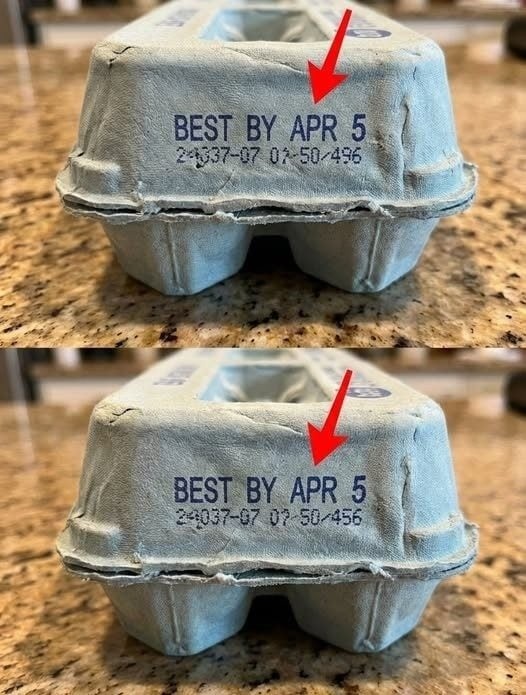
Most consumers are familiar with the sell-by date printed on food packaging. However, egg cartons often contain another important code that provides additional details about freshness.
This code is commonly known as the Julian date. It appears as a three-digit number and can usually be found on the side of the carton near the sell-by date.
At first glance, the number may look like a simple serial code. In reality, it represents a specific day of the year.
The Julian date system counts each day sequentially from the beginning of the year to the end.
How the Julian Date Works
The numbering starts with 001, which represents January 1. Each day afterward receives the next number in sequence.
For example, January 2 is represented by 002, January 3 by 003, and so on throughout the year.
The count continues until the final day of the year. In a standard year, December 31 is represented by 365.
Because the system uses only three digits, it provides a quick and efficient way to identify when the eggs were processed and packaged.
What the Code Actually Tells You
The Julian date does not indicate when the eggs were laid. Instead, it marks the day the eggs were washed, graded, and placed into cartons.
This information offers valuable insight into the age of the eggs when they reach store shelves.
By checking the code, shoppers can compare cartons and select the freshest available option.
A carton with a more recent Julian date generally contains eggs that were packaged more recently.
Freshness Timeline After Packaging
Eggs are considered freshest during the first four to five weeks after packaging. During this period, they usually maintain their best texture and quality.
Knowing the packaging date can help consumers estimate how long the eggs have been in circulation before purchase.
This is especially useful because the date printed on the carton may not always provide the full picture regarding freshness.
Comparing Julian dates can sometimes reveal noticeable differences between cartons sitting side by side in the same refrigerator case.
Why Older Cartons May Still Be in Stores
Many shoppers assume eggs on store shelves were packaged only a few days earlier. However, that is not always the case.
Regulations allow eggs to remain available for sale for a period after packaging. As a result, cartons can be several weeks old by the time consumers purchase them.
This does not necessarily mean the eggs are unsafe. Properly stored eggs can remain usable beyond the packaging date.
Still, shoppers seeking the freshest eggs may benefit from taking a moment to examine the Julian date before making a purchase.
Making Better Choices While Shopping
Checking the sell-by date is a common habit, but adding the Julian date to your evaluation can provide a more complete picture.
When comparing multiple cartons, selecting one with the most recent packaging date may increase the likelihood of getting fresher eggs.
This simple step takes only a few seconds and can help improve quality at home.
Whether eggs are being used for everyday meals or special recipes, freshness often contributes to better cooking results.
A Simple Tool for Consumers
The Julian date is a small detail that many shoppers overlook. Yet it serves as a useful indicator of when eggs were processed and packaged.
Understanding this code allows consumers to make more informed choices and better estimate the age of the eggs they buy.
Combined with proper storage and attention to expiration information, the Julian date can help ensure eggs remain at their best.
By learning how to read the three-digit code, shoppers gain an easy and practical way to identify fresher cartons and make smarter purchasing decisions.