
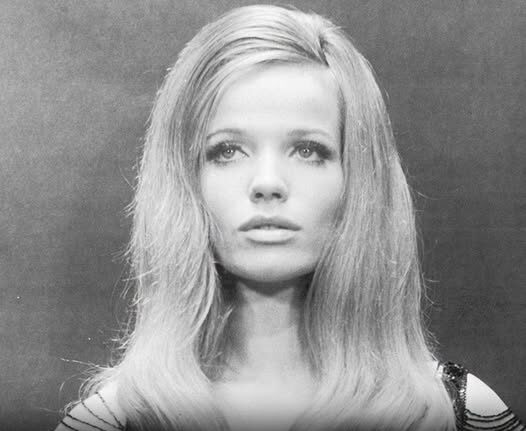
Veruschka, Pioneering German Supermodel and Blow-Up Star, Dies at 87
A Distinctive Figure in Fashion and Art
Veruschka, the German model and artist whose expressive poses and striking presence helped define 1960s fashion photography, has died at 87.
Born Vera von Lehndorff, she died in Berlin on November 24, 2026. Her death was announced through her sister’s company, while German newspaper BILD reported that she was at home surrounded by friends and family.
No cause of death has been made public. Her passing closes a life that encompassed childhood persecution under the Nazis, international fashion fame, film performances and an enduring interest in artistic transformation.
Often described as one of the world’s first supermodels, Veruschka became recognizable far beyond the pages of fashion magazines. Yet she resisted being defined solely by modeling, approaching her appearance as material for performance and experimentation.
A Childhood Shaped by Nazi Persecution
Veruschka was born on May 14, 1939, in East Prussia. Her early childhood was profoundly disrupted by the Second World War and her family’s connection to the German resistance.
Her father, Heinrich Graf von Lehndorff-Steinort, participated in the resistance against Adolf Hitler and was implicated in the failed assassination plot of July 20, 1944. The Nazi regime executed him later that year.
His daughter was five years old. The reprisals extended to the rest of the family, bringing arrest, separation and the loss of their previous life.
Veruschka and her sisters were placed in an SS children’s home. After the war, the surviving family members were reunited, but the stability of their early home had disappeared.
These experiences formed a painful background to the public life she would later create. The glamorous photographs associated with her career represented only one part of a much more complicated personal history.
From Art Student to International Model
Her route into fashion began through an interest in art. While studying in Florence, she was discovered by photographer Ugo Mulas, an encounter that helped set her modeling career in motion.
Work in major fashion centers, including Paris and New York, followed. Her height, unusual features and willingness to experiment gave photographers something distinctive to work with.
She adopted the professional name Veruschka and developed a presence that went beyond displaying clothes. Her photographs frequently depended on movement, dramatic posture and the creation of a character.
That approach made her an important collaborator in fashion imagery. Rather than appearing interchangeable from one assignment to the next, she helped shape the mood and identity of a photograph.
Her emergence coincided with a period when a small number of models were becoming internationally recognized personalities. Veruschka stood among those whose individual identities became inseparable from the pictures they helped create.
A Defining Presence in Vogue
American Vogue became one of the central platforms of her career. She appeared on its cover 13 times and became closely associated with the ambitious fashion photography of the period.
Her career brought her into contact with leading photographers and designers. Her ability to transform herself suited images that moved beyond conventional studio poses toward something more theatrical.
At the height of her success, she was reported to command fees of as much as $10,000 a day. Such figures reflected the demand for her work and the prominence she had achieved internationally.
But commercial success did not eliminate her dissatisfaction with the limits of the profession. She wanted creative freedom and showed little interest in allowing the label of model to explain everything she did.
“I never wanted to be a model, a meaningless object,” she said in a 2008 interview. “Fashion never really interested me. I only used it to transform myself.”
The remark offers a useful perspective on her photographs. For Veruschka, an image could provide an opportunity to become something unexpected rather than simply present a polished version of herself.
Blow-Up Brought Her to Film Audiences
Her appearance in Michelangelo Antonioni’s 1966 film Blow-Up became one of the best-known screen moments of her career. Playing a version of herself, she appeared opposite David Hemmings in a photographic sequence that became strongly associated with the film.
The role connected her fashion persona with a wider cinematic audience. Her physical expressiveness translated naturally into a scene built around the relationship between a photographer, his subject and the act of creating an image.
She later appeared in Veruschka, Poetry of a Woman, directed by photographer and filmmaker Franco Rubartelli, who was also her partner during an important period of her life.
Her screen work continued beyond the fashion-centered productions most closely associated with her name. In Ulrike Ottinger’s 1984 film The Image of Dorian Gray in the Yellow Press, she played the title character in drag.
That performance offered another expression of her interest in changing identity through appearance. Her film credits also included The Bride, the Frankenstein-inspired production featuring Sting.
Transformation Became an Artistic Practice
As she moved away from mainstream modeling, Veruschka devoted greater attention to art. The body remained central to her work, but its purpose changed.
In collaborations with artist Holger Trülzsch, body painting and photography allowed her figure to merge visually with surrounding surfaces and environments. Instead of drawing attention through fashion, she could appear to disappear into an image.
These works extended ideas already visible in her modeling: appearance could be constructed, identity could shift and a photograph could record a performance rather than a fixed personality.
Her artistic interests also complicate any account that remembers her only as a beautiful face from a celebrated decade. Fashion gave her visibility, but she used that visibility while continuing to pursue other forms of expression.
Occasional returns to modeling and screen appearances kept her connected to the industries that had made her famous. They did not erase the independent creative direction she established beyond them.
A Legacy Beyond the Supermodel Label
Veruschka’s career helped broaden the possibilities of fashion modeling. Her photographs demonstrated how much a subject could contribute through imagination, posture and the willingness to take creative risks.
Her name remains associated with an era when fashion photography became increasingly theatrical and models emerged as cultural figures in their own right. Her work also crossed into cinema and visual art, giving that influence a wider reach.
Remembering her requires room for those different identities: a child who survived persecution, a model who achieved extraordinary recognition and an artist who continued questioning what an image could reveal or conceal.
She leaves behind photographs, performances and artistic collaborations that preserve her distinctive approach to transformation. Across them, Veruschka remained an active participant in creating the image the world saw.