
Does Putting Salt in the Toilet Really Work? What the Cleaning Trick Can—and Cannot—Do
A Familiar Ingredient With Limited Cleaning Uses
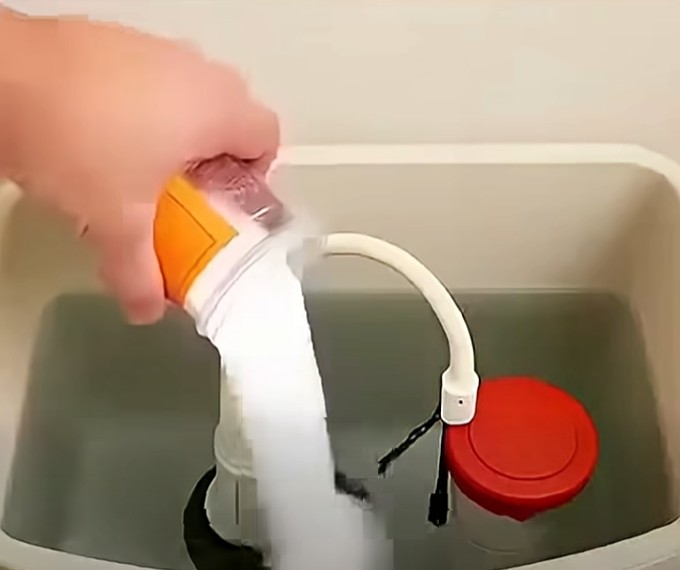
Adding coarse salt to the toilet is often promoted as an inexpensive way to remove stains, eliminate odors and avoid costly cleaning products. Some versions of the tip recommend pouring in at least 100 grams, leaving it overnight and scrubbing the bowl the following morning.
The advice sounds convenient because salt is inexpensive and readily available. However, the claim that it is a secret plumbers refuse to share has no established basis, and several of the promised benefits overstate what ordinary salt can accomplish.
Salt can act as a mild abrasive while its crystals remain undissolved. Used with an appropriate cleaning tool on a compatible surface, that texture may help loosen some surface dirt through scrubbing.
That limited function does not make salt a reliable disinfectant, a treatment for plumbing problems or an effective way to dissolve established limescale. Understanding those differences helps explain why the overnight trick may disappoint.
Why Leaving Salt Overnight Is Not a Proven Solution
Table salt and coarse salt are primarily sodium chloride. When added to water, the crystals dissolve, so much of the gritty texture that could assist with scrubbing disappears.
Leaving salt in the toilet overnight does not transform it into a stronger cleaner. Nor does using a larger quantity establish that it will remove stains more effectively.
The recommendation to add 100 grams or more is not a standard cleaning instruction supported by the manufacturer guidance reviewed here. There is no reason to treat that quantity as a necessary household maintenance routine.
If a bowl appears cleaner after the method, brushing may have removed loose material. That result would not establish that the salt disinfected the surface, dissolved mineral deposits or cleaned the pipes beyond the bowl.
A useful cleaning method should match the problem being addressed. Ordinary dirt, mineral buildup, persistent odor and a slow flush can have different causes and require different responses.
Salt Is Not a Reliable Toilet Disinfectant
Cleaning and disinfecting are different processes. Cleaning removes dirt and other material from a surface, while disinfecting uses an appropriate product to kill specified germs.
Although concentrated salt has uses in food preservation, sprinkling it into a toilet does not provide a reliable household disinfection method. It should not be described as a substitute for a product tested and labeled for that purpose.
When disinfection is needed, choose a product approved for the relevant surface and follow its directions. Those instructions include how much to apply and how long the surface must remain wet.
Appearance alone cannot establish that disinfection has occurred. A bowl can look brighter after brushing without having received an effective disinfecting treatment.
Routine cleaning also includes areas outside the bowl, such as the flush handle and other frequently touched surfaces. Use products compatible with each material rather than assuming one treatment suits the entire toilet.
Limescale Needs a Different Approach
Limescale is a mineral deposit associated with hard water. It can leave a stubborn ring or rough buildup that does not disappear with ordinary brushing.
Salt does not provide the acidic action commonly used to dissolve these deposits. Its crystals may offer some physical abrasion, but abrasion and chemical descaling are different mechanisms.
For mineral buildup, look for a toilet-compatible product specifically labeled for limescale removal. Check the toilet manufacturer’s instructions first, particularly if the bowl has a special coating or finish.
Follow the cleaner’s stated contact time instead of assuming that an overnight soak is always preferable. Product strength and surface compatibility matter more than simply leaving something in place longer.
Avoid forceful scraping with metal objects or unsuitable scouring tools. Persistent marks may require a different cleaner, but aggressive abrasion can damage a finish and create another problem.
What About Baking Soda?
Baking soda is another inexpensive ingredient frequently suggested for toilet cleaning. It can function as a mild abrasive and may help with some light surface soil when used with brushing.
However, replacing salt with baking soda does not make the original claims accurate. Baking soda should not be relied upon as a disinfectant or as a universal solution for hard-water deposits.
Its usefulness depends on the surface, the type of dirt and the cleaning method. A product that helps with light residue may still be ineffective against a thick mineral ring.
There is also no need to combine multiple household ingredients in the hope of creating a stronger cleaner. Mixing products can reduce their effectiveness or introduce hazards, depending on what is already present.
A More Dependable Cleaning Routine
Begin by checking the care instructions for your toilet. The bowl, seat, hinges and exterior may have different requirements, so a cleaner suitable for one part may be inappropriate for another.
For the bowl, use a compatible cleaner according to its label, brush thoroughly and flush as directed. Pay attention to the waterline and beneath the rim, where residue can be less obvious.
Clean the exterior with a suitable product and a separate cloth. Wash your hands after finishing, and clean or store your equipment according to its care instructions.
Never mix bleach with vinegar, acidic toilet cleaners or ammonia. Hazardous gases can result, and adding a household ingredient does not make an existing chemical mixture safe.
If the toilet has a persistent sewage smell, repeatedly clogs or flushes poorly, adding salt is not a dependable repair. Those symptoms may require inspection rather than another cleaning treatment.
Salt has a limited role as an abrasive in some cleaning tasks, but flushing it regularly is not an essential toilet-care habit. A compatible cleaner, proper brushing and attention to the actual problem offer a more reliable approach.