
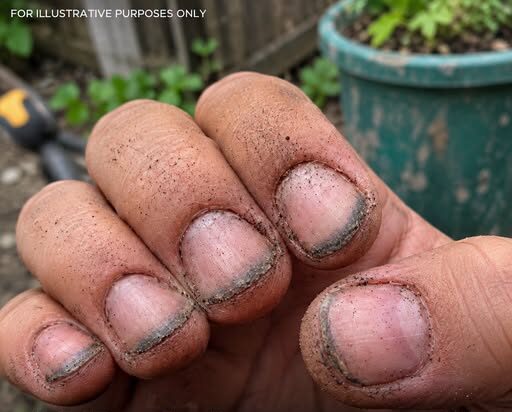
Dirty Fingernails Can Lead to Unfair Judgments, but They May Reveal Something Very Different
What the Appearance of Your Fingernails Really Means for Hygiene, Hard Work, and Health
Dirty fingernails can attract unwanted attention, particularly when someone notices dark material beneath the nails or stains that remain after washing. For some people, the immediate reaction is to assume poor hygiene or a lack of personal care.
However, the appearance of someone’s hands does not necessarily reflect their cleanliness, habits, or character. In many cases, dirt beneath the fingernails is simply a visible consequence of physical work.
Gardeners, farmers, mechanics, and construction workers frequently handle materials that can become trapped beneath their nails. Even after washing, traces of soil, grease, or other substances may remain temporarily.
There is also an important distinction between ordinary dirt and persistent changes in the nails themselves. While surface stains may be harmless, certain changes in nail color, thickness, or attachment can deserve medical evaluation.
Understanding that difference can help people avoid unfair assumptions while paying appropriate attention to their own health.
Why Dirty Fingernails Do Not Always Mean Poor Hygiene
Fingernails naturally come into contact with the environment throughout the day. Activities involving soil, machinery, building materials, and other substances can leave visible residue beneath or around them.
For someone working outdoors or performing manual labor, this exposure may happen repeatedly over several hours.
Washing with soap and water can remove much of the accumulated material, but some stains and particles may be more difficult to eliminate immediately.
As a result, hands may still appear dirty even after someone has made an effort to clean them.
This is why judging personal hygiene from a quick glance at someone’s fingernails can be misleading.
Cleanliness involves habits and practices, not simply the appearance of the hands at one particular moment.
The Workers Whose Hands Tell a Different Story
Many occupations require direct contact with materials that can leave visible marks on the skin and nails.
Gardeners regularly handle soil and plants. Farmers may spend long hours working outdoors, while mechanics frequently encounter grease and machinery.
Construction workers also handle materials that can leave dust or residue around their fingernails.
These activities are often essential to everyday life. They contribute to food production, equipment maintenance, housing, and other practical needs.
The visible effects of such work should not automatically be interpreted as evidence of carelessness.
Someone with stained fingernails may have spent the day performing demanding tasks that benefit other people.
Recognizing the circumstances behind an appearance encourages a more respectful and balanced view of others.
Why Appearance Alone Cannot Reveal Someone’s Character
People often form impressions quickly, especially when they notice something that differs from their expectations.
Dirty fingernails may become the focus of attention without any understanding of what the person has been doing.
Yet the presence of soil or grease reveals little about someone’s personality, values, or general standard of cleanliness.
A worker may maintain careful personal hygiene while still experiencing temporary stains associated with daily tasks.
Likewise, someone whose nails look perfectly clean cannot be assumed to have better hygiene practices solely because of their appearance.
The important lesson is that visible details should be interpreted within their circumstances rather than used as the basis for personal judgments.
Why Proper Fingernail Hygiene Still Matters
Although dirty nails should not invite criticism, regular nail care remains an important part of personal hygiene.
Material can accumulate beneath fingernails during everyday activities, including work, gardening, and household tasks.
Regular handwashing with soap and water helps remove dirt and reduce the spread of germs.
Gently cleaning beneath the nails can also help prevent material from remaining trapped in areas that may be overlooked during ordinary washing.
Keeping fingernails trimmed makes routine cleaning easier and helps limit the buildup of debris.
These habits are useful regardless of a person’s occupation or whether their nails appear visibly dirty.
Good hygiene is about consistent care rather than maintaining a flawless appearance at every moment.
The Difference Between Temporary Dirt and Lasting Nail Changes
Not every unusual nail appearance is caused by dirt.
Temporary staining from soil, grease, or other materials is different from changes that develop in the nail itself and remain over time.
For example, discoloration that persists despite ordinary cleaning may deserve closer attention.
Other changes can include nails becoming noticeably thicker or beginning to separate from the nail bed.
A dark streak that does not grow out with the nail is another finding that should be medically assessed.
These symptoms can have different causes, and their appearance alone is not enough to establish a diagnosis.
Observing whether a change is temporary or persistent can help determine when professional evaluation is appropriate.
When Nail Changes Should Be Checked by a Medical Professional
Persistent nail changes should not automatically be dismissed as ordinary dirt or staining.
Discoloration, thickening, or lifting away from the nail bed may warrant medical attention, especially when the changes continue rather than resolving.
A dark streak that remains or does not move outward as the nail grows also deserves professional evaluation.
Such changes do not necessarily indicate a serious condition, but they should not be diagnosed from appearance alone.
A healthcare professional can examine the nails, consider relevant circumstances, and determine whether further assessment is necessary.
Seeking medical advice is more reliable than attempting to identify the cause through photographs, assumptions, or casual observations.
How to Maintain Cleaner and Healthier Fingernails
Simple hygiene practices can make a meaningful difference in routine nail care.
Washing hands regularly with soap and water is an important starting point, particularly after activities involving dirt or other materials.
Cleaning gently beneath the fingernails helps remove accumulated debris without relying on aggressive scraping.
Keeping nails reasonably short can also make them easier to maintain.
For people whose occupations repeatedly expose their hands to soil, grease, or construction materials, regular cleaning may be especially relevant.
However, even careful washing does not guarantee that every temporary stain will disappear immediately.
The objective should be consistent hygiene and awareness of unusual changes, not an unrealistic expectation that hands must always look spotless.
Why Respect and Health Awareness Should Go Together
There is no contradiction between recognizing the importance of clean fingernails and refusing to judge people whose hands show signs of work.
Both ideas can exist together.
People should practice appropriate hygiene to limit the buildup and spread of germs, while also understanding that visible dirt may result from ordinary daily activities.
Similarly, persistent nail changes should be treated as potential health concerns rather than reasons for embarrassment or criticism.
This approach shifts attention away from assumptions about character and toward practical information about cleanliness and health.
It also recognizes the dignity of people whose occupations involve physically demanding tasks.
The Important Lesson Behind Dirty Fingernails
A quick look at someone’s hands rarely tells the full story of their day, their habits, or their circumstances.
Fingernails marked by soil or grease may reflect hours of gardening, farming, mechanical repairs, or construction work rather than a disregard for cleanliness.
At the same time, regular washing, gentle cleaning, and nail trimming remain worthwhile hygiene practices for everyone.
Lasting changes in nail color, thickness, or attachment should receive appropriate medical attention instead of being dismissed as simple dirt.
The most useful response combines three principles: maintain good hygiene, pay attention to persistent nail changes, and avoid making personal judgments based on appearance.
Ultimately, hands that look imperfect may have spent the day doing valuable work. Understanding the difference between ordinary dirt and possible nail health concerns allows people to respond with both greater awareness and greater respect.