
Part 2 of 2
According to Brigitte Kranendonk, the morning of July 10 began quietly.
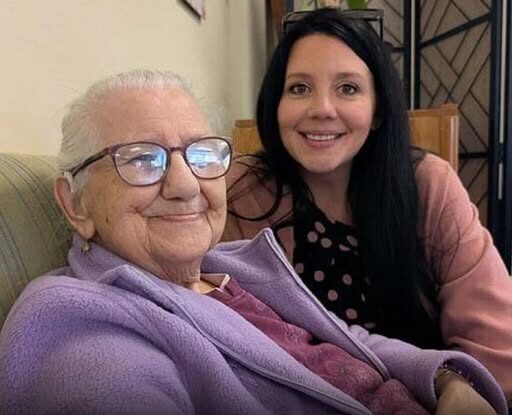
Her grandmother, Brigitte Stegemann, spent time outside with family members in the care home garden.
They ate strawberry ice cream.
Her pastor prayed with her.
Kranendonk says Stegemann was still interacting with the family that morning.
At one point, when Kranendonk became emotional, she says her grandmother even told her:
“If you don’t stop crying, I’m not going to sleep tonight.”
To Kranendonk, that comment mattered.
It reinforced her belief that her grandmother was still aware of what was happening around her.
Then the family was asked to go back inside.
Kranendonk says this happened earlier than expected.
The family had understood that the doctor involved in the MAiD procedure would arrive later that morning.
Instead, preparations began sooner.
Kranendonk alleges that the nurse had difficulty inserting an IV.
She says there were repeated attempts and significant bleeding.
By the time the doctor arrived, Kranendonk says her grandmother appeared far less responsive.
That is one of the central points now disputed in the case.
According to Kranendonk, the doctor told Stegemann she would be given medication and asked whether that was acceptable.
Kranendonk says her grandmother did not answer.
She says Stegemann did not nod.
She did not open her eyes.
She did not verbally confirm that she wanted the procedure to continue.
Kranendonk says the doctor then proceeded.
Stegemann died shortly afterward.
The granddaughter says she left the room uncertain about exactly what had happened during those final minutes.
She questioned whether her grandmother had become unconscious before the medication was administered.
She also questioned whether she still had the capacity to provide final consent.
Those questions are especially important under Canada’s MAiD rules.
In general, a patient who still has decision-making capacity must be given the opportunity to withdraw the request and must provide express consent immediately before MAiD is administered.
There are limited circumstances in which a patient may have signed a waiver of final consent in advance.
But even when such a waiver exists, federal guidance says signs of refusal or resistance can invalidate it.
Kranendonk says she does not know what documentation was in place in her grandmother’s case.
That uncertainty has become one of the reasons the family is seeking records.
She says she repeatedly requested Stegemann’s medical documentation from The Pearl.
She also says she later learned more about the safeguards surrounding MAiD and began questioning whether every required step had been properly completed.
Among her concerns is an allegation that some paperwork may have been completed only after Stegemann’s death.
That claim has not been independently established.
The care home and practitioners involved have not publicly provided a detailed response addressing each of Kranendonk’s allegations.
The family has been told that Stegemann had legally consented to MAiD.
Kranendonk disputes that conclusion.
She maintains that her grandmother’s distress the previous day, including allegedly saying “I’ve made a mistake,” should have prompted further review.
She also argues that the lack of an obvious response immediately before the procedure should have caused it to stop.
Those are allegations.
They have not yet been resolved by an independent investigation or court.
After her grandmother’s death, Kranendonk contacted several authorities.
She says she raised concerns with Ontario’s Chief Coroner’s Office and the Patient Ombudsman.
She also contacted Belleville Police.
Police have confirmed that the matter remains open and is being investigated by the Criminal Investigations Division.
Because the investigation is ongoing, police have not publicly released detailed findings.
That means several major questions remain unanswered.
What exactly did Stegemann understand about the procedure?
What did the two MAiD assessments conclude about her capacity?
Was there a valid waiver of final consent?
If so, did anything happen that should have invalidated it?
What was documented immediately before the procedure?
And how did the medical team interpret Stegemann’s condition when the medication was administered?
For Kranendonk, the issue is deeply personal.
She had cared for her grandmother for years.
She had served as her medical power of attorney.
And she says she trusted the people providing Stegemann’s care.
Looking back, she says she wishes she had known more about the legal options available to the family.
She has said she regrets not trying to seek an emergency court order that might have delayed the procedure while the consent questions were reviewed.
But at the time, she says she did not know that was something she could even consider.
She also says simply removing her grandmother from the facility did not feel realistic.
Stegemann still needed medical care.
The family was trying to balance her illness, her comfort and the rapidly moving decisions around end-of-life treatment.
That is part of why Kranendonk says the experience felt both rushed and overwhelming.
For now, the case remains unresolved.
Stegemann’s family alleges that she did not clearly consent on the morning she died.
The medical side has maintained that the procedure was legally authorized.
Police are still investigating.
Until that process is complete, the most serious claim in the case—that Stegemann was euthanized against her will—should be treated as an allegation, not an established fact.
What is clear is that her death has raised difficult questions about consent, capacity and how safeguards are applied when a vulnerable patient’s wishes appear uncertain.