
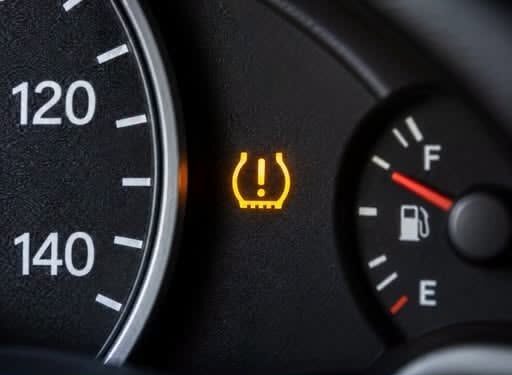
Tire Pressure Light Still On After Adding Air? Here’s What to Check
Start With the Pressure, Not the Reset Button
Adding air does not always make a tire pressure warning disappear immediately. One tire may still be below its recommended pressure, a slow leak may be allowing air to escape, or the monitoring system may need time to update.
In other cases, the warning follows a tire rotation or replacement that requires a vehicle-specific calibration procedure. A damaged sensor or depleted sensor battery can also cause a fault on systems that use wheel-mounted pressure sensors.
The first step is to measure the pressure in every road tire with a reliable gauge. Do this before attempting to clear the warning, because resetting a system cannot repair a leak or make an underinflated tire safe.
The correct next step depends on the readings, the warning’s behavior and the instructions for your particular vehicle. There is no universal reset procedure that applies to every car.
Use the Vehicle’s Recommended Inflation Pressure
Find the tire information label, usually located on the driver’s door edge or doorjamb. It lists the vehicle manufacturer’s recommended cold inflation pressures for the specified tires.
Do not use the maximum pressure molded into the tire’s sidewall as your routine inflation target. That marking is not the same as the vehicle manufacturer’s recommendation.
Read the label carefully rather than assuming every tire needs the same pressure. Some vehicles specify different values for the front and rear wheels, and certain operating conditions may have separate instructions in the owner’s manual.
Use the gauge to check each tire individually. Adding air to the tire that looked lowest does not establish that the others are correctly inflated.
A tire can look reasonably normal while still being underinflated. The gauge reading provides information that a visual inspection cannot reliably supply.
Check the Tires While They Are Cold
Recommended inflation figures refer to cold tires. A practical time to check is before driving, or after the vehicle has been parked for at least three hours.
Driving warms the tires and increases the pressure inside them. A reading taken immediately after a journey therefore may not be directly comparable with the cold-pressure figure on the vehicle label.
Do not release air from a warm tire simply to bring its reading down to the cold specification. Recheck under the appropriate conditions and follow the vehicle manufacturer’s guidance.
If you added air after driving to a filling station, check the tires again once they are cold. That follow-up can reveal whether the original adjustment actually achieved the recommended level.
Record the readings if the warning has been recurring. Comparing measurements taken under similar conditions can help identify whether one tire is losing pressure between checks.
Cold Weather Can Trigger a Warning
A drop in outdoor temperature can lower tire pressure enough to activate the warning. This is especially noticeable when a tire was already close to the system’s warning threshold.
You may see the light on a cold morning and find that it goes out after driving. As the tires warm, the pressure can rise above the threshold again.
That pattern does not mean the warning should be ignored. Check the cold pressure and adjust it to the recommended value rather than relying on driving to turn the light off.
Temperature changes and leaks are also separate possibilities. Cold weather may explain a general decrease, but a tire that repeatedly loses more pressure than the others needs closer attention.
A Slow Leak May Be Undoing the Adjustment
If a tire needs air again soon after inflation, it may have a leak. Possible locations include a puncture, the valve, the seal between the tire and wheel, or the wheel itself.
Adding air can temporarily improve the reading without fixing the source of the loss. Repeated top-ups should therefore prompt an inspection rather than become a substitute for repair.
A tire professional can examine the assembly and determine what action is appropriate. The fact that a tire accepts air does not establish that it can safely retain pressure.
If a tire is visibly flat, damaged or rapidly losing air, do not drive merely to see whether the dashboard warning clears. Use the assistance or spare-wheel procedure specified for the vehicle.
A Steady Light and a Flashing Light Can Mean Different Things
A continuously illuminated tire pressure warning commonly indicates that one or more tires are significantly underinflated. The owner’s manual explains the exact meaning of the indicator on your vehicle.
On many vehicles, a warning that flashes for approximately 60 to 90 seconds after startup and then remains illuminated indicates a TPMS malfunction.
That distinction is useful, but both situations still call for a pressure check. A monitoring fault does not prove the tires are correctly inflated; it means the system may not be able to warn you reliably.
Some vehicles also display a message identifying a sensor fault or another system issue. Note the wording and describe the flashing sequence when arranging service.
Recent Tire Work May Require Calibration
A rotation, replacement or pressure adjustment can require calibration or sensor relearning on certain vehicles. Other systems update automatically under conditions described in the manual.
Indirect TPMS uses information such as wheel-rotation characteristics to detect changes associated with tire pressure. Some of these systems require calibration after inflation or tire servicing.
Direct systems use pressure sensors associated with the wheels. Depending on the vehicle, changes to the sensors or their positions may require a relearning procedure.
These differences explain why an online reset instruction may be unsuitable for your car. Follow the procedure for the correct model and year, and set the tire pressures properly before beginning.
Do not repeatedly recalibrate simply to silence a returning warning. If the pressure is dropping or the system has a fault, the underlying problem still requires attention.
Sensor Problems Need a Different Fix
If all tires maintain the correct pressure and the warning persists after the prescribed update or calibration process, a system fault becomes another possibility.
On direct systems, a sensor may be damaged or its battery may be depleted. These faults cannot be corrected by adding more air.
A technician can check sensor communication and investigate the system rather than replacing parts based only on the warning light. Recent tire work, a temporary spare and any dashboard messages can provide useful context.
Do not assume that every vehicle has the same sensor arrangement. The owner’s manual remains the starting point for understanding how its monitoring system operates.
Let the Measurements Guide the Next Step
A persistent TPMS warning is a reason to investigate, not automatically a reason to reset the dashboard. Begin with cold pressure measurements and the vehicle’s inflation label.
If pressure falls again, arrange a leak inspection. If pressures remain correct, check the manual for the required update or calibration procedure and have an unresolved fault assessed.
TPMS supplements routine tire maintenance rather than replacing it. Keeping a dependable gauge and checking regularly helps you identify a problem before you are relying on a warning light to reveal it.