
The Hidden Language of Feet: An Ultimate Guide to Podomancy and Personality
Understanding the Idea Behind Podomancy
For generations, people have searched the human body for signs of character, emotion, and hidden personality. Hands, faces, skull shapes, and physical features have all been interpreted in different traditions as possible windows into the inner self.
Podomancy is one of the more unusual examples of this belief. It focuses on the feet, especially toe length, toe shape, and the way the toes align with one another.
The idea behind podomancy is simple: the shape of a person’s feet may reflect certain personality traits. Some people look at the feet as a symbolic map of temperament, confidence, sensitivity, creativity, and social behavior.
It is important to note that there is no scientific evidence proving that toe length or foot shape determines personality. A person’s character cannot be measured by the alignment of the metatarsals or by whether one toe is longer than another.
Still, podomancy remains popular because it offers a playful way to reflect on identity. Many people enjoy these personality readings not as medical or scientific facts, but as light, entertaining descriptions that may feel surprisingly familiar.
Why Foot Shapes Became Part of Personality Reading
Human beings have always been drawn to patterns. When people notice differences in body shape, facial features, or posture, they often try to connect those differences with behavior and emotion.
That curiosity helped create traditions such as chiromancy, which focuses on palm reading, physiognomy, which interprets facial features, and phrenology, which studied the skull. Podomancy belongs to this same broad habit of looking at the body for symbolic meaning.
Feet are especially interesting because they are both practical and personal. They carry the body, support movement, and often remain hidden from public view. Because of that, some personality traditions treat the feet as a quiet symbol of how a person moves through life.
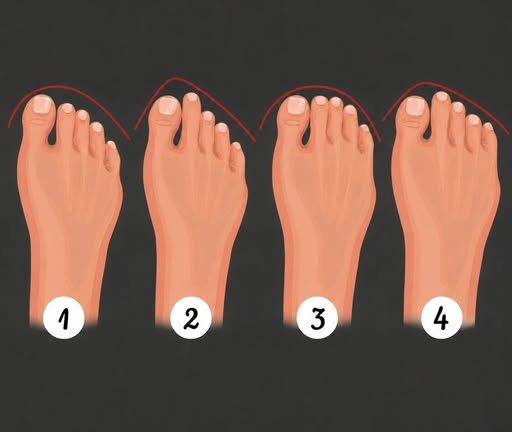
In modern personality-style readings, the most common categories include the Egyptian Foot, the Greek Foot, the Roman Foot, and the Celtic Foot. Each type is linked to a different emotional profile and social style.
These descriptions should be understood as reflective and entertaining rather than definitive. They can encourage self-awareness, but they should not be used to judge someone or make serious conclusions about their abilities, loyalty, or values.
The Egyptian Foot: The Slant
The Egyptian foot is one of the easiest shapes to recognize. It forms a diagonal line that begins with the big toe and gradually slopes down toward the smallest toe.
In this shape, each toe is shorter than the toe before it. The big toe is the longest, the second toe is shorter, and the remaining toes continue to descend in a smooth line.
This foot shape is often associated with people who have a private and imaginative inner world. They may appear calm or reserved on the outside, while carrying deep thoughts, dreams, and emotions within themselves.
People linked with the Egyptian foot are often described as dreamers or idealists. They may enjoy beauty, mystery, and quiet spaces where they can think freely without pressure from others.
Privacy is one of the strongest themes connected with this foot shape. A person with this profile may not reveal everything they feel right away. They may prefer to protect their thoughts until they fully trust someone.
The Egyptian foot is also connected with moodiness and impulsivity. This does not necessarily mean instability; rather, it suggests a person who feels strongly and may act quickly when emotions are intense.
Aesthetic appreciation is another common trait in this reading. People in this category may be drawn to art, atmosphere, design, music, or anything that creates emotional meaning through beauty.
The Greek Foot: The Flame or Morton’s Toe
The Greek foot is defined by a second toe that is longer than the big toe. This creates a raised point near the front of the foot, giving the toes a peaked shape.
This shape is sometimes called the flame shape because the longer second toe creates a dynamic, upward appearance. It is also commonly associated with Morton’s Toe.
In podomancy-style personality readings, the Greek foot is often linked with energy, enthusiasm, and creativity. It is seen as the foot shape of people who move through life with passion and strong emotional drive.
The Greek foot is also connected with kindness and leadership. People with this shape are described as individuals who care deeply about others while still having the strength to take charge when needed.
One major theme in this profile is the idea of having a huge heart. A person with this foot shape may naturally support friends, family, or loved ones during difficult moments.
They may become the emotional anchor of their social circle. Others may turn to them for reassurance, honesty, and comfort because they are seen as loyal and dependable.
At the same time, the Greek foot profile is not only soft or emotional. It is also associated with protection, intuition, and a strong sense of boundaries.
People in this category are often described as difficult to fool. They may quickly notice hidden motives, insincerity, or drama, even when others miss the warning signs.
Trust plays a central role in this personality reading. Once trust is broken with someone connected to the Greek foot profile, it may be extremely difficult to restore.
This does not mean they are unforgiving without reason. It suggests that loyalty matters deeply to them, and betrayal can change how they see a person permanently.
The Greek foot is also associated with high energy. Many descriptions connect it with athletes, artists, performers, and people who thrive when they can create, compete, or express themselves.
The Roman Foot: The Square
The Roman foot has a balanced, sturdy appearance. In this shape, the first three toes are almost the same height.
Because the big toe, second toe, and third toe line up closely, the front of the foot can look more squared or blocked than slanted. This gives the Roman foot a strong and structured visual profile.
In personality readings, the Roman foot is often described as the shape of the social butterfly. People with this foot type are associated with communication, confidence, and public presence.
They may enjoy meeting new people, starting conversations, and being part of active social environments. Their energy often feels open and expressive rather than hidden or withdrawn.
Charisma is a major trait linked to the Roman foot. People in this category may know how to hold attention, tell stories, and make others feel included in a room.
This profile is also connected with public speaking. A person with Roman feet may feel comfortable presenting ideas, leading discussions, or speaking confidently in front of others.
Business-minded thinking is another common theme. The Roman foot is often associated with logic, networking, and the ability to recognize useful opportunities.
Someone with this profile may be practical and strategic. They may value structure, planning, and results, especially when dealing with work, goals, or social influence.
However, the same confidence that makes this personality type attractive can sometimes be misunderstood. A Roman foot profile may be perceived as arrogant if self-assurance becomes too strong or too direct.
The key balance for this type is confidence with humility. When their social skills are guided by respect and awareness, they can become powerful connectors and natural leaders.
The Celtic Foot: The Step
The Celtic foot is a more complex shape. Like the Greek foot, it often has a second toe that is longer than the big toe.
What makes it different is the pattern of the remaining toes. Instead of forming a smooth diagonal line, the third, fourth, and fifth toes descend in a more uneven or stepped arrangement.
This jagged pattern gives the Celtic foot a distinctive look. It does not fit neatly into the smoother categories, which is why it is often linked with a layered personality.
In podomancy readings, the Celtic foot suggests someone who is not easily categorized. This person may have many sides and may behave differently depending on the situation or the people around them.
Ambition is one of the dominant traits connected with this shape. A person with Celtic feet may have strong goals, a competitive spirit, and a desire to keep moving forward.
At the same time, this profile also includes a softer side. That gentler part of the personality may not be shown to everyone.
People with this foot type may reserve their warmth for trusted friends, close family, or inner circles. To strangers, they may seem guarded or intense, while loved ones may know them as thoughtful and caring.
The Celtic foot is often described as a blend of Greek energy and Egyptian mystery. This means the person may be creative and ambitious, but also private and difficult to fully understand.
This combination can make the Celtic foot profile especially intriguing. It represents someone with movement, depth, and emotional contrast.
What These Foot Shapes Really Offer
Podomancy is not a scientific tool, and it should not be treated as one. No foot shape can prove whether someone is kind, ambitious, loyal, creative, or confident.
Still, these categories remain popular because they give people a simple way to think about personality. They turn ordinary physical differences into symbolic stories.
The Egyptian foot highlights privacy, imagination, and emotional depth. The Greek foot points toward kindness, leadership, energy, and loyalty.
The Roman foot emphasizes confidence, communication, logic, and social strength. The Celtic foot suggests ambition, complexity, mystery, and hidden softness.
Each description can feel accurate in different ways because human personality is naturally layered. Most people are not only one thing. A person can be private and outgoing, kind and guarded, ambitious and gentle.
That is part of the appeal of these readings. They invite people to notice themselves more carefully, even if the starting point is something as simple as the shape of their toes.
A Lighthearted Mirror of Personality
The hidden language of feet is best understood as a reflective tradition rather than a rulebook. It can be fun, memorable, and even meaningful when approached with balance.
Looking at foot shapes may not reveal a person’s destiny, but it can start a conversation about how people see themselves. It can encourage someone to ask whether they are more private, more social, more protective, or more ambitious.
That kind of reflection is where podomancy finds its modern appeal. It does not need to prove anything scientifically in order to remain entertaining.
The Egyptian, Greek, Roman, and Celtic foot shapes each offer a different personality portrait. Some people may strongly identify with one, while others may see pieces of themselves in several.
In the end, toes do not define character. But the stories people attach to them can reveal how deeply humans want to understand themselves and others.
Whether your feet form a slant, a flame, a square, or a step, the real value lies in the self-reflection that follows. Podomancy may not unlock the soul, but it can offer a playful reminder that personality is full of patterns, contrasts, and surprises.