

Transgender Fathers Who Gave Birth Say Respectful Language Can Transform Healthcare
Bennett Kaspar-Williams and Freddy McConnell Are Challenging Traditional Assumptions About Pregnancy and Parenthood
Using a person’s chosen name and pronouns is more than a simple act of politeness.
It is one of the clearest ways to acknowledge who someone is and communicate that their identity is respected.
This consideration becomes especially important in healthcare settings, where patients may already feel anxious, exposed, or physically vulnerable.
For transgender patients, being addressed incorrectly can add emotional distress to an experience that is already medically demanding.
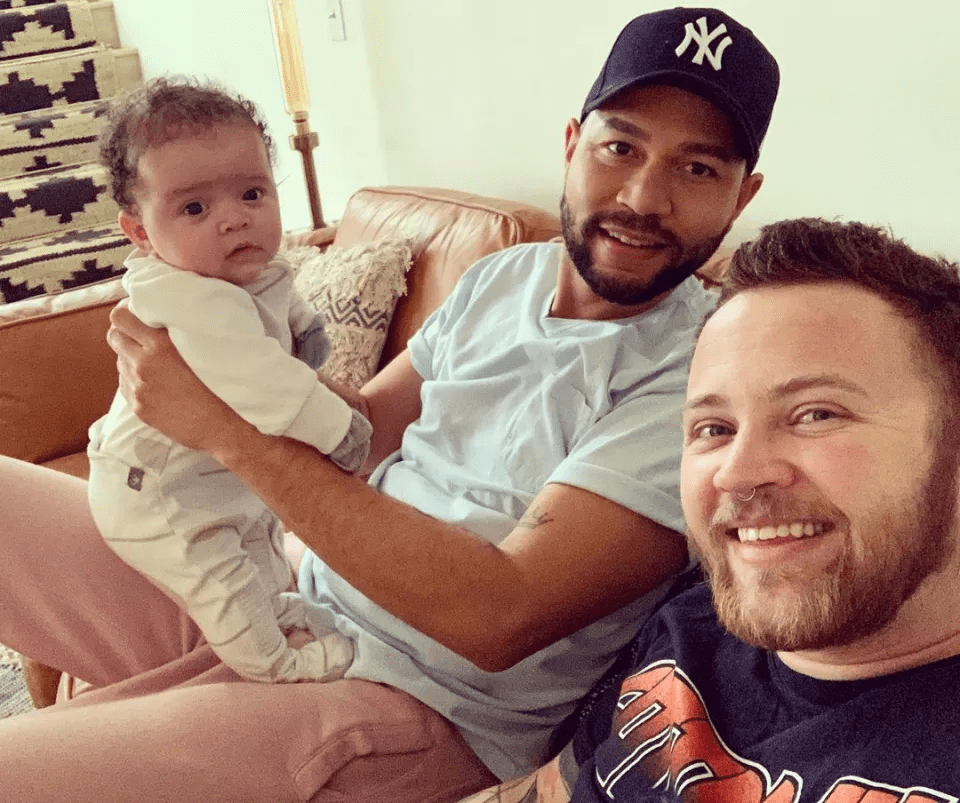
That was the experience of Bennett Kaspar-Williams, a transgender man who gave birth to his son, Hudson, in 2020.
Although Bennett was open about being male and his medical records reflected his identity, he said members of the hospital staff repeatedly referred to him as “mother” during his scheduled Cesarean delivery.
A day that should have centered on welcoming his child became complicated by frustration and a painful sense that his identity was being ignored.
Bennett Understood His Gender Identity in 2011
Bennett first recognized that he was transgender in 2011.
That realization brought greater clarity about himself, but it also marked the beginning of a personal journey involving social expectations, medical choices, and the process of living openly as a man.
He began transitioning in 2014.
As part of that transition, Bennett underwent top surgery, which helped bring his physical appearance into closer alignment with his identity.
He chose not to undergo genital surgery.
That was a personal decision and meant that he retained the physical ability to become pregnant and carry a child.
Pregnancy Became a Practical Path to Parenthood
Years later, Bennett and his partner began discussing the possibility of building a family.
Because Bennett still had the biological capacity to carry a pregnancy, using his own body became a practical route to parenthood.
The decision was made intentionally and with love.
Bennett did not view pregnancy as something that contradicted his identity.
He understood himself as a man using one of his body’s existing capabilities to bring a wanted child into the world.
The pregnancy itself was meaningful, and he has not described carrying Hudson as a source of shame.
The greater challenge came from the way other people interpreted the pregnancy.
Hospital Staff Repeatedly Called Him “Mother”
During prenatal care and the delivery, Bennett was often addressed using terms such as “mom” and “mother.”
Those words were inconsistent with the way he identified and how he wanted to be recognized as a parent.
Even when corrections were made, the gendered language reportedly returned.
Hearing those terms during a scheduled C-section was particularly difficult.
Surgery and childbirth can leave patients feeling physically exposed and dependent on the people caring for them.
In that setting, repeated misgendering can create an additional layer of emotional strain.
Why Misgendering Can Be So Painful
For Bennett, the issue was not simply a disagreement over terminology.
It was about whether the people around him recognized who he was.
Being repeatedly labeled in a way that contradicted his identity contributed to feelings of gender dysphoria.
Gender dysphoria can describe the distress that occurs when someone’s gender identity is not affirmed or when their body or social treatment feels inconsistent with that identity.
Not every transgender person experiences dysphoria in the same way, but being misgendered can be deeply upsetting, especially during a major medical event.
Pregnancy Is a Biological Process, Not a Gender Identity
Bennett has emphasized that pregnancy does not determine a person’s gender.
Carrying a child did not make him view himself as a woman.
He remained a man throughout the pregnancy and understood himself as a father preparing to welcome his son.
This distinction is central to the way he describes his experience.
Society often treats pregnancy and childbirth as experiences belonging exclusively to women.
Bennett’s story challenges that assumption by showing that a person can give birth while identifying and living as male.
Not Every Woman Gives Birth, and Not Everyone Who Gives Birth Is a Woman
Recognizing that transgender men and some nonbinary people can become pregnant does not take anything away from women who experience motherhood through childbirth.
It simply acknowledges that biology, gender, and parental identity do not always fit into one traditional pattern.
Not every woman wants or is able to carry a pregnancy.
Likewise, not every person who becomes pregnant identifies as a woman.
Using accurate and respectful language allows each patient to describe their own experience without invalidating anyone else’s.
The Experience Highlighted Gaps in Healthcare
Bennett’s story attracted attention because it reflected a larger concern within medical institutions.
Healthcare professionals serve patients from many backgrounds, yet routine systems may still rely heavily on traditional assumptions about gender.
Hospital forms, identification bracelets, electronic records, and standard phrases can automatically label pregnant patients as mothers or women.
For many patients, those words may feel appropriate.
For others, they can create a sense of exclusion.
The problem is not always deliberate hostility.
Often, it reflects systems and habits that have not been updated to account for a wider range of patients.
Small Changes Can Make Care More Respectful
Bennett has argued that hospitals do not need extraordinarily complicated procedures to make transgender patients feel respected.
One of the simplest steps is asking patients how they want to be addressed.
Staff can confirm a patient’s name, pronouns, and preferred parental language before treatment begins.
Those details can then be included clearly in medical records and communicated during shift changes.
Using neutral terms such as “patient,” “parent,” or “birthing parent” may also help in settings where gender-specific language is unnecessary.
Respectful Language Can Affect the Entire Medical Experience
The words used by medical professionals can shape whether a patient feels safe enough to communicate openly.
A patient who feels dismissed may become less willing to ask questions, disclose symptoms, or return for follow-up care.
By contrast, a person who feels respected may be more comfortable discussing sensitive medical information.
This makes inclusive communication more than a matter of social courtesy.
It can also support clearer communication and better patient care.
Freddy McConnell Also Gave Birth as a Transgender Man
Bennett’s experience is not unique.
In 2019, British transgender man Freddy McConnell gave birth to his child.
His journey was later documented publicly and became part of an international discussion about pregnancy, gender, and the legal meaning of parenthood.
Like Bennett, Freddy had transitioned and was living openly as a man before deciding to have a child.
His choice to carry a pregnancy was practical and personal.
He wanted to become a parent, and using his own body provided a direct way to do so.
Freddy’s Medical Experience Was More Supportive
Freddy has described receiving respectful care from his medical team.
Healthcare workers acknowledged his identity and used language that aligned with the way he understood himself.
That support changed the emotional quality of his experience.
Pregnancy and delivery remained physically demanding, but he did not have to continually defend his identity while receiving treatment.
Instead of feeling erased, he felt recognized.
The Contrast Shows Why Respect Matters
Bennett and Freddy both experienced pregnancy as transgender men, but the environments surrounding their medical care were different.
Bennett described repeated misgendering that caused additional distress.
Freddy described a team that respected his identity and helped create a more affirming experience.
The contrast demonstrates how strongly healthcare workers can influence a patient’s emotional wellbeing.
The biological aspects of pregnancy may be similar, but the language and behavior of the medical team can shape whether the patient remembers the experience as supportive or alienating.
Bennett Proudly Identifies as Hudson’s Father
Today, Bennett is raising Hudson and identifies clearly as his father.
The title “dad” carries deep meaning for him.
Carrying the pregnancy does not weaken or complicate his fatherhood.
Instead, it has contributed to the unique connection he shares with his son.
Bennett has spoken about the strength he feels in being a father who physically brought his own child into the world.
He hopes that as Hudson grows older, he will understand his birth story as a natural part of their family’s history.
Children Can Learn That Families Take Many Forms
Bennett believes that being open about Hudson’s birth can help normalize different kinds of families.
Children are capable of understanding that parents may arrive through many paths.
Some families include biological parents, adoptive parents, stepparents, surrogates, or donors.
Some children are raised by one parent, two fathers, two mothers, grandparents, or extended relatives.
A transgender father who carried a pregnancy is another variation within that broad reality.
Freddy Also Wants His Child to Understand the Truth
Freddy has expressed a similar desire to raise his child with honesty.
He wants his family story to reflect reality rather than be forced into a traditional definition that does not fit.
For him, family is built through love, care, and responsibility.
The way his child entered the world is part of that story, but it does not determine the full meaning of their relationship.
Parenthood Is Defined by Daily Care
The words “mother” and “father” carry emotional and cultural significance.
However, parenting itself is expressed through actions.
It involves feeding, comforting, protecting, teaching, listening, and remaining present through difficult moments.
Bennett and Freddy demonstrate that those responsibilities are not limited by the physical role someone played during pregnancy.
A father can carry a child, just as a mother may become a parent without experiencing pregnancy.
Inclusive Care Is Also a Public Health Concern
Transgender people may sometimes delay or avoid healthcare because they fear discrimination, embarrassment, or misunderstanding.
A previous negative experience can make someone hesitant to seek help again, even when medical attention is necessary.
This creates risks that extend beyond emotional discomfort.
Patients who avoid preventive appointments or delay treatment may face worse health outcomes.
Creating respectful environments can encourage people to seek care earlier and communicate more honestly with medical professionals.
Trust Improves Communication
Effective healthcare depends on trust between the patient and the medical team.
Patients must feel safe enough to disclose information about symptoms, medications, physical changes, and emotional concerns.
When a person repeatedly hears the wrong name, pronoun, or parental title, that trust can weaken.
Correcting language may appear like a small action, but it signals that the provider is listening.
That signal can make further communication easier.
Healthcare Forms Can Be Updated
Many challenges begin before the patient meets a doctor or nurse.
Registration forms may allow only two gender options or automatically label every pregnant patient as a mother.
Electronic systems may display an outdated name even when a patient has provided updated information.
Hospitals can reduce these problems by including fields for chosen name, pronouns, gender identity, and preferred parental title.
Systems should also make this information visible to staff members who interact directly with the patient.
Training Can Help Staff Avoid Assumptions
Healthcare workers often rely on familiar language during busy shifts.
Without training, they may not realize that routine phrases can feel invalidating to some patients.
Education can help staff ask respectful questions without making the interaction uncomfortable.
For example, a provider can ask, “What name and pronouns would you like us to use?”
A maternity team can ask, “What parental title feels right for you?”
These questions allow the patient to guide the language used in their care.
Mistakes Should Be Corrected Without Making the Patient Responsible
Even well-intentioned staff members may occasionally use the wrong term.
When that happens, a brief correction and sincere apology are usually more helpful than a lengthy explanation.
The focus should remain on the patient rather than forcing them to reassure the person who made the mistake.
Repeated errors after multiple corrections suggest that stronger systems or training may be needed.
Inclusive Language Does Not Erase Women
Discussions about terms such as “pregnant people” or “birthing parents” sometimes create concern that women are being removed from conversations about pregnancy.
Inclusive terms do not prevent anyone from using “woman,” “mother,” or other language that accurately describes them.
They simply provide broader wording when discussing groups that include people with different identities.
In individual care, the most respectful approach is to use the language the patient prefers.
Traditional Motherhood Remains Valid
Acknowledging transgender fathers does not diminish the meaning of motherhood.
Women who identify deeply with pregnancy and motherhood can continue to describe their experiences in those terms.
Inclusion does not require replacing one family structure with another.
It means allowing multiple experiences to exist without demanding that all families conform to the same pattern.
Bennett Did Not Intend to Become a Public Symbol
Bennett’s primary goal was to have a child and build a family with his partner.
He did not enter the hospital intending to become part of a public debate.
By sharing the misgendering he experienced, however, he helped other transgender patients express concerns they may have struggled to describe.
Personal stories can reveal institutional problems more clearly than abstract discussions.
They show how a policy or habit affects a real person during a vulnerable moment.
Freddy’s Story Also Expanded Public Conversation
Freddy’s decision to document his pregnancy brought a rarely discussed experience into public view.
His story encouraged conversations about gender identity, reproductive healthcare, and how legal systems classify parents.
Public attention can be difficult, particularly when a person’s family becomes the subject of political or cultural debate.
Yet visibility can also help others feel less isolated.
Neither Father Is Attacking Traditional Families
Bennett and Freddy have not argued that conventional family structures are wrong.
Their message is that those structures are not the only possibilities.
A family can include a mother who gives birth, a father who gives birth, adoptive parents, or many other arrangements.
What matters is whether the child is cared for, protected, and loved.
Language Shapes How People Understand Reality
The words society uses influence which experiences are treated as normal and which are treated as exceptions.
When every pregnant patient is automatically called a mother, transgender fathers become difficult to recognize within the system.
Changing language does not change the biological process.
It changes whether the person experiencing that process is accurately described.
Respect Begins With Listening
Healthcare providers do not need to understand every aspect of a patient’s personal journey before offering respectful treatment.
They can begin by listening to how the patient identifies and using the requested name and pronouns.
This is the same principle applied to many forms of patient-centered care.
People are more than their diagnosis, procedure, or physical characteristics.
They bring identities, relationships, histories, and individual needs into the examination room.
Pregnancy Does Not Cancel a Person’s Identity
Bennett’s experience highlights the assumption that pregnancy must automatically transform someone into a mother.
For him, it did not.
He remained the same person throughout the pregnancy and after Hudson’s birth.
The process changed his life by making him a parent, but it did not change his gender.
The Title “Dad” Reflects His Relationship With Hudson
Bennett’s identity as a father is not based only on the word he prefers.
It reflects the relationship he is building with his child.
He provides care, guidance, security, and love.
Those daily responsibilities give the title its meaning.
The fact that he carried Hudson adds to their story without redefining him as a mother.
Supportive Healthcare Can Prevent Additional Trauma
Childbirth can be physically intense and emotionally overwhelming for any patient.
Transgender patients may face additional stress related to dysphoria, body changes, public misunderstanding, or fear of mistreatment.
Healthcare teams cannot remove every difficulty associated with pregnancy.
They can avoid adding unnecessary distress through dismissive or incorrect language.
Partners and Families Also Benefit From Inclusive Care
When a patient is respected, their partner and family members may feel more confident in the medical team.
They do not have to spend crucial moments correcting staff or defending the patient’s identity.
This allows them to focus more fully on supporting the person giving birth and welcoming the child.
Birth Plans Can Include Language Preferences
Transgender and nonbinary patients may find it helpful to include chosen terminology in a written birth plan.
The plan can identify preferred name, pronouns, parental title, and words the patient would rather avoid.
Hospitals can support this approach by reviewing the information before labor or a scheduled procedure begins.
A written plan cannot guarantee that every interaction will be perfect, but it can reduce confusion.
Medical Accuracy and Respect Can Coexist
Healthcare professionals sometimes need to discuss anatomy, reproductive organs, hormones, or medical risks in precise terms.
Clinical accuracy does not require ignoring a patient’s identity.
Providers can use anatomically specific language when medically necessary while still addressing the individual by the correct name and pronouns.
Respectful care is compatible with clear medical communication.
Family Definitions Continue to Evolve
Ideas about family have changed throughout history.
Adoption, blended families, assisted reproduction, surrogacy, and same-sex parenting have all expanded public understanding of how children can enter and experience families.
Transgender fathers who give birth represent another part of that evolving picture.
Their experiences do not require society to abandon familiar words.
They invite people to use those words more thoughtfully.
Children Often Understand Diversity More Easily Than Adults Expect
Young children commonly accept straightforward explanations about their families.
A child may understand that their father carried them because his body was able to do so.
The explanation does not need to be framed as shameful or confusing.
When adults speak honestly and calmly, children can learn that families do not all look the same.
Authenticity Can Strengthen Family Relationships
Bennett and Freddy want their children to know the truth about their births.
That openness can help prevent secrecy from becoming a source of shame.
It also allows the children to understand the intention, love, and effort involved in bringing them into the world.
Authenticity can create trust when family stories are shared in age-appropriate ways.
Public Stories Can Help Institutions Improve
Hospitals and clinics may not recognize gaps in care until patients describe them publicly or through formal feedback.
Stories like Bennett’s can encourage administrators to review forms, staff training, record systems, and routine language.
Improvement does not require every institution to have encountered the same situation before.
It requires a willingness to learn when patients explain what made them feel unsafe or unseen.
The Goal Is Dignified Care for Every Patient
Inclusive healthcare is not about giving one group special treatment.
It is about ensuring that every patient receives accurate, respectful, and dignified care.
A transgender father should not have to surrender his identity to receive pregnancy-related treatment.
A woman should not have her identity or motherhood dismissed.
Patient-centered care makes room for both.
Respectful Language Is Only the Beginning
Names and pronouns matter, but true inclusion extends further.
It includes privacy, informed consent, appropriate clinical training, equal access to treatment, and policies that protect patients from discrimination.
Language is the most visible starting point because it appears in nearly every interaction.
When staff use respectful terms consistently, they communicate that the patient belongs in the healthcare environment.
Bennett and Freddy Broaden the Image of Fatherhood
Both men demonstrate that fatherhood cannot be defined solely by who did or did not carry a pregnancy.
They are fathers because that is how they understand themselves and how they care for their children.
Their birth experiences add an unusual dimension to their family stories, but love and responsibility remain at the center.
Parenthood Is Built Through Commitment
Pregnancy lasts for a limited period.
Parenthood continues through sleepless nights, illness, school years, difficult conversations, celebrations, and countless ordinary days.
The enduring work of raising a child matters more than whether a parent fits a traditional expectation.
A More Inclusive Future Is Possible
Bennett’s painful experience and Freddy’s more supportive one show that change is achievable.
Healthcare professionals can create better outcomes through awareness, preparation, and respect.
Institutions can update systems so that patients are not forced to explain their identities repeatedly.
Families can speak openly without being treated as threats to anyone else’s way of life.
Love Remains at the Center of Their Stories
Bennett and Freddy chose pregnancy because they wanted children.
Their decisions were rooted in the same hopes that lead many people toward parenthood.
They wanted to nurture, protect, and build a family.
The public discussion surrounding their stories may focus on gender, language, and healthcare systems.
At the center are two fathers and the children they deeply wanted.
Respect Makes Vulnerable Moments Safer
Childbirth can be one of the most physically and emotionally significant experiences in a person’s life.
No patient should have to spend that moment repeatedly defending their identity.
Asking a few respectful questions in advance can prevent avoidable distress and allow the medical team to focus on safe, compassionate care.
The Meaning of Family Is Larger Than Tradition
Traditional ideas about mothers, fathers, and childbirth remain meaningful to many people.
They do not have to disappear for other family experiences to be recognized.
Family is not weakened when society acknowledges greater diversity.
It becomes more accurately understood.
A Simple Truth About Parenthood
The journeys of Bennett Kaspar-Williams and Freddy McConnell point toward a straightforward conclusion.
Respect begins with listening to how people describe themselves.
It continues through policies, medical practices, and daily interactions that honor that information.
Whether a parent is called mom, dad, or another title, the deepest meaning comes from the care they provide.
Parenthood is expressed through commitment, responsibility, patience, protection, and love.
Bennett and Freddy are raising their children as proud fathers, while also encouraging healthcare systems and society to recognize that families can take many forms.
Their stories do not erase traditional parenthood.
They expand the space in which more families can be seen, understood, and treated with dignity.