
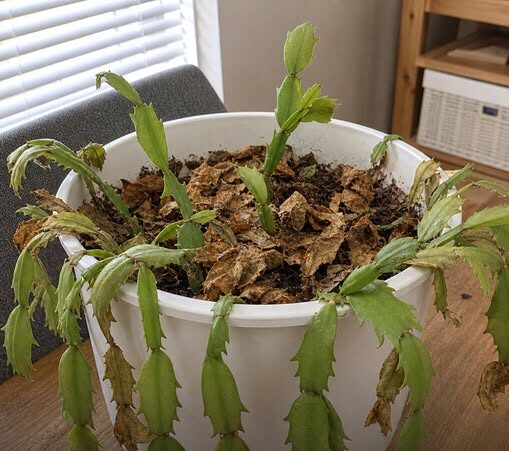
Why Your Christmas Cactus Suddenly Looks Limp — And What the Plant May Be Trying to Tell You
The First Warning Can Be Easy to Miss
A Christmas cactus can look healthy one week and strangely exhausted the next.
The change often begins with something small.
One segment that was once firm and glossy begins to droop.
Then another follows.
Within days, the entire plant may appear limp, deflated, and dramatically different from the vibrant cactus that once filled the pot.
It is easy to assume the plant is dying, but limp growth is often a signal that something about its growing conditions needs attention.
Limp Segments Are a Warning Sign
Drooping growth on a Christmas cactus should not be treated only as a cosmetic problem.
The plant is responding to stress.
The challenge is identifying exactly what kind of stress is responsible.
Two completely opposite problems can create a surprisingly similar appearance.
The cactus may be receiving too much water.
Or it may not be receiving enough.
Understanding the condition of the soil is therefore one of the most useful first steps.
Check the Soil Before Adding More Water
When people see a drooping plant, their first instinct is often to water it.
That response can help if the soil is genuinely dry.
But if excessive moisture is already causing the problem, adding more water may make the condition worse.
Before watering, feel the potting mix.
Its moisture level can provide an important clue about what is happening below the surface.
Overwatering Can Make a Christmas Cactus Look Wilted
A Christmas cactus may be associated with tropical conditions, but that does not mean its roots should remain continuously soaked.
When potting soil stays saturated for too long, the spaces around the roots fill with water.
The roots then have less access to oxygen.
Instead of helping the plant, constant moisture can interfere with normal root function.
The result above the soil may be limp, weak-looking growth.
Soggy Soil Can Become the Hidden Problem
The top of a Christmas cactus may receive all the attention because that is where visible symptoms appear.
But the actual problem may be occurring deep inside the pot.
If the soil feels unusually wet and heavy long after watering, drainage may be inadequate.
Water can remain trapped around the roots, creating conditions that the plant cannot tolerate indefinitely.
That is why examining the soil is more useful than simply judging the plant by its drooping segments.
An Unpleasant Smell Can Be Another Warning
Moist soil alone does not automatically mean the plant is in serious trouble.
However, a foul or unusual smell coming from the pot can indicate that the root environment has deteriorated.
Wet, heavy soil combined with a bad odor deserves immediate attention.
It may suggest that root damage or rot has begun.
At that point, simply waiting while the plant remains soaked may not be enough.
Allow Excessively Wet Soil to Dry
If the potting mix is saturated, stop adding water.
Place the Christmas cactus where it receives bright, indirect light and allow the soil to dry.
The goal is to give the root area an opportunity to recover from excessive moisture.
Strong direct sunlight is not necessary.
A bright location without harsh exposure provides a more controlled environment while the soil loses excess water.
Sometimes Repotting Becomes Necessary
If the soil remains heavy, drains poorly, or smells unpleasant, replacing the potting mix may be the better solution.
Carefully remove the cactus from its container and examine the root area.
Fresh, well-draining potting material can give the plant a healthier environment than compacted or persistently wet soil.
The container itself also matters.
A pot that does not allow excess water to escape can repeatedly recreate the same problem.
Drainage Holes Are Essential
A Christmas cactus should not sit indefinitely in trapped water.
Using a container with drainage holes allows excess moisture to leave the pot after watering.
Without drainage, water may accumulate at the bottom even when the surface appears relatively normal.
That hidden moisture can keep the root zone saturated much longer than expected.
Good drainage therefore helps reduce the chance of repeating an overwatering problem.
But What If the Soil Is Completely Dry?
Not every limp Christmas cactus is drowning.
Sometimes the exact opposite is happening.
If the potting mix feels pale, dry, light, and crumbly, the plant may simply be dehydrated.
A cactus that cannot obtain enough moisture may lose firmness in its segments.
The result can look very similar to the symptoms caused by excessive watering.
A Dehydrated Christmas Cactus Needs a Thorough Drink
If the soil has become extremely dry, give the plant a deep watering.
Water thoroughly enough that the potting mix becomes evenly moistened rather than wetting only the surface.
Then allow excess water to drain away.
The objective is to rehydrate the root zone without turning the container into permanently soggy soil.
Balanced Watering Matters More Than a Rigid Schedule
Christmas cactus care becomes easier when watering is based on the condition of the soil rather than a fixed calendar.
Environmental conditions can change how quickly a pot dries.
Temperature, light, container size, potting mix, and active growth can all influence moisture use.
A schedule that works perfectly during one period may provide too much or too little water at another.
Use the Top Inch of Soil as a Guide
After correcting severe dehydration, monitor the potting mix regularly.
Water when approximately the top inch has dried.
This can help create a better balance between allowing the roots access to moisture and preventing the pot from remaining saturated.
The plant may need more consistent attention during active growth.
The important goal is avoiding both extremes.
Too Much and Too Little Water Can Look Surprisingly Similar
This is one reason Christmas cactus problems can be confusing.
A plant with waterlogged roots may droop.
A severely dry plant may also droop.
Looking only at the leaves or segments does not always reveal which problem is responsible.
Checking the soil provides the missing information.
Sudden Limpness Can Have Another Cause
If watering appears reasonable but the plant continues struggling, consider how long it has been growing in the same container.
A mature Christmas cactus can eventually become crowded.
Roots may fill much of the available space inside the pot.
When that happens, the plant may have difficulty using available moisture and nutrients efficiently.
A rootbound cactus can therefore begin looking stressed even when the owner believes watering is appropriate.
Look for Signs of a Crowded Root System
A plant that has remained in the same small container for a long time may have roots packed tightly together.
The potting mix can also become increasingly difficult to manage as the root system occupies more space.
Water may pass through strangely or fail to distribute evenly.
The plant may become increasingly limp despite regular care.
In that situation, giving the roots slightly more room may help.
Do Not Move It Into an Oversized Pot
If repotting a rootbound Christmas cactus, the new container does not need to be dramatically larger.
A pot approximately two inches wider can provide additional room without surrounding the roots with an excessive amount of unused soil.
The change should be moderate.
Repotting is about giving the root system enough space to function more effectively, not placing a relatively small plant into an enormous container.
Gently Loosen the Root Ball
When removing a rootbound cactus, handle the plant carefully.
The root ball can be gently loosened before the plant is transferred into fresh potting mix.
This gives crowded roots an opportunity to begin expanding into their new environment.
Fresh mix also replaces old material that may have become compacted or difficult to manage.
Remove Obviously Damaged Growth
Repotting also provides an opportunity to examine the plant more closely.
If some growth is clearly damaged, it can be pruned away carefully.
The goal is not to remove healthy sections unnecessarily.
Instead, focus on obvious damage while giving the rest of the cactus the conditions it needs to recover.
Recovery May Not Be Immediate
Once the underlying problem has been corrected, do not expect every limp segment to become firm immediately.
A stressed plant needs time to respond.
Roots affected by excessive moisture must recover.
A dehydrated cactus needs time to absorb water.
A rootbound plant needs time to settle into its new container.
Patience becomes part of the recovery process.
Bright, Indirect Light Supports Recovery
Light remains important while the Christmas cactus is recovering.
A bright area with indirect light provides useful conditions without subjecting an already stressed plant to harsh exposure.
The goal is consistency.
A plant recovering from watering or root problems does not need additional stress from abrupt environmental changes.
Stable Temperatures Can Help
Temperature is another part of maintaining consistent conditions.
Sudden extremes may place additional stress on a weakened plant.
A reasonably stable indoor environment allows the Christmas cactus to direct more of its energy toward recovery rather than repeatedly adjusting to dramatic changes.
Do Not Assume the Plant Is Dead
A severely limp Christmas cactus can look surprisingly hopeless.
Segments may hang downward, lose their firmness, and make the entire plant appear as though it is collapsing.
That appearance can tempt owners to discard it.
But if the underlying issue is identified early enough, the plant may still recover.
The Soil Usually Tells the Story
When diagnosing limp growth, begin below the plant rather than focusing only on what is visible above it.
Wet and heavy soil points toward one type of problem.
Bone-dry, crumbly soil points toward another.
A container packed with roots may suggest a third.
Those clues make it easier to respond appropriately instead of guessing.
Avoid the Cycle of Overcorrecting
One common mistake is reacting too strongly after noticing a problem.
A dry plant may suddenly receive excessive amounts of water repeatedly.
A wet plant may then be left dry for far too long.
Moving back and forth between extremes can continue stressing the roots.
A more measured approach is usually better.
Good Drainage Provides a Strong Foundation
Many Christmas cactus problems become easier to prevent when the potting mix drains effectively and the container allows excess water to escape.
These conditions make it easier to provide a thorough watering without leaving the roots permanently soaked.
They also help the soil reach a healthier balance between moisture and air.
Root Health Controls What You See Above the Soil
The visible segments of a Christmas cactus often reveal the consequences of something happening below them.
Healthy roots allow the plant to take up the moisture and resources it needs.
Stressed roots cannot perform that function effectively.
That is why drooping growth should encourage owners to investigate the pot rather than simply treating the visible symptom.
Your Christmas Cactus May Be Asking for Space
If a plant has grown successfully for years and suddenly begins declining without an obvious watering mistake, its container may simply have become too restrictive.
Giving the root system a little more room and refreshing the soil may restore conditions the plant has gradually lost.
This can be especially important for a long-neglected specimen that has remained in the same pot for an extended period.
Consistent Care Can Bring Back Its Appearance
A healthy Christmas cactus can become a striking centerpiece, particularly when the plant is full and vigorous.
Restoring that appearance begins with correcting the basic conditions that caused the stress.
Balanced watering, suitable drainage, enough root space, bright indirect light, and steady temperatures all work together.
The First Drooping Segment Is Worth Noticing
That first limp section may seem insignificant.
But it can be an early opportunity to identify a problem before the entire plant declines.
Rather than waiting until every segment has wilted, examine the soil as soon as something looks different.
The earlier the cause is understood, the easier it may be to correct the growing conditions.
Overwatering, Dehydration, or Crowded Roots?
When a Christmas cactus begins drooping, ask three basic questions.
Is the soil remaining excessively wet?
Has it become extremely dry?
Or has the plant spent so long in its container that the roots have become crowded?
Those possibilities can explain many cases of sudden limpness.
A Struggling Plant Can Still Recover
The Christmas cactus that looks deflated today does not necessarily have to remain that way.
If excessive watering is responsible, allow the plant to dry and provide a healthier, better-draining root environment when necessary.
If dehydration is responsible, restore moisture with a thorough watering and monitor the soil more carefully afterward.
If crowded roots are causing stress, give the plant modestly more space and fresh potting mix.
The Goal Is Balance
Christmas cactus care is not about constantly watering or constantly keeping the plant dry.
It is about maintaining a balance.
The roots need moisture, but they also need conditions that do not remain waterlogged.
The plant needs room to grow, but not an unnecessarily oversized container.
It needs light, but bright indirect conditions may be more suitable than harsh exposure during recovery.
Your “Dead” Christmas Cactus May Have More Life Left Than You Think
A limp Christmas cactus can look dramatic enough to convince its owner that the plant is finished.
But drooping segments are often a message rather than an ending.
They are telling you to look more closely at moisture, drainage, roots, and growing conditions.
Correct the underlying issue, give the plant time, and avoid swinging from one extreme to another.
With balanced watering, fresh well-draining soil when needed, enough room for healthy roots, and stable conditions, a struggling Christmas cactus may gradually regain its strength.
The plant that looked ready to give up could once again become the full, healthy centerpiece you hoped to see during the holiday season.