
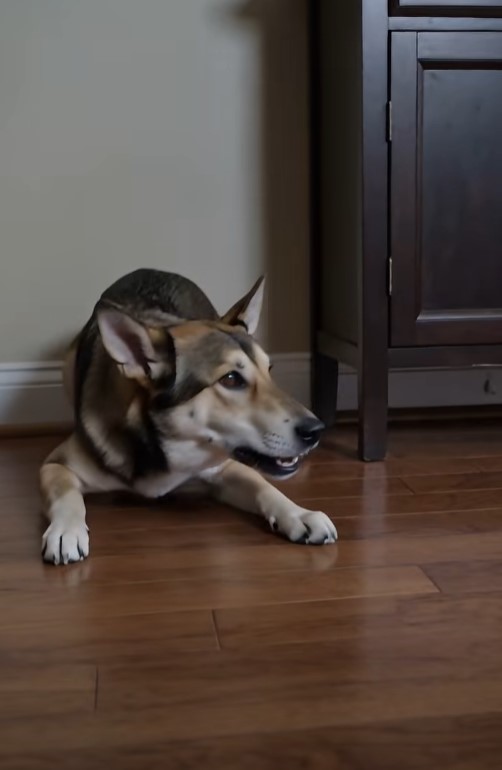
Senior Dog Risks His Life to Protect an Ohio Family From a Rattlesnake
A Quiet Summer Afternoon Changes Without Warning
For twelve years, Buster had been known as a gentle and dependable member of his family. The aging Golden Retriever mix had never shown a pattern of aggression, and his calm temperament had made him especially trusted around children.
Age was beginning to show. Gray fur covered much of his muzzle, arthritis had slowed his movements, and his once-quick steps had become a noticeable limp. Even so, Buster remained closely attached to four-year-old Lily.
Whenever Lily moved around the family home or yard, Buster was usually nearby. He had developed the habit of quietly following her and watching her activities, becoming a constant presence during her early childhood.
That bond became especially important on a warm Tuesday afternoon at the family’s rural Ohio property, where their backyard bordered a large stretch of dense woodland.
Lily’s father, David, was outside preparing burgers on a grill while his daughter played in the grass near the tree line with a small plastic tea set. Buster rested beneath a nearby oak tree, positioned between the two of them.
Nothing initially appeared unusual. The yard was quiet, summer insects could be heard in the background, and Lily continued playing while David focused on the grill.
Then Buster’s behavior abruptly changed.
The fur along the dog’s neck rose as he became intensely alert. He began growling in a way David could not remember hearing during their twelve years together.
David initially assumed that Buster had noticed an animal somewhere around the trees. Instead of watching the branches or the woods, however, the dog appeared focused on an area beside the house and the grass nearby.
Buster suddenly forced his aging body upright and rushed toward David.
Before David understood what was happening, the dog bit him hard on the calf.
An Instinctive Reaction Leads to Immediate Regret
The bite caught David completely by surprise. Reacting instinctively to the sudden pain, he kicked out with his other leg in an attempt to separate himself from the dog.
His heavy work boot struck Buster in the ribs and knocked the elderly animal backward onto the ground.
Almost immediately, David felt guilty. Nothing in Buster’s history suggested that the dog would suddenly attack a member of the family without a reason.
Buster’s reaction made the situation even more confusing. Rather than responding aggressively, running away, or focusing on David, the dog struggled back to his feet.
Despite having just been struck, Buster remained fixated on something else.
He began moving toward Lily.
Because of his age, arthritis, and the impact to his ribs, his movements were strained. Yet he continued across the lawn toward the four-year-old girl and the taller grass beside her.
Only then did David notice movement close to where Lily was sitting.
The significance of Buster’s actions suddenly became clear. The dog had not bitten David as an unexplained act of aggression. David had been moving backward toward an unseen danger, and Buster had apparently been trying to stop him.
A Timber Rattlesnake Was Hidden Beside Lily
The movement came from the taller vegetation only inches from the child.
As David focused on the area, he could make out the patterned body of a large Timber Rattlesnake concealed in the grass.
The snake was thick-bodied and coiled with its head raised. Lily remained seated nearby, still occupied with her toys and initially unaware of how close the animal was.
She reached toward her plastic tea set, bringing her hand close to the weeds.
The rattlesnake shifted into a striking posture.
David then heard its rattle.
He faced an immediate problem. Running toward Lily or suddenly shouting could cause his daughter to move unpredictably at exactly the moment the snake appeared prepared to strike.
The distance between the child and the rattlesnake was extremely small. David did not believe he could reach her before the snake reacted.
Buster was already moving.
The elderly dog crossed the remaining distance between himself and Lily despite his painful ribs and limited mobility.
He placed himself directly between the girl and the rattlesnake as the snake moved forward.
Buster Takes the Strike Intended for the Family
The rattlesnake struck Buster in the neck.
The dog cried out but remained in front of Lily. Instead of retreating, he grabbed the snake with his jaws and began shaking it.
During the struggle, the snake continued fighting back and bit Buster additional times around his face, including an area close to his eye.
The sudden confrontation finally drew Lily’s attention away from her toys. She saw Buster struggling with the snake and called to her father.
David immediately rushed forward and pulled Lily away from the grass.
He moved backward with her until they had created as much distance as possible between themselves and the confrontation near the tree line.
Buster eventually released the snake, throwing it back toward the thick vegetation near the woods.
David did not attempt to determine whether the rattlesnake had been killed or had simply retreated. His attention immediately turned toward Buster.
For a brief moment, the dog remained standing and continued watching the woods, apparently making sure the immediate danger had passed.
Then Buster looked back toward his family.
David now fully understood what had happened moments earlier.
Before the confrontation with the snake, he had been backing into the area where the rattlesnake was positioned. Buster had bitten his calf to prevent him from moving farther backward.
The action David initially interpreted as an attack had instead prevented him from entering the snake’s immediate strike zone.
Buster had first intervened to protect David and then placed himself between the rattlesnake and Lily.
The Dog Begins to Collapse
Any relief David felt was immediately replaced by alarm.
Buster’s front legs gave way, and he collapsed onto the lawn.
David hurried to him and began examining his neck and face. The signs of the rattlesnake encounter were already visible.
There were puncture wounds along the side of Buster’s neck, and the surrounding tissue was rapidly swelling and discoloring. Additional marks were visible on his cheek close to the right eye.
Blood was running through the gray fur around his muzzle.
Buster’s breathing became increasingly shallow as his condition deteriorated.
The story described the Timber Rattlesnake venom as hemotoxic and capable of causing extensive tissue damage, interfering with normal blood clotting and threatening organ function.
For Buster, age added another concern. At twelve years old and already affected by arthritis, he did not have the physical resilience of a younger dog.
David tried to keep him alert while watching the swelling increase.
Despite his weakening condition, Buster managed a small movement of his tail while David comforted him.
Lily soon approached carrying her favorite pink blanket. The frightened child wanted to know why her dog appeared sleepy and whether he was sick.
David explained that Buster had been very brave but now needed a doctor immediately.
A Race Toward Emergency Veterinary Care
Sarah, David’s wife, was approximately twenty miles away in town running errands. David decided there was no time to wait for her to return.
He also believed every minute mattered too much to delay departure by making additional calls.
Buster weighed about seventy pounds, and by that point much of his body had gone limp.
David lifted the dog into his arms and told Lily to run to their truck.
The child hurried toward the driveway while David followed carrying Buster.
His own calf was painful from the bite, but the injury received little attention as he concentrated on getting the dog into the vehicle.
The family used an older Chevrolet Silverado. David placed Buster across the front passenger seat and covered him with a work towel while Lily climbed into her car seat in the back.
The closest emergency animal hospital was approximately twenty-five minutes away.
At 3:14 p.m., David began the drive toward town.
Buster’s condition continued deteriorating during the trip. His heartbeat remained extremely fast while the swelling around his face and neck increased.
One eye eventually became completely swollen shut.
David kept a hand on Buster whenever road conditions allowed, repeatedly checking the dog’s chest and urging him to remain alive.
The urgency of the situation led David to drive far faster than normal on the rural two-lane roads.
He passed seventy miles per hour and then eighty while trying to reduce the twenty-five-minute journey.
The rough road caused Buster additional discomfort. Each significant bump caused movement through his weakened body, occasionally producing a faint whimper.
Those sounds intensified David’s guilt over the kick he had delivered before realizing what Buster was trying to do.
Buster’s Breathing Becomes Critically Difficult
The swelling eventually moved farther down Buster’s neck.
His breathing changed from shallow and strained to what appeared to be an increasingly serious struggle for air.
His tongue began taking on a darker color.
David feared that swelling was beginning to obstruct Buster’s airway.
He turned on the truck’s hazard lights and continued toward the emergency clinic.
A slow-moving tractor appeared ahead on the county road. Rather than remaining behind it, David moved around the vehicle and continued toward town.
Lily remained in the backseat with her pink blanket, frightened by what she had witnessed and by her father’s urgent behavior.
David tried to reassure her even though he had no idea whether Buster would survive.
The speedometer eventually reached approximately eighty-five miles per hour.
As they approached the outskirts of town, traffic became heavier and intersections replaced the open rural roadway.
David could finally see the area where the emergency animal clinic was located.
During the frantic trip, he drove through a red traffic signal after cross traffic had entered the intersection. A silver minivan braked sharply and narrowly avoided the truck.
David continued toward the clinic, focused entirely on Buster’s weakening heartbeat.
Moments later, the Silverado entered the clinic parking lot.
Emergency Staff Immediately Begin Treatment
David stopped the truck and rushed around to the passenger side.
At first, Buster appeared completely motionless.
David placed a hand against the dog’s chest and initially struggled to detect anything. He then felt a faint and irregular heartbeat.
Buster was still alive.
His breathing, however, had become extremely weak and obstructed. The right side of his face was severely swollen, and the swelling extended into the neck.
David told Lily to remain secured in the truck momentarily while he carried Buster inside.
The emergency facility was identified as Oak Creek Emergency Veterinary Care, a small gray building with a blue awning.
David entered carrying the seventy-pound dog while covered with dirt, sweat and blood from Buster’s injuries.
Three other people were in the waiting area when he arrived.
The receptionist immediately recognized the seriousness of the situation and alerted the medical staff.
Two veterinary technicians and a gray-haired veterinarian named Dr. Evans emerged with a stainless-steel gurney.
Buster was transferred to the table and taken into emergency treatment.
Staff members began shaving fur around the wounds, searching for intravenous access and assessing the severe swelling around his airway.
Dr. Evans determined that Buster’s ability to breathe was critically compromised.
The veterinarian also found an extremely weak and declining heart rate and described the dog as being in profound shock.
David begged the clinic team to save him, explaining that Buster had protected Lily.
Dr. Evans made clear that Buster’s condition was extremely serious but said the team would attempt everything available to stabilize him.
David Is Left Waiting With Overwhelming Guilt
The clinic staff pushed Buster through the treatment-room doors while David remained in the waiting area.
Once separated from the dog, the adrenaline that had carried him through the rescue and drive quickly faded.
David looked at the blood covering his hands and returned mentally to the moment in the backyard when he had kicked Buster.
The realization was particularly painful because the dog had already been acting to protect him at the time.
David dropped to the waiting-room floor and began crying.
He was still struggling with that guilt when he suddenly remembered that Lily remained outside in the truck.
He immediately returned to the vehicle.
Lily was still secured in her car seat and gripping her blanket. David removed her from the truck and carried her back inside.
The significance of Buster’s intervention became even more difficult to ignore while David held his daughter.
He believed the rattlesnake had been positioned close enough to strike Lily directly if Buster had not intervened.
Sarah Learns What Happened
Once Lily was safely beside him, David called Sarah.
She had already returned home and had noticed that the truck was gone while the grill had been left outside.
David first reassured her that Lily was unharmed.
He then explained that a Timber Rattlesnake had been hidden in the backyard grass near their daughter and that Buster had moved between Lily and the snake.
He told Sarah that Buster had been bitten several times while protecting the child.
David also admitted what had happened immediately before the encounter.
He explained that Buster had bitten his leg when he was unknowingly backing toward the rattlesnake and that he had responded by kicking the dog in the ribs before seeing the danger.
Sarah did not blame him for the reflexive reaction. She reminded him that he had not understood the circumstances and told him to remain with Lily while she traveled to the clinic.
The family then entered another difficult period of waiting.
By 4:15 p.m., David was still sitting inside the clinic without knowing whether Buster would survive.
Lily eventually fell asleep against him, exhausted by the events of the afternoon.
Memories of Twelve Years With Buster Return
As treatment continued, David began thinking about Buster’s life with the family.
They had originally brought him home from a shelter when he was young, energetic and still growing into his oversized paws.
Over the years, Buster became part of nearly every stage of their family life.
He slept near David and Sarah and later became especially protective after Lily was brought home.
When Lily was an infant, Buster regularly stayed beneath her crib.
As she learned to crawl, he watched her movements and used his body and nose to steer her away from places such as the stairs.
By the time Lily was four, his protective behavior had become so normal that his presence rarely attracted attention.
The events of the afternoon demonstrated how quickly that quiet habit could become something much more significant.
The Bite on David’s Leg Is Finally Treated
While David waited, a veterinary technician noticed the torn fabric and blood around his calf.
She initially wanted to know whether the rattlesnake had also bitten him.
David explained that the wounds had come from Buster.
He described how the dog had bitten him to stop him from moving backward toward the snake.
The technician cleaned the injury because the puncture wounds posed an infection concern.
When the torn jeans were moved aside, four deep puncture marks were visible in David’s calf.
The wounds would later heal into four round scars, leaving him with a permanent physical reminder of what Buster had done.
Sarah Arrives as the Veterinarian Returns
Sarah soon entered the clinic visibly distressed.
She found David and Lily in the waiting room and immediately embraced them.
The family still had no clear information about Buster’s survival.
Shortly afterward, the treatment-room doors opened.
Dr. Evans emerged wearing blue scrubs stained from the emergency procedure.
His slow movements and serious expression initially frightened David and Sarah, who feared they were about to receive the worst possible news.
The veterinarian approached and gave them the first major update.
Buster was alive.
Emergency Intervention Keeps Buster Breathing
Dr. Evans emphasized that survival remained uncertain even though Buster had made it through the initial emergency.
The veterinarian said three separate puncture sites had been identified, including two on Buster’s neck and another on the cheek.
The swelling around his throat had become severe enough to close his normal airway.
When Buster entered the clinic, his heart rate was dropping and he was struggling to get enough oxygen.
The team performed an emergency tracheotomy to bypass the swelling and restore airflow to his lungs.
Dr. Evans told David that the airway intervention had been urgently needed and that even a short additional delay could have changed the outcome.
After establishing an airway, the veterinary team administered two full vials of antivenom.
The intention was to stop additional damage from circulating venom before Buster’s vital organs were affected further.
The treatment stabilized his heart rate and stopped the swelling from continuing to spread.
Those improvements were encouraging, but Dr. Evans warned that venom already present in Buster’s tissues had caused considerable damage.
The Next Forty-Eight Hours Remain Critical
The tissue around Buster’s neck and face had been badly affected.
Dr. Evans expected areas of tissue death around the bite sites and warned the family about possible infection.
Organ failure during the next forty-eight hours remained another major concern because of the amount of venom Buster had received and the severity of the shock.
His age further complicated the situation.
David asked about the right eye, where one of the bites had occurred nearby.
The swelling was initially too extensive for the veterinary team to determine how much damage the eye had sustained.
Dr. Evans explained that the eye would have to be reassessed after the swelling decreased.
At that stage, keeping Buster alive was the priority.
The dog was receiving intravenous fluids, antibiotics and strong pain medication while his kidney function and other vital signs were closely watched.
David Is Allowed a Brief Visit
David asked to see Buster despite being warned that his appearance would be difficult to witness.
The veterinarian agreed to a short, quiet visit.
Sarah remained in the waiting room with Lily while David followed Dr. Evans into the intensive care area.
Buster was lying on heated blankets inside a large enclosure surrounded by monitoring equipment, intravenous tubing and respiratory support.
The right side of his head and neck had been shaved.
The exposed skin showed extensive bruising and swelling, and his head appeared significantly larger than normal.
A breathing tube had been placed through the surgical opening in his throat and connected to oxygen equipment.
Despite the severity of his condition, the monitor continued displaying a heartbeat.
David knelt beside the enclosure and gently touched the fur around Buster’s unaffected ear.
The dog was unconscious under medication and did not visibly respond.
David apologized to him for the kick and remained beside him for several minutes.
He also told Buster that Lily was safe and that the family understood what he had done for them.
Eventually, Dr. Evans told him the dog needed uninterrupted rest.
David left after promising to return the following morning.
Two Days of Uncertainty Follow
The next forty-eight hours were dominated by anxiety for the family.
David struggled to sleep because memories of the rattlesnake encounter and the emergency drive repeatedly returned.
He was particularly afraid that a phone call from the clinic would bring news of organ failure.
That call did not come.
Instead, on the morning of the third day, Dr. Evans contacted the family with a much more hopeful update.
Buster’s swelling had decreased by approximately fifty percent.
His kidney function remained normal, reducing the concern that the venom had caused the organ failure the clinic feared.
He was also breathing independently.
The respiratory tube had been removed that morning.
Buster had regained consciousness and had even accepted some boiled chicken from Dr. Evans.
For David and Sarah, those developments represented the first strong indication that their dog might actually return home.
The Family Reunites With Buster
David, Sarah and Lily returned to the clinic that afternoon.
Buster was waiting in an examination room on a padded bed.
Although his condition had improved dramatically, the effects of the attack were still clearly visible.
The right side of his face remained shaved, swollen and damaged.
A large bandage covered his neck, and a drainage tube had been placed in his cheek to help manage the injured tissue.
When the family entered the room, Buster immediately became alert.
He recognized them and began weakly moving his tail against the floor.
Lily approached carefully and gently embraced him around an unaffected part of his neck.
Buster responded by licking her cheek.
David also knelt beside the dog and stroked his head.
Despite the kick that had occurred before the rescue, Buster showed no hesitation toward him.
The reunion helped ease some of the guilt David had carried since the incident.
Buster Survives but Loses Sight in One Eye
Dr. Evans warned that recovery would still require substantial care.
Buster needed daily treatment of his wounds along with antibiotics and medication to control pain.
The tissue damage around his neck was expected to leave significant permanent scarring.
The family also received the final assessment of his injured eye.
The swelling and venom damage around the area had permanently affected the optic nerve.
Buster had lost vision in his right eye.
For David and Sarah, that consequence was difficult but secondary to the fact that he had survived.
At twelve years old, Buster would return home arthritic, scarred and blind on one side, but still alive and able to remain with the family he had protected.
Dr. Evans chose to keep him at the clinic for one additional night to continue monitoring his hydration and general stability.
If no new complications developed, Buster could leave the following morning.
A Much Calmer Drive Home
The next day, the family returned to collect him.
The journey home was very different from the frantic trip toward the clinic only days earlier.
David drove at the speed limit with the windows open to the warm summer air.
Buster rested in the backseat beside Lily’s car seat with his head on her lap.
Lily gently stroked his fur throughout the ride.
When they reached the house, David prepared to help Buster from the truck.
The dog’s legs were still weak and his limp was more pronounced, but he resisted being carried.
He slowly climbed the front steps using his own strength and began taking in the familiar surroundings of home.
The Family Changes the Backyard After the Attack
The experience also changed how David viewed the property bordering the woods.
He spent the next three weekends removing tall vegetation and thick brush around the portion of the yard closest to the tree line.
The cleared area was extended approximately fifty yards from the house.
He also added heavy wire mesh along the lower section of the existing fence in an effort to reduce the possibility of another snake entering the yard.
The work was motivated by the knowledge that the earlier danger had been almost impossible to notice before Buster reacted.
David wanted Lily to continue using the backyard while reducing the dense cover that had allowed the rattlesnake to remain concealed.
Recovery Takes Weeks
Buster’s return home did not mean the ordeal was finished.
Recovery was slow, and some days were more difficult than others.
Medication occasionally caused nausea.
The wound across his neck and cheek also required close attention as damaged tissue healed.
Whenever the area became unusually red or appeared worse, David took Buster back to Dr. Evans for additional evaluation.
Gradually, the dog’s condition improved.
The fur around the largest damaged areas never completely returned.
A raised scar remained visible across Buster’s neck and cheek, marking the location of the rattlesnake injuries.
He also never regained vision in the right eye.
Adapting to partial blindness created smaller challenges around the house. Buster occasionally bumped into furniture and doorways because he could no longer see objects approaching from his right side.
His age and arthritis remained unchanged, meaning he was slower than before the incident.
His behavior toward the family, however, remained familiar.
Buster Returns to His Place Beside Lily
Months passed after the summer attack.
By late October, cooler autumn weather had arrived in rural Ohio.
One evening, David sat on the back patio while Lily played on the carefully maintained lawn.
The little girl kicked a soccer ball around the same general area where the rattlesnake confrontation had taken place months earlier.
Buster stayed beside her.
He no longer had the energy to chase the ball, and his movement remained stiff.
Instead, he followed Lily at his own pace and continued watching the perimeter between the open yard and the woods.
Even after the injuries, Buster had returned to the role he had occupied throughout Lily’s life.
He remained close to her whenever she was outside.
Four Scars Leave David With His Own Reminder
The wounds Buster caused while trying to stop David also healed.
Four round scars remained on David’s calf.
What initially looked like evidence that his trusted dog had suddenly attacked him came to represent the exact opposite.
Without Buster’s intervention, David believed he would have continued stepping backward toward the concealed rattlesnake.
The bite interrupted his movement before he could enter the immediate danger area.
Buster then continued toward Lily despite being kicked and despite already being an elderly dog with arthritis.
His actions ultimately exposed him to multiple rattlesnake bites, emergency respiratory surgery, antivenom treatment, permanent scarring and blindness in one eye.
David continued to regret his instinctive reaction to the original bite, but Buster’s behavior after returning home showed no sign of resentment.
The dog remained affectionate toward him and continued seeking physical contact and attention.
A Family Dog’s Protective Instinct Becomes Unforgettable
Looking back on the incident, David saw Buster differently than he had before that Tuesday afternoon.
The Golden Retriever mix had always been a beloved family pet, but the encounter in the backyard demonstrated the depth of the dog’s protective behavior under extraordinary circumstances.
He had reacted to a danger before the people around him understood that it existed.
First, he stopped David from backing toward the rattlesnake.
Then, after being injured by David’s reflexive kick, he immediately continued toward Lily instead of protecting himself.
Finally, he placed his body between the child and the snake when the confrontation became unavoidable.
The consequences were severe, but Buster survived because David reached emergency veterinary care while his heart was still beating and because the clinic was able to secure his airway and begin treatment.
The veterinary team remained concerned about organ failure for forty-eight hours, but by the third day Buster’s kidney function was normal, his swelling had been cut roughly in half, and he was breathing without the emergency tube.
The final cost to his health included substantial tissue damage, permanent scars and loss of sight in the right eye.
None of those changes prevented him from returning to the family and resuming his familiar routine.
Life Continues After an Extraordinary Summer
During the autumn evening months later, David eventually left his chair on the patio and walked onto the lawn.
He knelt beside Buster and wrapped his arms around the dog’s scarred neck.
Buster leaned against him and relaxed in the grass while Lily remained nearby.
The scene was peaceful in a way that had seemed impossible during the frantic drive to Oak Creek Emergency Veterinary Care months before.
The same dog who had arrived at the clinic unable to breathe was now home again, still following the child he had protected.
Buster’s damaged eye, aging joints and visible scars became permanent reminders of the encounter, but his relationship with the family remained intact.
For David, the strongest reminders were the four marks on his own leg and the knowledge that the painful bite he had initially misunderstood may have prevented an even more serious tragedy.
The family continued to regard Buster not simply as a pet but as a member of the household whose instinctive response had protected both a father and his four-year-old daughter during a dangerous encounter.
At twelve years old, the aging Golden Retriever mix had already spent most of his life beside the family. After surviving the rattlesnake attack, he returned to the same position he had always preferred: close to Lily, quietly watching over her from only a few steps away.
A Lasting Message About Buster’s Loyalty
The experience left David with a new appreciation for the quiet ways animals can react to threats that people may not immediately recognize.
Buster’s initial growl had been the first warning. His sudden bite was the second. His final decision to move directly between Lily and the rattlesnake demonstrated what he had been trying to communicate from the beginning.
The family also came away with a stronger awareness of the risks around the wooded edge of their property.
Clearing brush, shortening the vegetation and reinforcing the fence became part of making the backyard safer after the incident.
Those changes could not undo what happened, but they reduced the amount of heavy cover immediately surrounding the area where Lily regularly played.
Buster continued living with the physical consequences of the attack, including the permanent scar and blindness in his right eye.
David likewise continued carrying the scars from the bite on his calf.
For him, those marks no longer represented a moment when his dog turned against him.
They represented the moment Buster tried to keep him from taking one more dangerous step.
The misunderstanding lasted only seconds, but it resulted in guilt David expected to remember for the rest of his life.
Buster, however, returned home without changing the way he treated the family.
He continued leaning against David, resting near Sarah and following Lily around the property.
By late October, his daily movements again looked much like they had before the attack, with one important difference: the scars across his face and neck now made the events of that summer impossible to forget.
Each time Lily crossed the yard, Buster continued moving behind her at his slow pace, keeping his remaining good eye on the ground, the fence and the dark woods beyond it.
For the family, his survival turned one frightening Tuesday afternoon into a lasting story about instinct, loyalty and the extraordinary lengths an aging dog was willing to go to protect the people who had been his family for twelve years.