
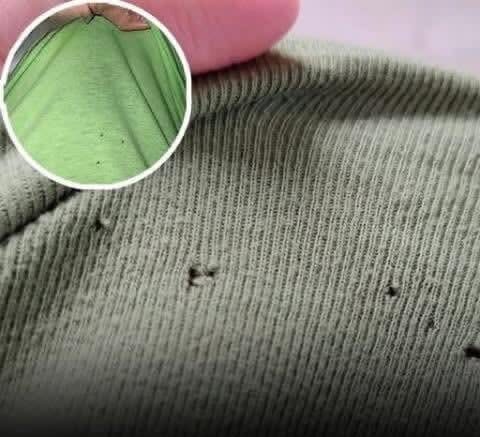
Why Tiny Holes Keep Appearing Near the Waist of Your Favorite T-Shirts
The Damage May Not Be Coming From Your Washing Machine
Finding tiny holes near the bottom of a favorite T-shirt can be frustrating, especially when the rest of the garment still looks perfectly wearable. Because the damage often appears after repeated washing, many people naturally assume that the washing machine or dryer must be responsible.
In many cases, however, laundry equipment may have little to do with the problem.
The more likely explanation is something much simpler: repeated friction.
The area around the waist of a T-shirt regularly comes into contact with jeans, trouser buttons, countertops, desks and other hard surfaces. Over time, that repeated rubbing can gradually weaken the fabric until small holes begin to form.
Why the Holes Often Appear in the Same Place
One of the biggest clues is the location of the damage.
These small holes frequently appear near the lower front section of a shirt, especially around the waist. That is also the exact area where the fabric is most likely to become trapped or rubbed between a hard surface and the clothing underneath it.
When someone leans against a kitchen counter, desk or similar surface, the front of the shirt can become compressed between that surface and the button of a pair of jeans or trousers.
A single contact is unlikely to create noticeable damage.
The problem develops because the same section of fabric can experience that pressure repeatedly over days, weeks or months.
Each time the shirt is pressed against the button or another hard object, a small amount of stress is placed on the fibers.
Eventually, those fibers begin to wear down.
A Common Abrasion Point on Clothing
This part of a shirt can be considered a “primary abrasion point.”
That description helps explain why the damage tends to be concentrated rather than spread randomly across the garment.
The shirt repeatedly experiences friction in almost exactly the same area.
The button beneath the fabric creates one hard contact point, while the edge of a countertop or desk creates another.
The T-shirt material is caught between them.
As the wearer moves, leans forward, works at a desk or stands against a counter, the fabric can rub back and forth against those surfaces.
The result is gradual abrasion.
At first, the damage may be impossible to notice. The fibers simply become thinner and weaker.
Later, a tiny opening appears.
Once the first fibers break, normal stretching and continued wear can make the hole more visible.
Why Jeans Buttons Can Play Such a Major Role
The metal button found on many pairs of jeans is positioned directly beneath the area where these holes commonly develop.
That placement makes it an important part of the problem.
When the shirt hangs normally, there may be little pressure between the fabric and the button.
But the situation changes when the wearer leans against something solid.
The shirt can become squeezed between the button and the hard surface.
Because the button does not move or compress like soft fabric, it can concentrate pressure on a very small section of the T-shirt.
Repeated contact in that same location gradually places more stress on the material.
Trouser buttons can create the same effect.
The issue is therefore not necessarily connected to one particular style of pants. Any hard button or similar clothing feature located beneath the shirt can contribute to repeated abrasion.
Countertops Can Create Repeated Friction
Kitchen countertops are another common surface involved in this type of fabric wear.
People regularly lean against counters while preparing food, washing dishes or carrying out everyday tasks.
When the lower front of a T-shirt is pressed against the counter, the fabric may be trapped against the button underneath.
The movement may seem harmless.
However, repeated contact in the same place can gradually weaken the fabric.
The effect can be especially noticeable when someone frequently performs the same activities while wearing similar clothing.
Because the contact happens naturally during normal movement, the wearer may never notice that the shirt is being rubbed against the counter.
By the time a hole appears, the actual damage may have been developing for a considerable period.
Desks Can Cause the Same Problem
Kitchen counters are not the only hard surfaces that can contribute to the problem.
Desks can create nearly identical conditions.
When someone sits or stands close to a desk, the lower front portion of a T-shirt can repeatedly brush against the desk edge.
If a jeans or trouser button sits directly behind the fabric, the shirt once again becomes the soft layer caught between two harder surfaces.
Small movements can create repeated rubbing.
Over enough time, the fibers in that concentrated area may begin to deteriorate.
This explains why people who spend significant amounts of time working at desks may notice similar holes even when they are careful with their laundry.
Why the Washing Machine Often Gets Blamed
The washing machine is an easy suspect because holes are frequently noticed while folding clean clothes.
A shirt may appear fine when it goes into the laundry, only for a small hole to become obvious afterward.
That timing can make it seem as though the machine created the damage.
However, washing may simply make existing wear easier to see.
If the fibers have already been weakened by repeated friction, normal handling can expose the damaged area more clearly.
The important clue remains the repeated location of the holes.
If they continue appearing around the same part of the waist rather than randomly across different sections of the shirt, localized abrasion offers a much more logical explanation.
The Dryer May Not Be Responsible Either
Dryers can also receive the blame when small holes suddenly become visible.
Again, the location of the damage is important.
If drying equipment were randomly damaging shirts, the holes would not necessarily be expected to appear so consistently around the same lower-front area.
Friction involving buttons and hard surfaces provides an explanation for why the problem keeps returning to one specific spot.
The repeated pressure weakens that portion of fabric during normal wear.
The damage becomes noticeable later, often when the shirt is being washed, dried or folded.
Thinner Fabrics Can Be More Vulnerable
Not every T-shirt develops these holes at the same rate.
Fabric thickness and quality can make an important difference.
Thinner materials generally provide less resistance to repeated abrasion.
When a lightweight shirt is repeatedly compressed between a metal button and a hard counter or desk, its fibers may wear through more quickly than those of a stronger garment.
Lower-quality fabrics can also be more vulnerable.
If the material begins with less strength, repeated contact at the waist can cause visible damage sooner.
This may explain why one shirt develops holes while another shirt worn in similar circumstances remains intact much longer.
Why the Damage Can Seem Mysterious
The frustrating part of this problem is that the event causing the damage is rarely dramatic.
There is usually no obvious tear.
The shirt does not suddenly become caught on something and rip open.
Instead, hundreds of small contacts gradually weaken the same group of fibers.
A person may lean against a countertop several times without noticing anything unusual.
They may sit against the edge of a desk day after day.
Each individual contact seems insignificant.
Together, however, those small moments can create enough abrasion to damage the fabric.
That gradual process is why the first visible hole can appear to have come from nowhere.
Why Several Tiny Holes May Appear Together
Sometimes the problem is not limited to one opening.
Several small holes can appear close together around the same section of the shirt.
This pattern also fits with repeated friction.
The exact point of contact between the fabric, pants button and hard surface can shift slightly as the wearer moves.
Instead of wearing down one single fiber location, the rubbing may weaken a small surrounding area.
Eventually, multiple points can break through.
The result is a cluster of tiny holes rather than one larger tear.
Better-Made Shirts May Last Longer
One of the simplest ways to reduce the problem is to choose shirts made from stronger material.
Better-made garments can generally tolerate repeated everyday friction more effectively than very thin fabric.
This does not mean a stronger shirt can never develop holes.
Continued abrasion can damage almost any material eventually.
However, thicker or more durable fabric may take considerably longer to wear through under the same conditions.
For someone who repeatedly experiences holes in the same place, paying attention to the construction and thickness of future T-shirts may help.
Reducing Contact With Hard Surfaces
Another solution is simply becoming more aware of how often the lower part of a shirt rubs against hard surfaces.
Avoiding repeated leaning against kitchen countertops can reduce one major source of abrasion.
The same principle applies to desks.
Changing posture slightly or keeping a small amount of space between the waist and the desk edge can prevent the shirt from being repeatedly trapped against the button underneath.
These are minor adjustments, but they directly target the source of the wear.
Because the damage develops gradually, reducing even some of the repeated contact can help extend the life of a garment.
Silicone Button Covers Offer Another Option
People who continue having the same problem can also place silicone covers over the buttons on their pants.
The idea is straightforward.
A hard button creates a concentrated pressure point against the T-shirt.
Covering that button with a softer material can reduce the harsh contact between the shirt and the button.
The silicone layer acts as a buffer.
When the wearer leans against a counter or desk, the shirt is no longer being pressed directly against the hard button surface in the same way.
This can reduce abrasion at the location where tiny holes commonly develop.
Protecting a Favorite Shirt Before Damage Appears
The easiest time to deal with this problem is before visible holes develop.
Once fibers have broken and an opening has appeared, the garment has already experienced significant wear in that spot.
Recognizing the likely source of the damage makes prevention easier.
If holes repeatedly appear near the waistband, paying attention to buttons, counters and desks may reveal how frequently that area of the shirt experiences friction.
Someone who regularly leans against a counter may discover that the damaged area lines up almost perfectly with a jeans button.
Someone who spends hours at a desk may find the same connection with the desk edge.
The Pattern Matters More Than the Timing
It is understandable to blame laundry equipment because the damage often becomes noticeable after washing.
But the more useful question is where the holes appear.
Repeated openings near the same waist area strongly point toward a localized source of wear.
The combination of shirt fabric, pants buttons and hard surfaces explains why one small portion of the garment receives far more abrasion than surrounding areas.
The gradual nature of the damage also explains why there may be no obvious moment when the shirt is torn.
A Small Everyday Habit Can Have a Big Effect on Fabric
Tiny T-shirt holes are a good example of how ordinary daily habits can affect clothing over time.
Leaning against a kitchen counter or sitting close to a desk is so routine that few people would think of it as something capable of damaging a garment.
Yet repeated pressure concentrated on the same small patch of fabric can eventually create visible wear.
The button beneath the shirt adds another hard point, increasing the pressure placed on the material.
Thinner or lower-quality shirts may show the results sooner because their fibers have less material available to withstand the repeated rubbing.
Simple Changes Can Help Shirts Last Longer
Preventing these tiny holes does not necessarily require changing how clothes are washed.
The more effective solution may involve reducing the friction that occurs while the shirt is being worn.
Choosing stronger, better-made T-shirts can provide greater resistance to abrasion.
Avoiding repeated leaning against countertops and desk edges can reduce the pressure placed on the lower front of the garment.
Adding a silicone cover to a jeans or trouser button can create a softer surface beneath the shirt.
Each method addresses the same basic problem: repeated friction concentrated at the waist.
The Real Culprit May Be Hiding in Plain Sight
When another tiny hole appears in a favorite T-shirt, the washing machine or dryer may seem like the obvious explanation.
But if those holes consistently develop near the lower front of the shirt, the real cause may be something encountered every day.
A jeans button, a trouser button, the edge of a desk or a kitchen countertop can repeatedly rub the exact same area of fabric.
Over time, that section becomes a primary abrasion point.
The fibers weaken, small breaks appear and eventually a visible hole develops.
The problem can be particularly noticeable with thinner or lower-quality fabrics, which may not withstand the repeated pressure as effectively.
Fortunately, the cause also suggests several straightforward solutions.
Stronger shirts, less contact with hard surfaces and soft silicone covers over pants buttons can all help reduce the repeated abrasion.
For anyone who has spent years wondering why their T-shirts keep developing mysterious holes in exactly the same place, the explanation may have far less to do with laundry and much more to do with what happens while the shirt is being worn.