
Part 1 of 2
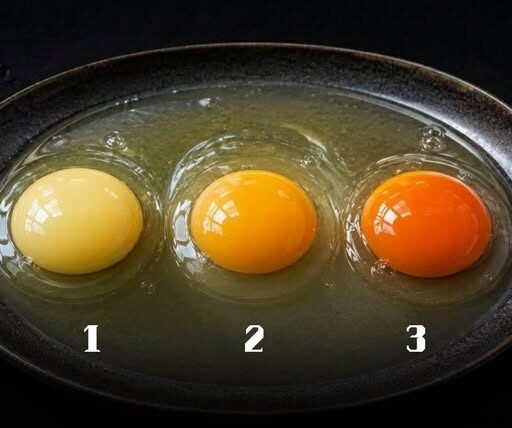
Crack open a carton of eggs and you may notice something immediately.
Some yolks are pale yellow.
Others are golden.
And some are a deep orange.
For years, social-media posts have encouraged people to compare these colors and assume that darker yolks must come from healthier, happier chickens.
But yolk color does not tell the whole story.
In fact, one of the biggest factors behind yolk color is simply what the hen has been eating.
The pigments responsible are called carotenoids.
These naturally occurring compounds are found in many plants and feed ingredients.
When hens consume more carotenoid-rich foods, their yolks can become darker yellow or orange.
Ingredients such as corn, grass, alfalfa and marigold can all influence the shade.
That means two healthy hens can produce noticeably different-colored yolks simply because their diets are different.
A hen eating one type of commercial feed may produce a relatively pale yolk.
Another hen eating feed richer in natural pigments may produce a much darker one.
Neither color automatically proves that one bird is healthier than the other.
This is where one of the most common egg myths begins.
People often see a dark orange yolk and assume it must indicate a free-range hen, superior nutrition or exceptional living conditions.
Sometimes those things may occur together.
But yolk color alone cannot prove them.
Feed can be deliberately formulated to influence color.
Some producers include ingredients naturally high in pigments specifically because consumers prefer richer-looking yolks.
That means a darker yolk may simply reflect the composition of the feed rather than providing a complete picture of how the hen was raised.
The same principle applies to pale yolks.
A light yellow yolk does not automatically mean the bird was unhealthy or poorly cared for.
It may simply have received a diet containing fewer of the pigments responsible for stronger yellow and orange shades.
This is why judging an egg solely by appearance can be misleading.
Yolk color is easy to see.
It feels like a convenient clue.
But it cannot reliably tell you everything about the hen’s health, welfare or the overall quality of the egg.
Those questions depend on a much wider set of factors.
How was the bird housed?
What was the overall quality of its feed?
Were hygiene and animal-care standards maintained?
How fresh is the egg?
Those details matter far more than whether the yolk happens to be pale yellow or deep orange.
And there is another misconception worth clearing up.
A darker yolk does not automatically mean the egg contains dramatically more nutrition.
Eggs of many different yolk shades can provide protein along with important vitamins and minerals.
So the next time two eggs look completely different after being cracked into a pan, the explanation may be much simpler than it appears.
The color can tell you something about what the hen ate — but far less about the bird’s overall health than many people assume.