
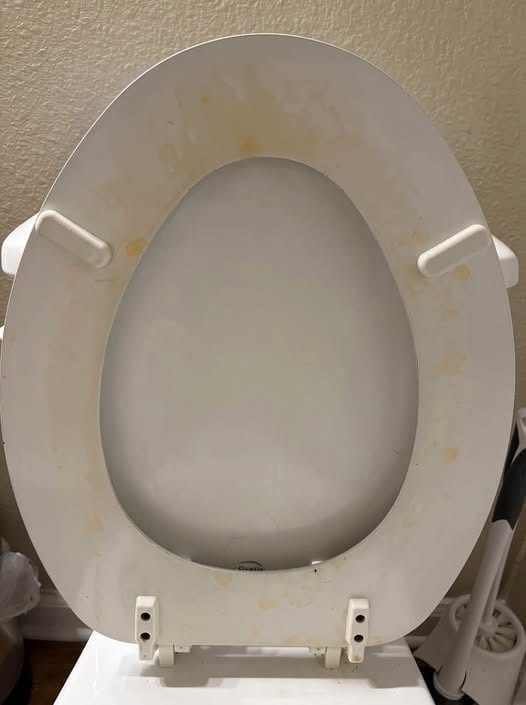
Stubborn Yellow Ring Around Your Toilet? Here’s What May Be Causing It and How to Remove It
That Persistent Yellow or Brownish Ring May Not Be Ordinary Dirt at All, and the Right Cleaning Method Depends on What Is Actually Building Up on the Porcelain
A stubborn yellow ring around the toilet bowl can be frustrating, especially when ordinary scrubbing seems to make little difference.
The problem is that the discoloration may not simply be dirt.
Hard-water minerals, iron deposits and dried residue can gradually collect on the surface of the toilet bowl and create a noticeable ring.
Once that buildup becomes thick enough, normal cleaning may no longer remove it easily.
Understanding what may be causing the ring can make it easier to choose an appropriate cleaning method.
Hard Water Can Leave Deposits Behind
One common reason for persistent toilet rings is hard water.
Hard water contains dissolved minerals that can remain behind as water repeatedly sits in the bowl.
Over time, those deposits can accumulate around the waterline.
Instead of wiping away like ordinary surface dirt, the buildup can become increasingly stubborn.
This is why someone may clean the toilet regularly and still notice the same ring returning.
The bowl may be clean while mineral deposits remain attached to the glazed surface.
Iron Deposits Can Also Cause Discoloration
Iron is another possible contributor to yellow, orange or brownish staining.
When deposits repeatedly collect in the same area, the discoloration can become increasingly noticeable.
Scrubbing alone may not always be enough to remove a thick layer.
The longer the deposits remain, the more persistent the ring may appear.
Dried residue can create a similar problem, particularly around the waterline where buildup repeatedly forms.
A Wet Pumice Stone May Help With Thick Buildup
For suitable glazed porcelain, a toilet-cleaning pumice stone can help remove stubborn mineral buildup.
The key is to use it gently.
Both the pumice stone and the porcelain surface should remain wet while cleaning.
The water helps reduce harsh friction while the stone works against the deposit.
A dry pumice stone should not simply be rubbed aggressively against the surface.
Careful, gentle cleaning is important to avoid unnecessary damage.
Lighter Stains May Need a Different Approach
Not every toilet ring requires physical scrubbing with pumice.
If the buildup is relatively light, white vinegar may help loosen mineral deposits.
Citric acid is another option for some mineral staining.
A suitable limescale remover may also be useful when the discoloration is caused by mineral buildup.
The appropriate approach depends on the condition of the toilet and the type of residue present.
Starting with the gentler option can make sense before moving to more abrasive cleaning methods.
One Safety Rule Is Especially Important
Cleaning products should never be casually combined in an attempt to create a stronger cleaner.
This is particularly important when bleach and acidic cleaners are involved.
White vinegar and other acidic products should not be mixed with bleach.
Using one cleaning method at a time helps avoid dangerous chemical combinations.
If another product is going to be used afterward, the previous cleaner should be thoroughly removed rather than intentionally combining different chemicals.
Why Does the Yellow Ring Keep Coming Back?
Removing the visible stain may solve only part of the problem.
If the same ring repeatedly returns, the underlying cause may still be present.
Hard water can continue depositing minerals every time water sits in the bowl.
A slow leak or another plumbing issue may also contribute to recurring buildup.
That means repeated staining is not necessarily evidence that the toilet is not being cleaned often enough.
It may indicate that the water itself or the toilet’s plumbing needs attention.
The Right Method Depends on the Buildup
A yellow toilet ring can have several possible causes, and treating every stain exactly the same way may produce disappointing results.
Thick mineral buildup on suitable glazed porcelain may respond to careful cleaning with a wet toilet pumice stone.
Lighter mineral deposits may respond to white vinegar, citric acid or an appropriate limescale remover.
Whatever method is chosen, cleaning products should never be mixed.
And if the discoloration quickly returns after cleaning, it may be worth looking beyond the stain itself.
Hard water, iron deposits or a slow leak could be creating the conditions that allow the stubborn ring to keep coming back.