
John Cusack’s Recent Appearance Sparked Debate About Aging, Hollywood, and His Changing Career
The Actor’s Podcast Appearance Shifted Attention From His Movies to His Appearance and Life After Peak Hollywood Fame
John Cusack has spent decades being recognized for some of the most memorable films of his generation, but one recent public appearance unexpectedly turned the conversation away from his work and toward something far more personal.
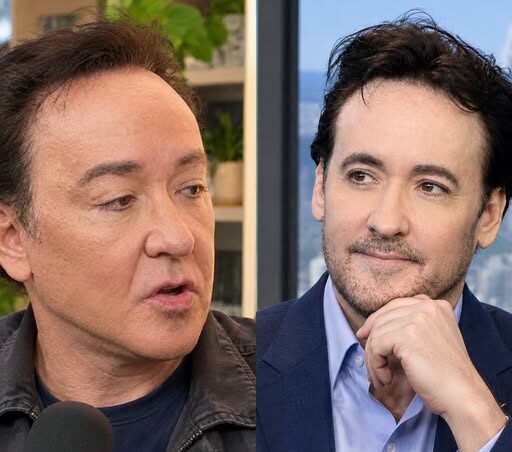
After appearing on the Happy Sad Confused podcast, the actor quickly became the subject of widespread online discussion. Instead of focusing primarily on his performances, career memories, or the films that made him famous, many social media users began analyzing his face, skin, jawline, and age.
The reaction demonstrated how quickly a nostalgic conversation about a familiar actor can transform into public scrutiny over appearance.
Cusack, now 60, found himself trending not because of a new movie or a major announcement, but because strangers were debating how he looked.
A Podcast Appearance Became an Unexpected Online Flashpoint
The Happy Sad Confused appearance had a very different purpose.
The conversation was intended to revisit Cusack’s long career, including films such as Say Anything and Con Air, along with other roles that helped define his reputation during the height of his Hollywood success.
For longtime viewers, the appearance offered an opportunity to hear the actor reflect on decades of work and the projects that connected him with audiences around the world.
However, short clips and still images from the interview quickly began circulating online.
Once the images were separated from the broader conversation, attention shifted almost completely.
People began commenting on Cusack’s appearance and asking whether he had undergone cosmetic procedures.
Some reactions were openly mocking.
Others speculated about changes to his face despite having no direct knowledge of any medical or cosmetic treatment.
The discussion became less about the actor’s career and more about whether his appearance matched what people remembered from films released decades earlier.
Social Media Users Focused on His Face
Cusack became famous at a relatively young age, meaning many viewers still mentally associate him with the face they remember from the 1980s and 1990s.
That familiarity can create an unrealistic expectation when a performer appears publicly many years later.
The actor who once represented youthful romantic characters is now a 60-year-old man, yet much of the online reaction treated normal changes in appearance as something requiring explanation.
Freeze-frames from the podcast became widely discussed.
Some users questioned whether Cusack had changed his appearance intentionally, while others made jokes and comparisons based solely on isolated screenshots.
As the conversation grew more aggressive, another group of commenters began defending him.
They argued that Cusack was simply older than he had been during his most famous roles and should not be expected to look exactly as he did decades earlier.
For those defending him, the controversy revealed something uncomfortable about the way aging celebrities are treated online.
Some Viewers Pushed Back Against the Criticism
As negative comments spread, people began challenging the idea that an actor’s changing appearance should become a public spectacle.
They pointed out that aging naturally changes a person’s face, body, and overall appearance.
That process becomes particularly visible when someone has spent most of his adult life appearing on movie screens.
For a famous performer, the public has access to photographs and films from almost every stage of adulthood.
As a result, comparisons can be made instantly between how that person looked at 25, 40, or 60.
In Cusack’s case, decades of familiar movie images made those comparisons especially easy.
The more thoughtful responses to the podcast appearance emphasized that nothing about reaching 60 should be treated as shocking.
They also questioned why so much attention was being directed toward his appearance when the actor had much more significant things to say about his career.
The More Important Story Was About His Place in Hollywood
Behind the online discussion about Cusack’s face was a much more meaningful subject.
The actor has spoken about the difficulty he has experienced getting projects financed in recent years.
He has acknowledged that the position he once held in Hollywood has changed dramatically.
Cusack has suggested that age and a decline in what the industry considers his commercial “heat” may be among the reasons certain projects have become more difficult to move forward.
That reality represents a major shift for someone who once appeared regularly in prominent studio films.
During earlier stages of his career, Cusack was closely associated with a wide range of successful movies and was considered a highly recognizable leading man.
Now, his relationship with the industry is different.
While social media users debated his appearance, Cusack was also describing the professional challenges that can come with getting older in Hollywood.
His Career Was Built Across Several Generations of Movies
Cusack became one of the most recognizable actors connected with the films of the 1980s and 1990s.
For many viewers, Say Anything remains one of the defining movies associated with his early career.
The film contributed heavily to the youthful image many fans still remember when they think of him.
Later projects expanded that identity and demonstrated his ability to move beyond romantic roles.
Con Air introduced him to another large audience and became another major title permanently linked with his name.
Across his career, Cusack developed a reputation as an actor capable of moving between romance, comedy, drama, and larger mainstream productions.
Those roles ensured that his younger appearance became permanently preserved in popular culture.
Decades later, that history creates an unusual challenge.
Audiences may feel that they know what an actor is supposed to look like because the person they remember remains unchanged on screen.
The real individual, however, continues aging like everyone else.
Hollywood Success Does Not Necessarily Last Forever
Cusack’s comments about struggling to finance projects reveal another side of long-term fame.
Becoming successful does not guarantee that the same opportunities will continue indefinitely.
An actor can spend years appearing in major productions and still eventually face difficulty convincing studios or investors to support new projects.
Cusack has connected some of those struggles with changes in his position within the entertainment industry.
The idea of losing “heat” reflects the way Hollywood frequently evaluates performers based not only on talent but also on current commercial appeal.
Someone who once received regular leading roles may eventually find that the industry has shifted its attention elsewhere.
That transition can be especially noticeable for actors whose careers began when they were very young.
Cusack’s experience therefore represents more than the story of one performer.
It also illustrates how dramatically an actor’s place within Hollywood can change over time.
He Has Continued Working Outside the Traditional Hollywood Spotlight
Although Cusack has acknowledged difficulties within Hollywood, he has not stopped acting.
Instead, he has increasingly worked on international projects and pursued opportunities beyond the traditional studio system that once defined much of his career.
That shift demonstrates that a reduced Hollywood profile does not necessarily mean the end of a performer’s professional life.
The industry may change, financing may become more complicated, and mainstream attention may move toward younger stars, but experienced actors can continue finding ways to work.
Cusack remains active even if his career no longer looks exactly as it did during his most commercially successful years.
The contrast between that reality and the online reaction to his appearance is striking.
While strangers debated his cheeks, wrinkles, and jawline, Cusack was continuing to work and adapt to a different stage of his profession.
The Reaction Raised Broader Questions About Aging in Public
The attention surrounding Cusack also highlighted the unusual pressure faced by people who become famous while young.
Audiences often develop a fixed mental image of a celebrity based on the period when that person was most visible.
When that celebrity reappears years later, the difference between memory and reality can become the story itself.
This dynamic can be particularly harsh in the age of social media.
A single image can be removed from its context, reposted thousands of times, enlarged, compared, and analyzed by people who know nothing about the circumstances behind it.
Comments can quickly move from observation to ridicule.
Speculation can then be repeated until it begins to sound like fact, even when no evidence supports it.
Cusack’s podcast appearance became an example of how easily that process can happen.
The Debate Eventually Became More Human
As the discussion continued, the tone began to change.
Some people stopped participating in the mockery and instead questioned why anyone should expect a 60-year-old man to resemble the younger actor they remembered from decades ago.
That response shifted the conversation from celebrity gossip toward something more universal.
Everyone ages.
Faces change, bodies change, and the way people are perceived changes with them.
Fame does not prevent that process.
If anything, fame makes aging more visible because the public can compare every stage of a celebrity’s life with photographs and films preserved indefinitely.
For Cusack, the difference is especially noticeable because millions of people first encountered him when he was much younger.
His Appearance Was Only One Small Part of the Story
The viral reaction may have focused on Cusack’s face, but his own comments revealed a more complicated moment in his life and career.
He is no longer occupying exactly the same place in Hollywood that he once did.
He has faced difficulties getting projects financed and has questioned whether age and reduced commercial momentum have contributed to those challenges.
At the same time, he continues to work and has pursued opportunities internationally.
That combination tells a more meaningful story than any freeze-frame from a podcast.
It is the story of a performer adapting after decades in an industry known for constantly changing its priorities.
John Cusack Is Still More Than the Image People Remember
For fans who grew up watching Cusack, it may be difficult to separate the actor standing before them today from the young man preserved in some of his most famous films.
But those two versions belong to the same life.
The younger Cusack became a familiar face through movies that defined a generation.
The older Cusack is dealing with a different entertainment landscape, different professional realities, and the ordinary process of aging.
Neither version cancels out the other.
The online reaction to his podcast appearance may have begun with jokes and speculation, but it also created a broader conversation about what audiences expect from stars they have watched for decades.
Behind the screenshots is not simply an actor whose appearance has changed.
There is a 60-year-old performer reflecting on a long career, acknowledging that Hollywood no longer treats him the same way, and continuing to work despite those changes.
That story says far more about John Cusack’s life today than any close-up photograph ever could.