
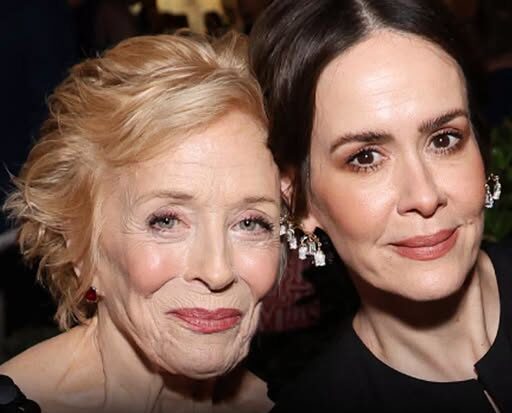
Sarah Paulson Explains Why She Feels Married to Holland Taylor Without a Wedding
The Couple Have Built Their Relationship Around Their Own Priorities
Sarah Paulson and Holland Taylor have spent more than a decade together without marrying. Their comments about commitment and living arrangements offer a picture of a relationship shaped by personal preferences, demanding careers, and the time they can spend in the same place.
For Paulson, 51, the absence of a marriage certificate does not diminish the closeness she shares with Taylor. She has described feeling married to her partner while remaining comfortable with their decision not to formalize the relationship.
Taylor, meanwhile, has explained that their separate residences do not mean they prefer to spend most of their time apart. Work frequently places them in different locations, and they try to be together whenever their schedules allow.
Their accounts address two distinct aspects of their partnership: how they organize daily life and how they understand commitment. Neither has presented a wedding or a single permanent household as necessary to validate the bond they already share.
Work Often Determines Where They Spend Their Time
During an appearance on The Drew Barrymore Show, Taylor discussed the practical challenge of maintaining time together while professional commitments repeatedly take them elsewhere. Her explanation emphasized the demands of their jobs rather than a desire for distance.
“Well we do as much time as we possibly can, because work takes us apart constantly,” she said.
Taylor has an apartment in New York City, where Paulson stays when she is in the city. That arrangement gives them a shared place to spend time without requiring each to maintain a separate routine during those visits.
“But I have an apartment here [in New York City], and [Paulson] stays here in my apartment when she’s here.”
Her description suggests a flexible approach to their homes. The residences provide places where they can come together as their work moves them between locations.
That flexibility matters to the way Taylor describes the relationship. Rather than measuring togetherness through ownership of a single address, she focuses on making use of the opportunities their schedules provide.
Their Los Angeles Living Arrangements Have Shifted
Taylor and Paulson also have separate houses in Los Angeles. However, Taylor explained that the distinction between those properties and their actual living arrangements has become less straightforward.
Paulson has not yet moved into her new house. As a result, she has been staying at Taylor’s Los Angeles home for an extended period.
“In LA, I have a separate house from hers, but her new house, she hasn’t moved into.
“It’s been almost a year since she’s been staying in my house in LA, too. So we’re together as much as geography and our jobs let us be.”
Those details add context to the description of the couple as maintaining separate homes. Although each has her own property, they have also been sharing Taylor’s space in Los Angeles for nearly a year.
The arrangement reflects their circumstances at the time Taylor spoke. It does not establish a permanent decision about where they will live after Paulson moves into her new house.
What Taylor made clear was their intention to spend time together. Geography and professional obligations affect that time, while their homes offer ways to accommodate it.
A Connection That Became Romantic Years After They Met
Taylor and Paulson first crossed paths in 2005. Their relationship became romantic in early 2015, and they publicly acknowledged their romance in March 2016.
That timeline places their partnership more than a decade beyond its romantic beginning. During those years, they have continued their relationship without taking the step of marrying.
The length of the partnership provides context for Paulson’s recent explanation. She was discussing a substantial, established connection rather than uncertainty about whether she wanted a relationship with Taylor.
Her remarks also distinguish the decision not to marry from the question of whether she feels committed. In describing their bond, she used the language of marriage while explaining why she does not need its formal structure.
Taylor’s account of their daily arrangements complements that explanation. One speaks to how they manage time and place; the other addresses what the relationship means to Paulson personally.
Paulson Says Remaining Unmarried Has Helped Preserve Her Sense of Self
During a November 12 appearance on Chelsea Handler’s Dear Chelsea podcast, Paulson spoke directly about her feelings toward marriage. She expressed satisfaction with having remained unmarried.
“I’m happy that I haven’t been married,” Paulson said. “I feel that I’ve maintained some sense of myself in a way.”
Her wording places personal identity at the center of the explanation. For her, remaining unmarried is connected to retaining something important about her individual sense of self.
That statement does not suggest that she sees her relationship with Taylor as lacking depth. In the same discussion, she described a level of connection that already feels marital to her.
“The bond, the connectivity I have with Holland, I feel married to her,” Paulson explained, “but I don’t have or have never had the need to have it be something written in stone somehow.
“The stoneness of it gives me the heebie-jeebies.”
The distinction is personal rather than a prescription for other couples. Paulson was explaining her own comfort with their arrangement, including her unease with making the relationship feel formally fixed.
Commitment and Freedom Coexist in Her Description
Paulson went on to connect being unmarried with a feeling of freedom. Alongside her comments about identity, that description helps explain why she does not regard marriage as a missing milestone.
She can feel deeply connected to Taylor while valuing the way their relationship currently exists. In her account, emotional commitment does not depend on turning that connection into a formal declaration.
Her comments also leave room for individuality within the partnership. Maintaining a sense of herself and feeling bonded to Taylor are presented as compatible parts of her experience.
The same flexibility appears in Taylor’s discussion of their homes. Separate properties coexist with long stretches spent under the same roof, and professional travel coexists with efforts to maximize their time together.
Neither description reduces the relationship to a simple label. They have separate homes, but they also share them; they are unmarried, but Paulson says she feels married.
Those details explain why conventional assumptions can miss the practical reality of their lives. The significance of an address or a marital status depends, in this case, on how the couple themselves experience it.
A Partnership They Do Not Feel Compelled to Formalize
Taylor and Paulson’s remarks describe a relationship that continues to adapt to their circumstances. Work affects where they can be, and housing arrangements have shifted as Paulson waits to move into her new Los Angeles home.
Through those changes, Taylor emphasizes spending as much time together as possible. Paulson emphasizes the strength of their bond and her comfort with remaining unmarried.
Their comments do not announce a wedding plan or a new rule for their future. They explain why the partnership, as it currently stands, makes sense to them.
After more than a decade together, Paulson’s position is that the connection already carries the meaning she needs. Taylor’s account adds the everyday expression of that connection: sharing space and finding time for each other whenever their work and geography permit.