
Major Exposes Abuse During Undercover Training Operation
A Quiet Recruit Changes Everything
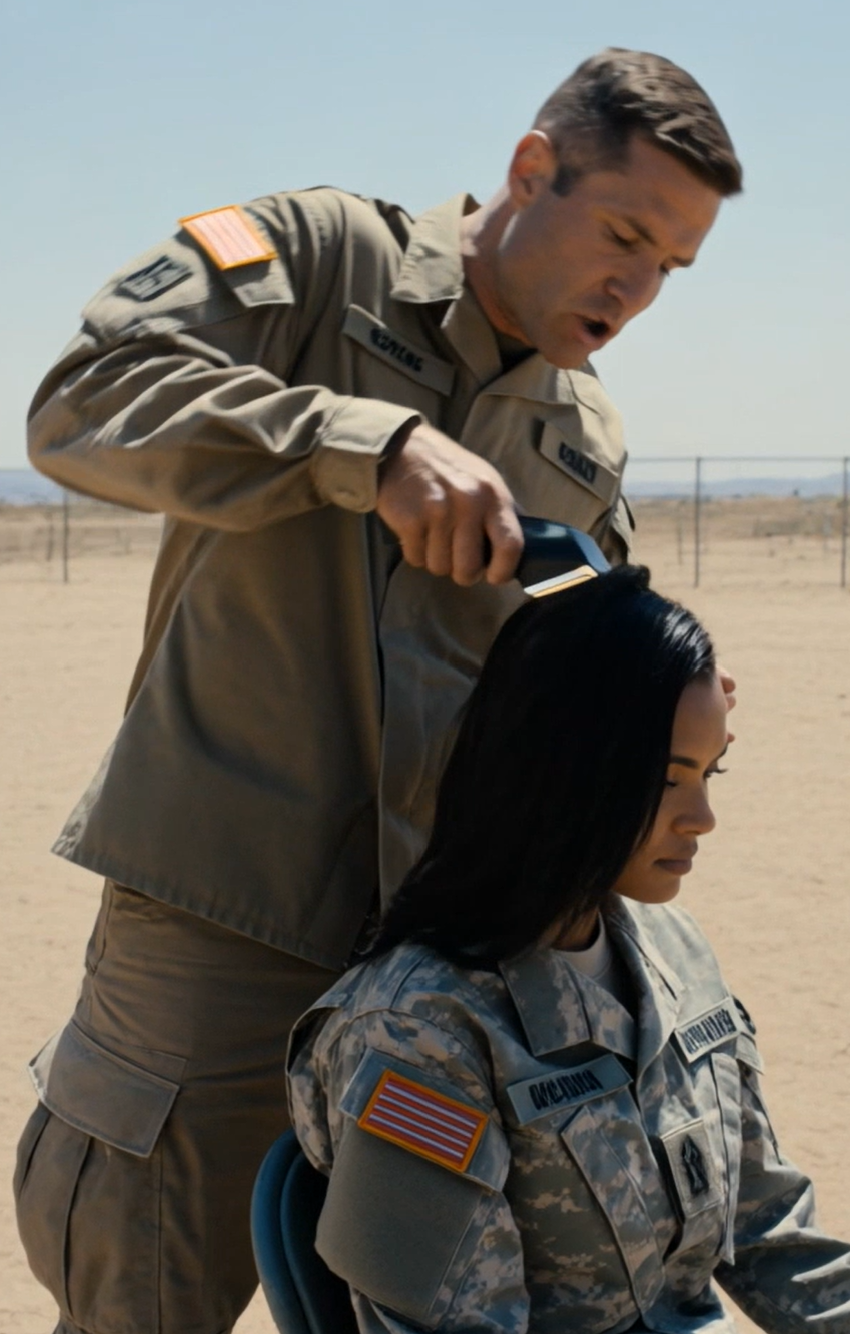
The training yard fell silent as Sergeant Lance stood before a quiet recruit named Shelby, believing he had complete control over the moment.
With clippers in his hand and a phone recording nearby, he treated the scene as another display of power. The other recruits watched uneasily, afraid to speak or move.
Shelby remained calm. She did not argue, cry, or plead. She simply sat still as the situation unfolded in front of everyone.
When the clippers stopped, Lance believed he had made his point. He thought he had embarrassed another recruit into silence.
He was wrong.
The Truth Is Revealed
Shelby stood, looked directly at him, and revealed that she was not a recruit at all.
Her real name was Major Theresa Hollis of the Army Criminal Investigation Division. For three weeks, she had been undercover, gathering evidence about serious misconduct inside the unit.
Two military police officers stepped forward as Lance realized the situation had turned against him.
Major Hollis then took the phone from Corporal Davis, who had been recording the incident. The video had not been sent to a private group as Lance believed.
It had been livestreamed to an official training and oversight channel, where thousands had already witnessed what happened.
A Pattern Comes to Light
Major Hollis addressed the stunned recruits and explained that her presence was part of a wider investigation.
Several complaints had been filed over the past year, but those complaints had been ignored. The issue was not limited to one moment in the yard.
Recruits had described harsh treatment, intimidation, unfair punishment, and pressure that had gone far beyond proper training.
One recruit had reportedly been denied medical attention for a stress fracture after being accused of exaggerating his pain.
Major Hollis told the platoon their training would be paused and that each of them would be debriefed privately.
The Investigation Expands
Inside the administrative building, Colonel Richards confronted Major Hollis about the public nature of the livestream.
She explained that the exposure had been necessary because someone had been protecting Sergeant Lance and helping keep complaints from moving forward.
The investigation soon pointed to Captain Reynolds, who had allegedly benefited from Lance’s misconduct.
Evidence from Corporal Davis’s phone suggested that money had been taken from recruits and that a portion was being passed upward.
When Captain Reynolds entered the office, Major Hollis confronted him with the findings. His confidence quickly disappeared.
Accountability Reaches Higher
Colonel Richards realized the problem was deeper than he had understood. The misconduct had continued because it was protected by people in authority.
Captain Reynolds was removed and turned over for further investigation.
Sergeant Lance and Corporal Davis also faced consequences for their roles in the incident and the wider pattern of behavior.
Major Hollis had not only exposed one abusive leader. She had revealed a system that allowed fear and silence to continue.
A Different Kind of Graduation
Three months later, the same platoon stood proudly at graduation.
They had completed their training under new leadership, with discipline built on respect rather than cruelty.
Major Hollis attended the ceremony in uniform. Her hair had begun to grow back, and the recruits greeted her with loud applause.
Private Miller approached her afterward and thanked her on behalf of the platoon.
He told her that she had shown them true strength was not about power or intimidation, but about courage, integrity, and standing up for what is right.
A Lesson in Real Leadership
The platoon gave Major Hollis a small medal they had purchased themselves.
It was not an official award, but to her, it carried deep meaning.
What had been meant to humiliate her became a symbol of sacrifice and resolve.
Sergeant Lance had tried to make her look weak, but his actions only revealed her strength.
The lesson stayed with everyone who saw it: real leadership does not break people down. It builds them up.