
How to Choose Sweeter Watermelons, Juicier Pineapples, and Better Cantaloupes With Simple Shopping Tricks
Why Picking Fresh Fruit Often Feels Like a Guessing Game
Buying fresh fruit seems like it should be one of the easiest parts of grocery shopping. Yet many shoppers have experienced the frustration of bringing home fruit that looks perfect on the outside but disappoints once it is cut open.
A watermelon may appear ripe and refreshing only to reveal pale, bland flesh. A pineapple can look attractive on the shelf but turn out dry and lacking flavor. A cantaloupe may seem promising yet deliver a texture and taste that fall far short of expectations.
Unlike packaged foods, fruit does not come with labels explaining exactly what is waiting inside. The quality remains hidden beneath thick rinds and tough skins, leaving shoppers to rely on visual clues and physical characteristics.
Fortunately, experienced growers and longtime fruit buyers often use simple techniques that can help improve the chances of selecting fruit at its best.
Understanding Watermelon Clues Before You Buy
Watermelons can be among the most difficult fruits to evaluate. Their large size and completely enclosed interior make it impossible to see what is happening beneath the surface.
Despite that challenge, several visible signs can offer valuable information about ripeness and flavor.
The Importance of the Field Spot
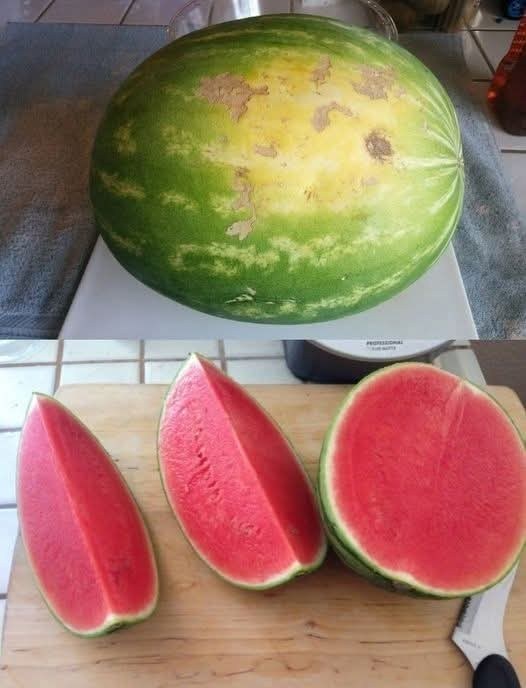
One of the first details many experienced shoppers check is the field spot. This is the discolored patch found on the underside of a watermelon where it rested on the ground while growing.
Because this section received less sunlight, it develops a different color than the rest of the fruit.
A field spot that appears pale white may indicate the watermelon was harvested before reaching peak maturity. In contrast, a creamy yellow or deep golden-yellow field spot often suggests the fruit spent more time ripening naturally on the vine.
Many shoppers view this darker field spot as a positive sign because longer maturation is often associated with improved flavor development.
Why Brown Webbing May Be a Good Sign
Some watermelons display rough brown markings that resemble webs or scars across portions of the rind.
Many people avoid these melons because the markings appear unattractive. However, experienced buyers often look at them differently.
These web-like patterns are commonly associated with pollination activity. Repeated visits from bees contribute to successful fruit development, and many growers believe stronger pollination can result in sweeter fruit.
As a result, watermelons with noticeable webbing are often considered worth a closer look.
The Shape Theory Many Shoppers Follow
Another traditional belief involves the shape of the watermelon itself.
According to a long-standing theory, rounder watermelons are often referred to as female melons, while longer and more oblong varieties are sometimes called male melons.
Those who follow this idea often believe round melons tend to be sweeter, while elongated melons may contain more water.
Although opinions vary regarding the accuracy of this theory, many experienced shoppers continue using shape as one of several factors when choosing a watermelon.
Check the Stem Before Making a Decision
The condition of the stem can also provide useful information.
A watermelon with a green, fresh-looking stem may have been picked before reaching full maturity. A dry, brown stem generally suggests the fruit remained on the vine longer before harvest.
Since watermelons do not significantly continue ripening after being picked, many shoppers prefer fruits that show signs of natural vine maturation.
While no single indicator guarantees quality, the stem can contribute another helpful clue during the selection process.
Pineapples Require a Different Approach
Pineapples often confuse shoppers because appearance alone does not always reveal ripeness.
Many people assume that a fully yellow pineapple is automatically ready to eat and that any green coloring means the fruit is immature.
In reality, the situation is often more complex.
A pineapple can still taste excellent while retaining some green coloration. Likewise, an intensely golden exterior does not always guarantee ideal quality.
For that reason, experienced buyers frequently rely on several additional methods.
Using the Leaf Test
The leafy crown at the top of a pineapple can offer valuable information.
A common technique involves gently pulling one of the center leaves.
If the leaf comes out with slight resistance, many shoppers consider that a positive sign. The fruit may be approaching ideal ripeness.
If the leaf slides out extremely easily, the pineapple could be moving beyond its peak. On the other hand, if the leaf refuses to move at all, the fruit may still need more time.
The goal is to find a balance between those extremes.
Feel the Texture Carefully
Touch can also play an important role when selecting a pineapple.
A gentle squeeze allows shoppers to evaluate firmness without damaging the fruit.
An ideal pineapple should feel firm while still offering a small amount of flexibility. Excessive softness may indicate that the fruit is beginning to deteriorate internally.
Meanwhile, an extremely hard pineapple may not yet be fully mature.
Many experienced shoppers look for a texture that feels balanced and healthy.
Why Aroma Can Be the Best Indicator
One of the most popular pineapple selection methods involves scent.
By turning the pineapple over and smelling the base, shoppers can often gather important clues about ripeness.
A pleasant, sweet tropical aroma typically indicates a ripe fruit.
If little or no scent is present, the pineapple may not yet be ready. If the smell becomes overly intense or resembles fermentation, the fruit could be moving beyond its ideal stage.
Many fruit buyers consider aroma one of the most reliable pineapple indicators available.
How to Select a Better Cantaloupe
Cantaloupes may appear simpler than watermelons or pineapples, but they also require careful evaluation.
Several physical characteristics can help shoppers identify melons with a greater chance of delivering good flavor and texture.
Start by Looking for Damage
The first step is examining the exterior condition of the fruit.
Visible bruises, cracks, mold, or soft spots can indicate declining quality.
A healthy cantaloupe should feel solid and appear free from significant damage.
Exterior problems often suggest that internal quality may also be affected.
Pay Attention to Color
Color offers another useful clue when evaluating cantaloupes.
Large green areas often suggest that the fruit was harvested before fully maturing.
Many shoppers prefer cantaloupes with warm tan or beige coloring and minimal green remaining on the rind.
This appearance often signals that the melon had more time to develop sweetness before harvest.
As with many fruits, balance remains important because excessive softness combined with pale coloring may indicate over-ripeness.
The Weight Test
One surprisingly effective technique involves comparing the weight of several cantaloupes.
A melon that feels heavier than expected for its size often contains more moisture.
Higher moisture content can contribute to a juicier eating experience.
While weight alone does not guarantee quality, many experienced shoppers use it as an important factor when comparing similar fruits.
Lighter melons may sometimes indicate dryness, which can affect both texture and flavor.
Check the Blossom End
The blossom end sits opposite the stem and can reveal valuable information through touch.
A gentle press should produce a slight amount of give.
If the area feels completely firm, the melon may not be fully ripe. If it feels excessively soft, the fruit could be deteriorating.
With practice, many shoppers learn to identify ideal ripeness through this simple test.
Use Your Sense of Smell
Aroma can also help when evaluating cantaloupes.
A ripe cantaloupe usually produces a pleasant, sweet scent that is noticeable without being overwhelming.
A lack of aroma may indicate immaturity, while an excessively strong smell can suggest that the fruit has passed its prime.
Many experienced buyers trust their sense of smell as an important final check before making a purchase.
Small Details Can Make a Big Difference
One of the most valuable lessons in fruit shopping is the importance of observation.
Nature often provides subtle clues about quality, but those clues can be easy to overlook when rushing through a grocery store.
The color of a watermelon’s field spot, the webbing on its rind, the firmness of a pineapple, the scent of a cantaloupe, and the weight of a melon all contribute pieces of information.
None of these indicators can guarantee perfection every time. Weather conditions, growing environments, and harvest timing continue to influence the final result.
However, paying attention to these details can significantly improve the chances of bringing home fruit that delivers better flavor and texture.
Making Better Choices in the Produce Aisle
Experienced fruit shoppers often develop confidence through repeated observation. Over time, they learn to recognize patterns and identify signs that point toward quality.
The goal is not perfection but consistency.
By looking carefully, lifting the fruit, feeling its texture, and paying attention to aroma, shoppers can reduce the likelihood of disappointment.
The next time you browse watermelons, pineapples, or cantaloupes, remember that the fruit itself often provides clues about what is waiting inside.
Knowing how to recognize those clues can make every trip to the produce section a little more successful.