
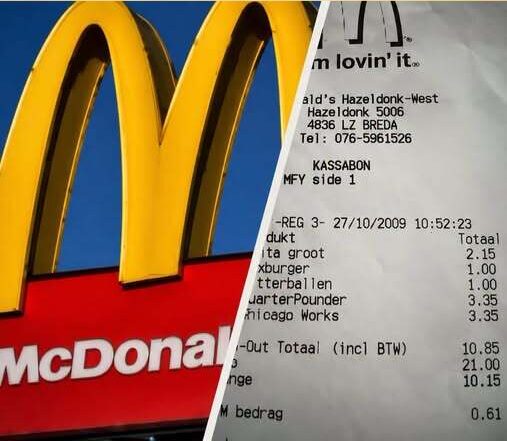
Why Asking for a McDonald’s Receipt Can Lead to a Better Meal
A Small Request That Can Make a Noticeable Difference
When customers walk up to the counter at McDonald’s, asking for a receipt may seem like an ordinary and forgettable part of the transaction.
Many people do not think twice about it. Some take the receipt automatically, while others leave it behind or tell the employee they do not need one.
However, that small piece of paper can play a bigger role than many customers realize. For people who value accuracy, fresh food, and careful service, asking for a receipt may help create a more attentive dining experience.
The habit is simple. It does not require a complaint, a special request, or any extra effort beyond one polite sentence at the end of an order.
Still, for customers who have noticed how the system works, asking, “Can I have my receipt, please?” can sometimes change the way an order is handled.
The Connection Between Receipts and Mystery Shoppers
One reason this tip has gained attention is the role of mystery shoppers in restaurant evaluations.
Former McDonald’s employees have shared that the company uses undercover evaluators in some locations and regions. These customers visit restaurants like ordinary guests while quietly judging the overall experience.
In some areas, these evaluators have been known as “Gapbusters.” Their job is to observe the restaurant from the customer’s point of view.
They may look at how quickly they are greeted, whether staff members are polite, how clean the restaurant appears, and whether the food is served fresh and correctly.
One important detail is that mystery shoppers are required to keep their receipts as proof of their visit.
Because of that requirement, a customer who asks for a receipt may stand out to employees. Staff members may not know whether that person is an ordinary guest or someone evaluating the restaurant.
That uncertainty can encourage extra care. Employees may become more alert, more polite, and more focused on getting the order right.
Why Employees May Pay Closer Attention
Restaurant workers are trained to serve customers properly, but busy shifts can create pressure.
During rush hours, staff members often handle long lines, drive-thru orders, delivery pickups, and constant food preparation at the same time.
In that environment, small details can be missed. Fries may sit slightly longer than expected, a sandwich may be assembled too quickly, or an order may be handed out without enough checking.
When an employee thinks a customer might be evaluating the store, that customer may receive extra attention.
The worker may double-check the order, speak more carefully, and make sure the food looks and tastes the way it should.
This does not mean customers are tricking employees. It simply means the request can remind staff to follow the service standards already expected of them.
The result may be a meal that feels fresher, more accurate, and more thoughtfully prepared.
Fresh Food Without Making a Special Demand
Many customers visit McDonald’s with one simple expectation: they want their food to be hot, fresh, and correct.
A warm Big Mac, crisp fries, or freshly prepared sandwich can make a quick meal much more enjoyable.
Asking for a receipt may increase the chance that employees take a little more care with the order.
If staff members believe the customer may be reviewing the restaurant, they may be less likely to hand over food that has been waiting too long.
Instead, they may prepare the order with more attention or make sure it is served at the right temperature.
For many customers, especially those who do not like making complaints or asking for special treatment, this can be useful.
The receipt request is quiet and polite. It does not pressure the employee or create a scene.
It simply signals that the customer is paying attention to the transaction.
A Better Chance of Getting the Right Order
Another important reason to ask for a receipt is accuracy.
Fast-food restaurants handle many orders quickly, and mistakes can happen even when employees are trying their best.
A customer may order a crispy chicken sandwich and receive a fish fillet instead. A drink size may be wrong. A side item may be missing.
When that happens, the receipt becomes useful proof of what was ordered and paid for.
Without a receipt, correcting the mistake can take longer, especially when the restaurant is crowded or the order has several items.
With a receipt, the customer can calmly show the record of the purchase and explain what needs to be fixed.
That small slip of paper removes confusion. It gives both the customer and employee a clear reference point.
Why This Can Help Older Customers
For older adults, asking for a receipt can be especially helpful.
Many older customers prefer simple, stress-free service. They may not want to argue over a missing item or repeat a complicated order during a busy lunch period.
A receipt gives them a simple way to confirm what they bought.
It also helps avoid confusion if there is a mistake with the food, the total price, or the items included in the order.
For grandparents treating children to a meal, the receipt can also make it easier to keep track of multiple sandwiches, drinks, desserts, or side items.
Instead of trying to remember every detail, they can look at the receipt and compare it with the food they received.
This makes the dining experience calmer and more manageable.
It Is Not About Being Difficult
Some customers may hesitate to ask for a receipt because they do not want to seem demanding.
In reality, asking for a receipt is a normal and reasonable part of any purchase.
It is not rude. It is not confrontational. It does not accuse the employee of making a mistake.
It is simply a polite request for a record of the transaction.
Employees are used to providing receipts, and the request takes only a few seconds.
The key is to ask calmly and respectfully. A simple “Can I have my receipt, please?” is enough.
That short sentence may encourage better attention while also giving the customer useful proof of the order.
How One Habit Can Improve the Overall Experience
The value of asking for a receipt comes from several small benefits working together.
First, it may make employees more aware of the order. Second, it may increase the chance of receiving fresher food. Third, it gives the customer a clear record if something is wrong.
Each benefit is small on its own, but together they can improve the entire visit.
A customer who receives hot fries, the correct sandwich, and friendly service is more likely to leave satisfied.
That positive experience does not require a complicated strategy. It begins with one ordinary request at the counter or drive-thru window.
In a fast-moving restaurant environment, small signals can matter. Asking for a receipt shows that the customer is attentive and expects the order to be handled properly.
Helpful for Dine-In, Takeout, and Drive-Thru Orders
This habit can be useful whether the customer is eating inside the restaurant, taking food home, or using the drive-thru.
For dine-in meals, the receipt can help resolve a mistake immediately.
For takeout orders, it becomes even more important because customers may not notice a problem until they are already away from the counter.
For drive-thru orders, a receipt can be helpful if an item is missing from the bag or the wrong sandwich was included.
Drive-thru service often moves quickly, and customers may feel rushed to leave the window.
Having the receipt makes it easier to check the order afterward and return with proof if something needs to be corrected.
A Reminder of Good Service Standards
Asking for a receipt can also benefit employees and restaurants.
It reminds workers to follow the service habits they are already trained to use: greeting customers politely, preparing food carefully, checking orders, and maintaining quality.
When employees stay alert, customers receive better service and restaurants maintain stronger standards.
That makes the receipt request a practical win for both sides.
The customer receives a better chance at a fresh and accurate meal. The restaurant receives an opportunity to show its service at its best.
In that sense, the receipt is more than a record of payment. It becomes a small reminder that every order matters.
A Simple Tip Worth Remembering
The next time a customer visits McDonald’s for coffee, lunch, dinner, or a snack with grandchildren, asking for a receipt may be worth trying.
It is a quick habit that costs nothing and requires no special effort.
While it cannot guarantee a perfect meal every time, it can help encourage better service and provide protection if the order is wrong.
For customers who want hotter food, greater accuracy, and a smoother experience, the receipt can be surprisingly useful.
Sometimes the smallest habits make the biggest difference.
At McDonald’s, one of those habits may be as simple as asking for the receipt before walking away from the counter.