
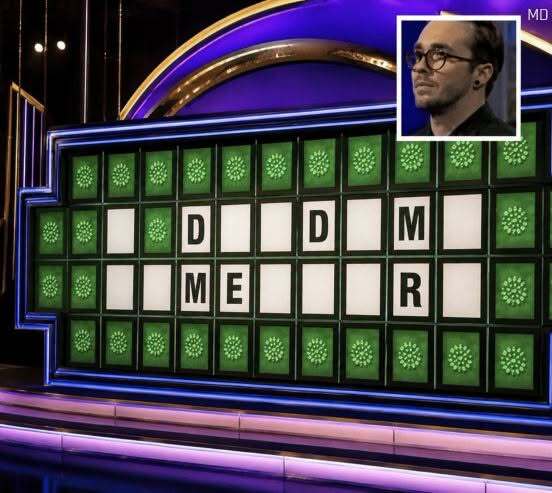
Wheel of Fortune Bonus Round Puzzle Sparks Debate After Contestant Misses Final Answer
Bonus Round Answer Divides Wheel of Fortune Viewers
A recent episode of Wheel of Fortune drew unusual attention after a Bonus Round puzzle created a lively debate among viewers. The game show has long been known for putting contestants under pressure with word puzzles that must be solved quickly, but this particular round stood out because the final answer divided fans after the broadcast.
The discussion centered on whether the puzzle was fair for the category it was placed under. Some viewers believed the answer was clear enough and fit within the normal style of the show. Others argued that the wording felt less like a familiar phrase and more like an ordinary sentence, making the Bonus Round more frustrating than entertaining.
As reactions spread online, the moment became one of the most discussed parts of the week’s episode. The debate showed how strongly Wheel of Fortune fans pay attention not only to whether a contestant wins, but also to how each puzzle is written, categorized, and presented.
A Strong Game Before the Final Round
The contestant involved in the conversation was Conner Kemmsies, a commercial pilot from California. Before entering the Bonus Round, Conner had already built an impressive total during the main portion of the game.
By the time he reached the final stage, he had collected more than $19,000 in cash and prizes. His winnings also included a whale-watching trip to Baja California, giving him a memorable experience even before the final puzzle appeared on the board.
With that success behind him, the Bonus Round offered an opportunity to turn a strong appearance into an even bigger win. The final round is often the most dramatic part of the show because a contestant may already have won a good amount but still has a chance to walk away with a much larger prize.
Conner approached the round with support from family members in the audience. Their presence added to the excitement of the moment, as he stood at the puzzle board hoping to finish the episode with another major reward.
The Bonus Round Begins
As in every Bonus Round, the puzzle began with the standard letters R, S, T, L, N, and E revealed. These letters give contestants a starting point and often determine how quickly they can recognize the answer.
After the standard letters appeared, Conner selected C, M, D, and A as his additional choices. Those letters were then added to the board wherever they appeared in the puzzle.
The category was shown as “Phrase,” which immediately shaped how viewers and the contestant interpreted the answer. In Wheel of Fortune, the category can be an important clue because it guides contestants toward a certain type of wording.
When the revealed letters appeared, there were still several blank spaces left. Conner studied the board and quickly seemed to understand the opening part of the puzzle.
He confidently said, “I DID MY.” That early recognition suggested he was close to solving the full answer, and it briefly looked as though the Bonus Round might end successfully.
However, the remaining word did not come to him before time ran out. The final seconds passed as he tried to complete the phrase, but he was unable to arrive at the correct solution in time.
The Correct Answer Is Revealed
After the clock expired, the full answer was shown: “I DID MY HOMEWORK.” The reveal immediately changed the tone of the moment, because Conner had already identified the first three words but missed the final one.
The near-solve made the outcome feel especially dramatic. He was not far from the answer, but in the Bonus Round, partial recognition is not enough. The contestant must provide the complete solution before the timer ends.
Conner responded to the miss with humor rather than visible frustration. Speaking with host Ryan Seacrest, he joked that homework was no longer part of his life because he was no longer a student.
The comment brought a lighter mood to the stage. It also gave the moment a human quality, showing that Conner was able to laugh about the result despite missing the Bonus Round prize.
His reaction helped keep the scene friendly and good-natured. Still, once the episode reached viewers beyond the studio, the puzzle itself became the main subject of discussion.
Why Viewers Were Divided
The strongest reaction came from fans who questioned whether “I DID MY HOMEWORK” belonged in the category “Phrase.” Their concern was not necessarily that the answer was impossible, but that the category may have made the puzzle feel less natural.
For some viewers, a phrase category suggests a commonly recognized expression or a familiar saying. They felt the answer sounded more like a simple statement someone might make in everyday conversation.
That difference mattered to fans because the Bonus Round is already difficult. Contestants have limited time, only a few chosen letters, and intense pressure from the audience, the host, and the prize waiting behind the result.
When a category seems broad or debatable, viewers often focus on whether the clue helped or misled the contestant. In this case, the wording created enough uncertainty to keep the conversation going after the episode ended.
Other fans saw the situation differently. They believed the answer was fair and that the category was acceptable. To them, “I DID MY HOMEWORK” could reasonably be treated as a phrase, and Conner had enough information to solve it before time ran out.
That split reaction is what made the moment spread. It was not simply a case of a contestant missing a difficult puzzle. It became a debate about how the show defines its categories and how much flexibility viewers are willing to allow.
The Pressure of the Bonus Round
The Bonus Round is designed to create suspense. By the time contestants reach that stage, they have already won the main game, but the final puzzle can dramatically change the size of their winnings.
That structure makes every second feel important. A contestant may recognize part of an answer, speak aloud while thinking, and still lose if one word does not come quickly enough.
Conner’s round showed that pressure clearly. He had the beginning of the answer almost immediately, but the final word remained out of reach during the short solving window.
The result also highlighted how a familiar sentence can become harder to identify when only part of it is visible. Under normal circumstances, “I DID MY HOMEWORK” is easy to understand. On a puzzle board with missing letters and a timer running, the same words can become much more difficult.
That is part of what keeps Wheel of Fortune appealing to viewers. People watching from home can play along, often believing they might solve the puzzle faster than the contestant. When a contestant misses an answer, viewers naturally compare their own reactions to what happened on stage.
Conner’s Humor Softens the Loss
Although the online debate focused heavily on the puzzle, Conner’s response was also a notable part of the episode. Instead of showing disappointment in a serious way, he used humor to acknowledge the irony of missing a homework-related answer.
His joke about no longer being a student made the moment relatable. Many viewers could understand why the answer might not come immediately to someone whose daily life no longer involves homework.
As a commercial pilot, Conner’s background also made the comment feel natural. He had moved far beyond school assignments, and his lighthearted reaction turned a missed puzzle into a memorable exchange.
That attitude helped the episode avoid feeling too tense. Even though the Bonus Round did not end with a larger prize, Conner still left with substantial winnings and a trip to Baja California.
His appearance remained successful overall. Winning more than $19,000 in cash and prizes is a strong result, and the missed Bonus Round did not erase the positive outcome of his main game performance.
Prize Wheel Comments Add to the Conversation
The debate did not stop with the wording of the puzzle. Some viewers also commented on the Bonus Round prize wheel after it landed on the frequently awarded $40,000 prize.
That part of the reaction reflected another common area of fan discussion. Viewers often pay close attention to the prize envelope selected during the Bonus Round, especially when the amount is one that appears often.
In this episode, the $40,000 result became part of the broader conversation. While the main disagreement focused on the phrase itself, the prize added another layer to the way fans discussed the ending.
For some viewers, the prize amount made the missed opportunity feel even more noticeable. For others, it was simply another routine part of the Bonus Round format.
Either way, the combination of a debated puzzle and a familiar prize amount helped keep the episode in the spotlight. The final round gave viewers multiple details to analyze after the credits rolled.
A Small Moment Becomes a Larger Debate
Wheel of Fortune has remained popular in part because its puzzles invite instant reactions. A single answer can make viewers cheer, groan, laugh, or argue about whether they would have solved it faster.
This episode followed that pattern, but the response was stronger than usual because the disagreement was not only about Conner’s miss. It was about whether the puzzle itself was properly categorized.
The category “Phrase” became the center of the discussion. Fans who objected felt that the answer lacked the kind of recognizable quality they expected from that label. Fans who defended the puzzle saw no issue with the wording and considered the round fair.
Both sides were reacting to the same moment, but from different expectations. One group focused on common usage and whether the words felt like a known phrase. The other focused on whether the words formed a phrase in a broad enough sense to fit the category.
That kind of debate is common with long-running game shows. The more familiar viewers are with a format, the more closely they evaluate every clue, category, and final answer.
Why the Episode Kept People Talking
In the end, the episode became memorable because it combined several elements that often drive fan conversation. There was a successful contestant, a suspenseful Bonus Round, a nearly solved puzzle, a humorous reaction, and a disputed final answer.
Conner’s performance gave viewers someone to root for. His winnings showed that he had played well throughout the game, and his family’s support in the audience made the Bonus Round feel meaningful.
The puzzle then created a sharp turn. He appeared close to solving it, but the final word remained just out of reach. When the answer was revealed, it immediately gave viewers something to debate.
The online discussion showed that even a simple four-word answer can become controversial when placed inside a high-pressure game show format. The disagreement was not about whether the words made sense, but whether they matched viewer expectations for the category.
That response helped the episode achieve something every television show values: continued attention after the broadcast. Long after the round ended, fans were still talking about what happened, whether the puzzle was fair, and how they would have handled the same board.
A Memorable Finish Despite the Miss
Conner Kemmsies did not solve the Bonus Round puzzle, but his episode still ended with a strong showing. He left with more than $19,000 in cash and prizes, including a whale-watching getaway to Baja California.
His missed answer became part of the larger Wheel of Fortune conversation, but it did not define his entire appearance. He had already succeeded in the main game and reached the final round with a significant total.
The final answer, “I DID MY HOMEWORK,” will likely be remembered less for the words themselves and more for the reaction they caused. It became a reminder that on Wheel of Fortune, puzzle categories can matter almost as much as the letters on the board.
For some fans, the round was a fair challenge that simply did not go Conner’s way. For others, it was an example of a Bonus Round answer that felt awkward under the chosen category.
Regardless of which side viewers took, the episode succeeded in creating a conversation. A single missed puzzle turned into a broader discussion about language, expectations, and the fine line between a fair clue and a frustrating one.
That is why the moment stood out. It was not only about one contestant losing a prize. It was about how a familiar game show can still surprise viewers, spark disagreement, and keep audiences talking with just a few words on a puzzle board.