
Christina Ricci’s Story of Fame, Survival, and Breaking a Painful Cycle
A Childhood Shaped by Fear and Control
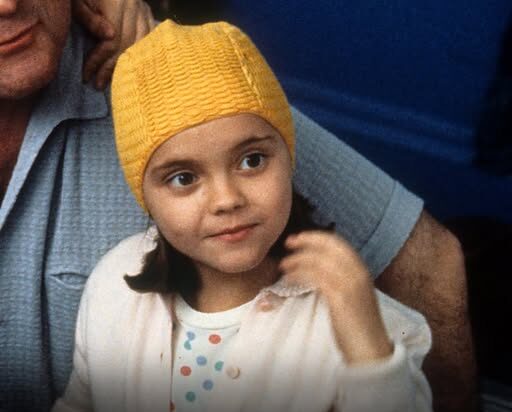
Christina Ricci’s public image has long been tied to unforgettable roles, a sharp screen presence, and a gaze that made her stand out from an early age.
Behind that image was a far more difficult personal story, one shaped by instability, fear, control, and emotional pain during her childhood.
Her early years were marked by a home life described as chaotic and frightening, where emotional volatility created an atmosphere that no child should have to navigate.
Within that environment, Ricci learned early that safety was not always found in the places where it was supposed to exist.
The adults around her did not provide the steadiness she needed, and that absence left a deep mark on the way she understood herself, others, and the world around her.
Her father has been described in stark and troubling terms, including as a “failed cult leader,” a phrase that reflects the intensity and unusual nature of the control surrounding her early life.
For a child growing up in that kind of setting, fear can become familiar, even when it should never feel normal.
That emotional landscape became part of the foundation from which Ricci’s later life would unfold, both in her career and in her private relationships.
Acting Became More Than a Career
For Christina Ricci, acting did not begin simply as ambition, opportunity, or childhood curiosity.
It became a lifeline.
When home felt unpredictable, the structure of a film set offered something different.
There were scripts, schedules, roles, expectations, and people who responded to her talent with praise.
That order stood in sharp contrast to the instability she had known elsewhere.
On set, she could step into a character and temporarily leave behind the confusion of her own life.
The work gave her a place where emotions had boundaries, scenes had endings, and approval could be earned through performance.
For a young person carrying emotional wounds, that kind of environment could feel safer than the real world.
Her fame, in that sense, was not something she had carefully planned.
It was an accident of talent, timing, and survival.
She became known while still trying to understand who she was beneath the roles that made her famous.
The audience saw a gifted young performer with a distinctive look and unusual emotional control.
What they could not see was the child behind the performance, still searching for stability and protection.
The Weight of Becoming Famous Young
Christina Ricci’s rise brought attention, recognition, and labels that followed her through adolescence.
She became a teen icon, known for roles that made her appear cool, detached, sharp, and strangely composed.
Her deadpan expression became part of her identity in the eyes of the public.
That image was powerful, but it was also incomplete.
As viewers projected meaning onto her screen presence, Ricci was privately working through questions that fame could not answer.
Where did the performance end?
Where did her real self begin?
Those questions became especially complicated for someone who had learned early that performing could be a way to survive.
In front of cameras, she could be precise, controlled, and admired.
In private, she was still carrying the effects of a childhood defined by fear and emotional uncertainty.
Fame did not erase that history.
It simply placed a public identity over it.
That distance between the person the world celebrated and the person trying to heal became one of the quiet tensions in her story.
Patterns That Followed Her Into Adulthood
As Christina Ricci moved into adulthood, the pain of her childhood did not remain neatly in the past.
Trauma often has a way of repeating itself through patterns that feel familiar before they are recognized as harmful.
For Ricci, adulthood brought a devastating realization.
She had stepped back into a dynamic that echoed the abuse she had once believed she had escaped.
Her marriage became part of that painful chapter.
The relationship reflected patterns of control and harm that connected back to wounds from her younger years.
That recognition was not immediate or easy.
For many people who grow up around fear, unhealthy dynamics can become difficult to identify because they resemble what was once normal.
Ricci’s story reflects the emotional complexity of breaking away from patterns that were learned long before adulthood.
Leaving that marriage was not only a personal decision.
It became an act of survival.
It meant choosing herself, protecting her future, and refusing to let the cycle continue without challenge.
Choosing to Leave and Protect Her Son
One of the most defining turning points in Ricci’s adult life came when she chose to leave the marriage that mirrored the pain of her past.
That choice carried emotional, personal, and practical consequences.
It was not only about ending a relationship.
It was about confronting the truth of what she had endured and deciding that survival required action.
Ricci also fought for her son, making motherhood central to the way she approached healing and protection.
For someone whose own childhood had been marked by instability, becoming a mother carried deep significance.
It gave her a reason to break patterns that had once seemed impossible to escape.
Her decision to protect her child became part of her effort to build a life different from the one she had known.
Breaking a cycle does not happen in a single moment.
It requires awareness, courage, and repeated choices to move away from what once felt familiar.
For Ricci, that process became part of her transformation from someone shaped by trauma into someone actively reclaiming her future.
Speaking Openly About the Past
Christina Ricci’s willingness to speak about painful parts of her life has become one of the most powerful aspects of her story.
Silence often protects harmful patterns, especially when the pain began in childhood and continued into adulthood.
By naming what happened and acknowledging how deeply it affected her, Ricci challenged that silence.
Her openness did not erase the damage, but it changed the way the story could be understood.
Instead of being defined only by what she survived, she became someone who could speak from inside that survival with clarity.
That kind of honesty can be difficult, especially for a public figure whose image has been shaped by decades of audience expectation.
Yet Ricci’s story shows that reclaiming a life sometimes begins with telling the truth about it.
Her voice added a new dimension to the way people understood her career, her choices, and the emotional strength behind her public persona.
The roles that once made her famous became only one part of a much larger story.
The deeper story was about endurance, recognition, and the difficult work of becoming free.
More Than an Iconic Screen Presence
Christina Ricci’s acting career remains central to how many people know her.
Her roles helped define her public identity, and her presence on screen made her one of the most recognizable performers of her generation.
But her life beyond those roles reveals something more complex than fame.
She was not simply a child star who grew into an adult actor.
She was a person who found refuge in performance while carrying wounds that the public could not see.
That contrast gives new meaning to the qualities that made her memorable as a performer.
The stillness, control, sharpness, and emotional restraint that audiences admired may also be understood alongside the survival skills she developed early in life.
Her story does not reduce her talent to trauma.
Instead, it shows how deeply personal history can exist beside artistic achievement.
Ricci’s work became a place where she could create, transform, and be seen, even while privately trying to understand what had shaped her.
Reclaiming Her Story
Today, Christina Ricci stands not only as an actor, but also as a mother, producer, and survivor who has worked to define her life on her own terms.
Her journey reflects the reality that trauma can shape a person without owning them.
It can influence choices, relationships, fears, and identity, but it does not have to decide the ending.
Ricci’s decision to leave an abusive pattern, protect her son, and speak about her past became part of a larger act of reclamation.
She did not deny what happened.
She did not allow it to remain hidden beneath the surface of fame.
Instead, she faced it and began building a different kind of life.
That process was not simple, and it was not painless.
Survival rarely is.
But her story carries a quiet force because it shows that healing is not about becoming untouched by the past.
It is about refusing to let the past have the final word.
A Quiet Revolution of Survival
Christina Ricci’s life has been shaped by extremes: childhood fear, unexpected fame, private pain, and public strength.
Her story begins in a home defined by emotional chaos and continues through a career that gave her both visibility and escape.
It moves through the difficult realization that old wounds can repeat themselves in new relationships.
And it reaches a turning point in her choice to leave, protect her child, and speak openly about what she endured.
That journey is not only about celebrity.
It is about the human cost of surviving early harm and the courage required to stop it from continuing into another generation.
Ricci’s life shows that breaking a cycle is not loud or simple.
Sometimes it is a quiet revolution made of hard decisions, painful honesty, and the refusal to keep living inside fear.
Her career made her famous, but her survival tells the deeper story.
It is the story of a woman who was shaped by trauma, nearly broken by its repetition, and ultimately determined to reclaim her life from it.