
Trump’s Madison Square Garden Appearance Turns Anthem Moment Into Political Flashpoint
A Televised Moment Draws Immediate Reaction
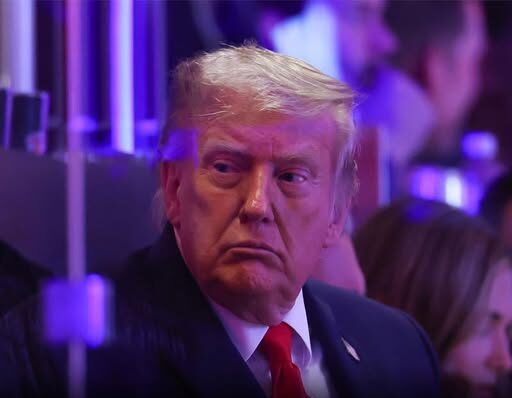
The anthem had just begun when cameras inside Madison Square Garden cut to Trump, placing him instantly at the center of the arena’s attention.
What followed was not a quiet or routine crowd shot. Boos rose from parts of the building and echoed through the rafters as the president stood with his salute held in place.
Trump did not visibly flinch. He did not lower his expression into anger or surprise. Instead, he maintained a steady smile as the sound of the crowd filled the arena.
The moment quickly became more than a brief television cutaway. In real time, a basketball venue became the setting for a public display of political division.
For some watching, the boos represented disrespect during a ceremonial moment. For others, they reflected a crowd willing to express its feelings openly, even under the attention of national cameras.
Madison Square Garden Becomes a National Mirror
Madison Square Garden is often a place where sports, celebrity, and public spectacle overlap. On this night, the building briefly felt like a mirror for a country still sharply divided over its political identity.
The president’s presence alone was enough to alter the atmosphere. The anthem, normally a moment of shared attention before the game, became charged with reaction, interpretation, and tension.
Trump’s salute remained steady as the boos continued. His smile stayed fixed, creating an image that many viewers could interpret in different ways.
Supporters could view the expression as composure under pressure. Critics could see it as a refusal to acknowledge the sound of public disapproval. Others may have simply seen it as another example of how politics now follows the president into nearly every public space.
The reaction inside the arena showed how little separation remains between national politics and major public events. Even a sports crowd, gathered for basketball, became part of a larger political conversation.
The Crowd Shifts as the Camera Moves
The tone changed sharply when the camera cut away from Trump and moved to Jalen Brunson.
The boos that had filled the arena turned almost instantly into loud cheers. The contrast was immediate and difficult to miss.
One figure had drawn a divided and emotional response. The other seemed to bring the crowd together, at least for that moment.
That sudden change gave the scene its lasting power. It was not only the booing that made the moment stand out, but the speed with which the crowd’s energy transformed once the focus shifted.
In a matter of seconds, Madison Square Garden moved from political tension to sports celebration. The same building, the same crowd, and the same broadcast produced two completely different reactions.
A Contrast Between Polarization and Unity
The reaction to Trump highlighted the president’s polarizing place in public life. His appearance did not pass quietly, and the crowd did not respond with one unified voice.
Instead, the arena became divided by sound. Boos echoed, attention sharpened, and the moment took on a meaning far beyond a standard camera shot.
When Brunson appeared, the mood changed. The cheers suggested a different kind of recognition, one rooted in the energy of the game and the crowd’s connection to the athlete.
That contrast made the scene feel symbolic. Trump drew a response shaped by politics, emotion, and national division. Brunson drew a response shaped by admiration and shared support inside the arena.
For a crowd gathered around basketball, that difference mattered. The president’s image created conflict, while Brunson’s image briefly restored a sense of common excitement.
Security and Tension Beyond the Arena
The tension was not limited to what happened inside Madison Square Garden.
Outside the building, heightened security added to the sense that the event carried unusual weight. Streets around the area were affected, and the atmosphere beyond the arena reflected the same political pressure visible inside.
Canceled watch parties added another layer to the evening. What might have been a routine night of public gathering and sports viewing became more complicated because of the president’s presence.
Frozen streets outside the venue further added to the feeling of a city forced to adjust around a political moment. The setting around the arena showed that Trump’s appearance had consequences beyond the television screen.
His public movements now tend to carry a wider effect. Wherever he appears, politics appears with him, even when the main event is not political at all.
Trump Holds His Expression
Inside the arena, Trump’s most noticeable response was the lack of an obvious response.
He held his salute. He continued smiling. He did not appear to directly acknowledge the boos that surrounded the moment.
That silence left room for interpretation. Viewers could project strength onto it, or denial, or calculation.
Because he gave no clear reaction, the image became more powerful. The crowd made noise, but Trump’s expression remained controlled.
In a divided country, even a still face can become a subject of debate. The question was not only what the crowd meant, but what Trump’s refusal to visibly react meant as well.
A Moment Shaped by Public Perception
The scene at Madison Square Garden showed how quickly public perception can form around a few seconds of live television.
There was no long speech and no extended exchange. There was only the anthem, a camera shot, a visible salute, a smile, and the sound of thousands of people reacting.
Yet that was enough to create a moment that felt larger than the event itself. The arena’s response turned into a public reading of Trump’s presidency and the country’s ongoing divisions.
For those who oppose him, the boos may have seemed like a direct rejection. For those who support him, his steady posture may have seemed like resilience.
For everyone else, the moment may have reflected something more familiar: a nation where almost any shared space can become political within seconds.
Sports, Politics, and the Modern Public Stage
The Madison Square Garden scene also showed how difficult it has become to separate sports from national politics.
Large arenas are not only places for games. They are also public stages where celebrities, politicians, athletes, and fans all become part of the same broadcast environment.
When the camera found Trump, the crowd responded not only to a person in the building, but to everything that person represents in national life.
When the camera found Brunson, the crowd responded to a different kind of figure, one rooted in the emotional language of sports rather than political division.
The shift from boos to cheers made that distinction clear. It also showed how quickly a crowd can move between conflict and unity when the focus changes.
The Image That Remained
By the end of the sequence, the lasting image was not only Trump saluting during the anthem. It was the full contrast of the moment.
There was the president standing firm as boos rang out. There was the crowd making its feelings heard. There was the camera cutting away. Then there was the sudden roar for Jalen Brunson.
Together, those pieces created a scene that felt unscripted and revealing. It did not need explanation inside the arena because the sounds told the story clearly enough.
The boos, the smile, the cheers, and the security outside all pointed to the same reality. Public life around Trump remains tense, emotional, and deeply divided.
Madison Square Garden became the place where that division was heard plainly, before the same crowd reminded viewers that unity can still appear, even if only for a few seconds at a time.
A Question Left Hanging
Trump’s reaction remained the central mystery of the moment.
Was his fixed smile a sign of strength under pressure? Was it a refusal to engage with a hostile reaction? Or was it simply part of the new normal in a country that has grown used to public conflict around political figures?
The scene did not provide a final answer. It only offered a snapshot of the national mood, captured under bright arena lights and broadcast to viewers in real time.
That may be why the moment stood out. It was brief, but it carried the weight of a much larger argument.
Inside Madison Square Garden, a basketball crowd became part of a political story without needing speeches, slogans, or formal debate. The sound alone was enough.
And when the camera moved from Trump to Brunson, the arena revealed something equally important: division may dominate the moment, but shared emotion can still break through when the focus changes.