
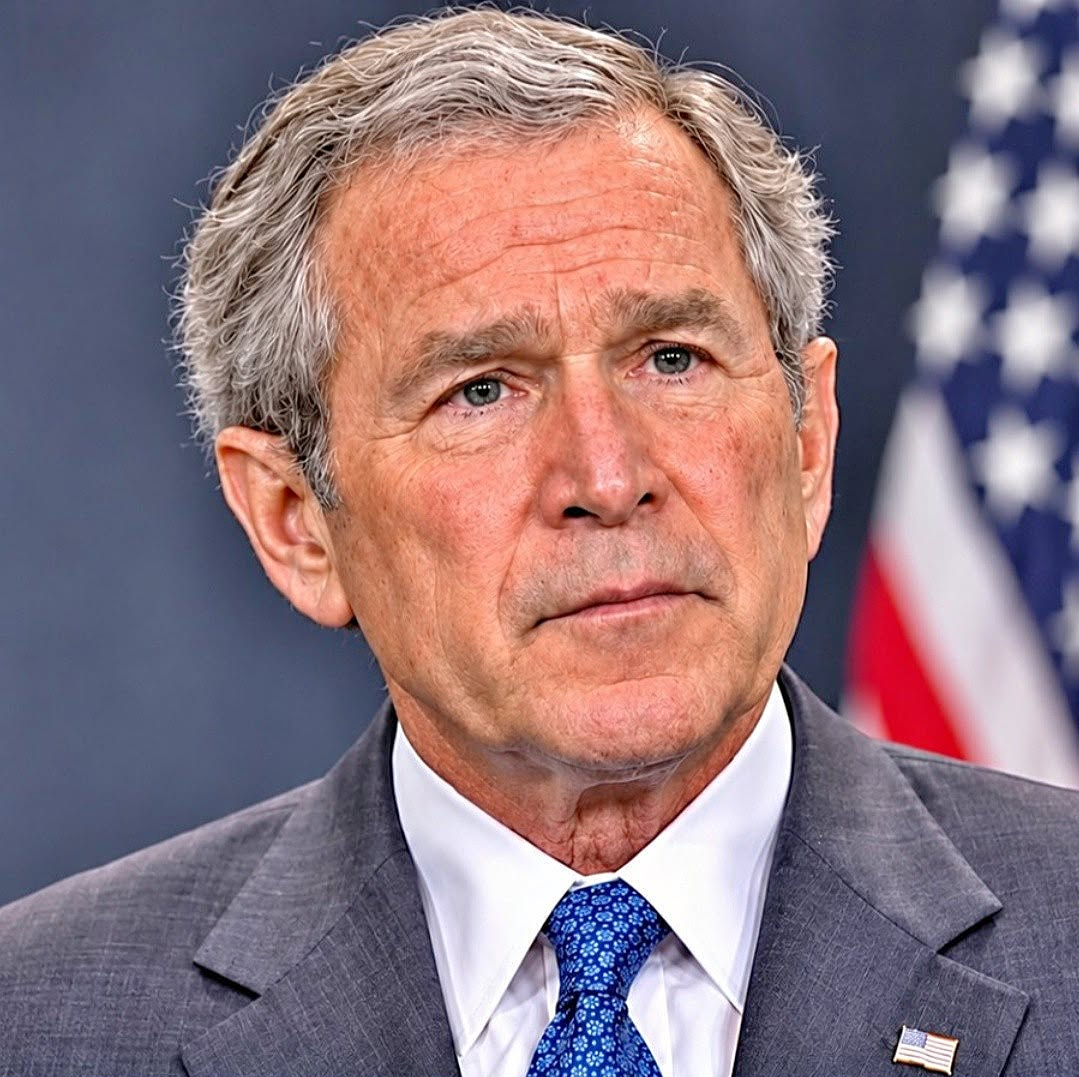
George W. Bush’s Life After the Presidency Keeps His Public Legacy in Focus
The Former President’s Texas Connections, Family Life, and Creative Interests Remain Part of His Story
George W. Bush remains a recognizable figure in American public life years after leaving the White House. His presidency, his longstanding connections to Texas, and his activities outside elected office continue to attract interest.
As the 43rd president of the United States, Bush served from 2001 to 2009. That period placed him at the center of decisions and events that remain important to discussions of the nation’s recent history.
Since completing his second term, he has maintained a less politically prominent routine. Family, painting, charitable activities, and selected public appearances have become familiar parts of his post-presidential life.
These different chapters offer distinct perspectives on the same public figure. His time in office remains central to his historical significance, while his later interests reveal how his life developed after the responsibilities of the presidency ended.
Eight Years in the White House
Bush’s presidency began in 2001 and concluded in 2009. Across those eight years, his role required him to address the country as its elected leader and make decisions whose consequences extended beyond his administration.
For many Americans, his name remains associated with the challenges and defining moments of that period. Those memories help explain why discussion of his life often returns to his presidential years.
The office also gave his words and appearances a significance different from those of an ordinary public figure. Statements made as president became part of the record through which later audiences would assess his leadership.
That record did not disappear when his term ended. It remains available for examination, disagreement, and reflection by people who experienced the period and by younger generations learning about it.
His place in American history therefore rests on more than continued name recognition. He occupied an office whose decisions form part of the country’s political memory.
At the same time, the years since 2009 represent a substantial chapter of their own. Understanding his public life requires acknowledging both the presidency and the period that followed it.
A Different Routine After Leaving Office
The transition away from the White House changed the setting of Bush’s daily life. He was no longer responsible for the continuous demands attached to serving as president.
He also became less involved in everyday political debate. Rather than maintaining the same public schedule associated with elected office, he directed more attention toward personal interests and selected commitments.
That change did not make him an entirely private citizen in the ordinary sense. A former president remains recognizable, and public appearances can still generate interest even when they are unrelated to an election or policy dispute.
Nevertheless, the distinction between holding office and living after it is important. An appearance by a former president does not carry the same official authority as an announcement made by a sitting administration.
For Bush, the later period has included activities that allow audiences to see him outside the presidential setting. Family life and creative work have become recurring elements of that view.
The result is a public identity that continues to develop without replacing the historical record of his administration.
Texas Remains a Personal and Political Connection
Texas occupies an important place in Bush’s story. His connections to the state extend across both his personal life and his political identity.
After leaving Washington, a quieter life in Texas became part of how the public understood his next chapter. The state provided continuity with an identity that existed beyond the White House.
That connection helps explain why attention surrounding him often resonates strongly there. For people who have followed his career over many years, Texas is an established part of the context.
Yet the personal connection and the political legacy remain different subjects. Interest in where he spends his time does not answer questions about how his presidency should be assessed.
Similarly, discussion of his administration does not describe every aspect of his life after office. The two perspectives can be considered together without treating them as interchangeable.
Texas remains a setting through which those chapters connect: a place associated with the public figure and with the family life he continued after his presidency.
Painting Offers Another View of the Former President
Painting has become one of Bush’s most recognizable interests outside politics. It provides a creative dimension to a public image originally shaped largely by government and leadership.
The contrast is part of what attracts attention. Someone remembered for speeches, official responsibilities, and political decisions is also engaged in an activity centered on observation and expression.
That interest does not alter the responsibilities he held as president. It adds information about the person whose life continued after those responsibilities passed to someone else.
Public interest in his artwork can therefore exist independently of agreement with his politics. People may be curious about the creative work while retaining different judgments about his administration.
His painting also illustrates how a later pursuit can become an established part of a former leader’s identity. It is one of the ways audiences encounter him outside the familiar setting of the White House.
Family and Charitable Activities Shape the Later Chapter
Family has remained another important focus of Bush’s post-presidential life. Attention to that part of his story offers a more personal perspective than the institutional history of his administration.
There are limits to what a public account can establish about private relationships. Familiarity with a person’s name does not provide complete access to the experiences shared within a family.
What can be recognized is the place family occupies among the priorities associated with his later years. It forms part of a routine different from the demands of a presidential term.
Charitable activities and public appearances also remain part of his life. They provide ways to participate beyond elected office without returning to the same daily political role.
These activities should be understood on their own terms. A charitable commitment is part of his later work, while the evaluation of presidential decisions remains a separate historical question.
Together, they show that leaving office did not end his public presence. It changed the forms through which that presence continued.
A Legacy Considered Across Generations
Bush’s legacy remains a subject of discussion because his presidency belongs to a period that continues to shape national memory. People approach that history with different experiences and perspectives.
For some, the years from 2001 to 2009 are remembered directly through the news and decisions of the time. Others encounter them through historical accounts and conversations about the recent past.
Those differences influence which parts of his story receive attention. A discussion may focus on presidential leadership, a later public appearance, or his life outside politics.
A balanced account keeps those subjects distinct while recognizing their connection. The personal side of a former president adds context, but it does not replace examination of his official record.
George W. Bush’s continuing public significance rests in that combination of history and later life. His presidency remains part of the national story, while his Texas connections, family, painting, and charitable activities describe the chapter he built after leaving the White House.