
A Teenager’s Michael Jackson-Inspired Dance Turned a School Talent Show Into a Memorable Moment
A Young Performer Held His Nerve as an Uncertain Audience Began Paying Attention
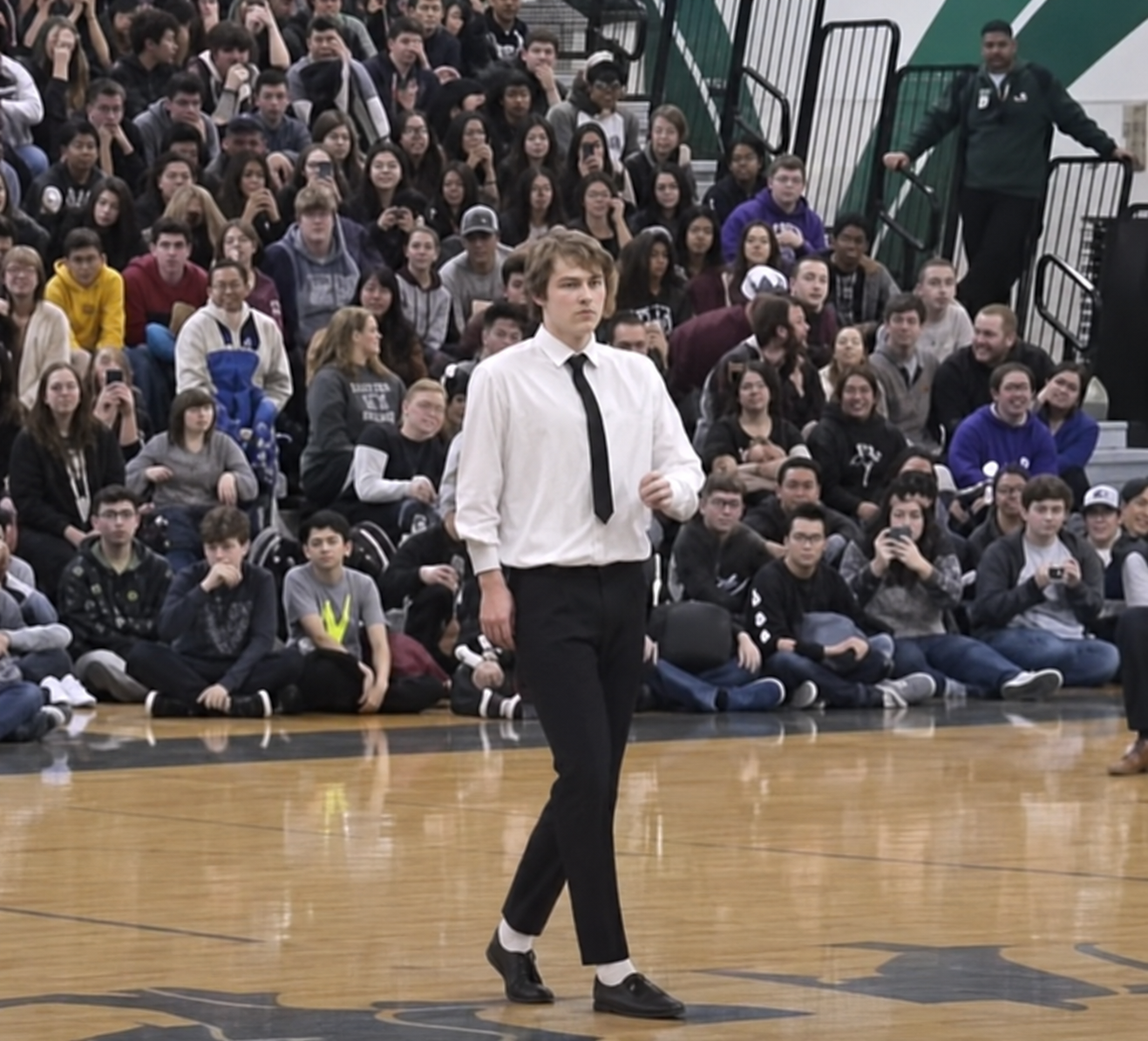
A teenager stepped onto a school stage with a routine inspired by Michael Jackson, ready to share an interest that had become a performance. Some people in the audience reportedly laughed before they knew what to expect.
Once the music began, the focus shifted. The young dancer continued with confidence, allowing his movements and preparation to speak for him.
His energy and attention to Jackson’s recognizable style gradually changed the atmosphere. What had begun as another entry in a school talent show became a performance that stood out to the people watching.
The account does not identify the teenager, school, or event date. It describes a routine that reportedly circulated online and attracted interest beyond the immediate school community, although specific audience figures and later bookings are not provided.
A School Stage Offered the First Opportunity
Talent shows give students a setting in which abilities outside their academic work can become visible. A classmate known mainly through lessons or conversations may reveal a different side of themselves once a performance begins.
For this teenager, dance provided that opportunity. His routine drew on an entertainer whose movements remain widely recognizable, creating an immediate point of reference for the audience.
That familiarity also made the task demanding. A tribute to a well-known performer invites comparison because spectators may already have a clear idea of the style being recreated.
The teenager proceeded despite the initial laughter. He remained with the routine rather than allowing the uncertainty in the room to bring it to an early end.
As his performance developed, spectators had something more substantial to respond to than their first impressions. His movement, timing, and commitment became the basis on which they judged what they were seeing.
The change in attention was the central feature of the moment. A young person had been given a stage, and the performance gave the audience a reason to watch more closely.
Jackson’s Distinctive Style Shaped the Routine
Michael Jackson’s influence on dance extends beyond any single movement. His performances combined choreography, timing, expression, and a stage presence that became part of his identity as an entertainer.
Recognizable steps such as the moonwalk have inspired generations of dancers. Their familiarity can make a tribute accessible even to viewers who do not follow dance closely.
However, reproducing a famous style involves more than inserting one recognizable step into a routine. The movement needs to fit the music, and the transitions between moments affect whether the performance feels coherent.
Coordination and control matter alongside energy. A dancer may capture attention through enthusiasm, but sustaining that attention requires an ability to deliver the routine rather than merely suggest it.
Expression also contributes to the result. The audience responds to how the performer carries himself, follows the rhythm, and remains engaged with the character of the music.
In the teenager’s case, the reported reaction centered on that combination. His routine was recognizable as a tribute while also demonstrating the preparation and confidence required to present it before classmates and teachers.
Continuing Through an Unexpected Reaction
A live audience does not always respond in the way a performer anticipates. Laughter at the beginning of a routine can be difficult to interpret, particularly for someone already facing the pressure of a school stage.
The account does not establish why individual spectators laughed. Some may have been unsure what was coming, and their reaction should not automatically be turned into a claim that the entire audience intended to mock him.
What matters is that the teenager continued. He gave the performance enough time to establish its own character.
That decision allowed the audience’s impression to change. Instead of remaining defined by the opening reaction, the moment developed through what he actually did.
Preparation can be especially important under those circumstances. A familiar sequence gives a performer something concrete to follow when the room feels unpredictable.
His confidence did not need to mean that he felt no nerves. The visible achievement was his willingness to complete the routine while people watched and responded.
A Recording Reportedly Carried the Performance Further
The dance reportedly reached a broader audience after recordings began circulating online. That moved the performance beyond the people who had attended the school event.
A recorded routine can be viewed in a very different setting from the original performance. Someone encountering it online may know little about the school, the audience, or the dancer’s earlier preparation.
The appeal must therefore come largely from what the recording shows. In this account, the teenager’s commitment and recognizable dance style were the qualities that attracted attention.
The routine has been described as viral, but no view count, sharing total, or platform history is supplied. The description supports an account of reported online interest without establishing its precise scale.
Similarly, the later performance opportunities mentioned in the story are not attached to named venues or events. They should remain reported possibilities rather than a detailed professional history.
That distinction preserves the encouraging nature of the account without adding achievements that have not been documented within it. A memorable school performance can be meaningful even when the full extent of its online reach is unknown.
Why Tribute Dance Connects With Different Generations
A tribute routine offers an audience a familiar starting point. People who recognize the music or movement can appreciate the connection before knowing anything about the dancer.
For older viewers, that recognition may come from memories of the original performances. Younger viewers may encounter the same style through recordings, online clips, or dancers who continue interpreting it.
The performance creates a meeting point between those experiences. An established musical influence becomes something a new performer actively learns and presents.
That process requires choices about which elements to emphasize. A routine needs enough recognizable detail to communicate its inspiration while remaining manageable for the person performing it.
Clothing and presentation can support a tribute, but they cannot replace the dancing. The movement and timing remain central to whether the routine holds attention.
The teenager’s reported success reflects that principle. The audience’s response changed as the routine progressed, suggesting that the performance itself supplied the reason to look beyond the initial uncertainty.
Recognition Is a Beginning Rather Than a Complete Career
Online attention can introduce a performer to people who would never attend a local talent show. It can also create interest in seeing the routine in another setting.
Nevertheless, one widely shared performance does not automatically establish a professional career. Continued opportunities depend on the ability to prepare, communicate, and perform reliably again.
A recorded highlight captures one successful occasion. A live booking requires the performer to bring that preparation to a different space and audience.
For a teenager, those opportunities also involve practical decisions beyond choreography. Professional invitations, travel, and agreements can require support from trusted adults.
The account provides no detailed picture of how those matters unfolded for this dancer. It therefore cannot establish the length or scale of any career that followed.
Its clearest achievement remains the school performance: a young person chose to share a skill, persisted through an uncertain opening, and reportedly reached people beyond the room.
A Small Stage Can Still Matter
The significance of a talent show does not depend entirely on what happens afterward. Performing can give a student experience, reveal an ability to classmates, and create a reason to keep developing a skill.
This teenager’s routine brought those possibilities together in a particularly memorable way. His admiration for Jackson became something he was willing to present publicly.
The initial laughter did not remain the defining feature. As the routine unfolded, the audience had an opportunity to reconsider its expectations.
Later online interest added another chapter, but the turning point began with the decision to step forward. Without that first performance, there would have been nothing for an audience elsewhere to discover.
The story offers an encouraging example without promising the same result for every student. Recognition is unpredictable, while practice and the experience of performing have value of their own.
For the teenager on that stage, a familiar musical influence became the foundation of a moment people remembered. He arrived with a routine to share and gave the audience a reason to take his talent seriously.