
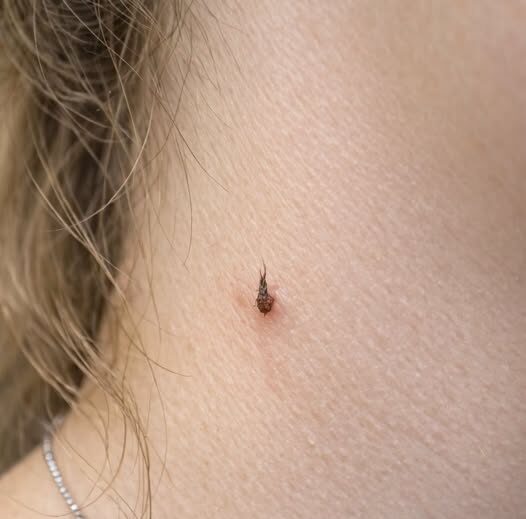
Mother Notices a Strange, Spiky Growth on Her Teenage Daughter’s Neck Before a Recital — Doctors Explain Why Trying to Remove It at Home Could Be a Mistake
Mother Notices a Strange, Spiky Growth on Her Teenage Daughter’s Neck Before a Recital — Doctors Explain Why Trying to Remove It at Home Could Be a Mistake
A small bump on the skin might seem like nothing worth worrying about.
But when it appears on a teenager’s neck just before an important recital, even a tiny imperfection can suddenly feel overwhelming.
After weeks of rehearsals and preparation, the last thing a young performer wants is an unfamiliar growth drawing attention away from the moment she has been waiting for.
For a concerned parent, the instinct may be to find a quick solution.
Perhaps the bump could be clipped off.
Maybe tweezers would remove it.
Or perhaps an over-the-counter wart treatment could make it disappear before the performance.
But dermatologists warn that attempting to remove an unidentified skin growth can sometimes create a much bigger problem than the bump itself.
Bleeding, irritation, infection, discoloration, and scarring are among the potential consequences of inappropriate home treatment.
And there is another important detail.
A thin, fingerlike growth on the neck might be a filiform wart, but several other skin conditions can look similar.
Without a proper examination, its identity cannot be determined from appearance alone.
Understanding what the growth could be, when medical attention is necessary, and how to protect the skin before a special event can make all the difference.
Why a Tiny Skin Growth Can Feel Like a Major Problem
Teenage years often bring increased awareness of personal appearance.
Adolescents may become particularly sensitive to changes in their skin, especially when those changes occur somewhere visible.
A bump on the neck can be difficult to ignore.
It may catch against clothing, appear in photographs, or become noticeable when hair is tied back.
For a teenager preparing for a recital, those concerns may feel especially significant.
The performance represents hours of practice, concentration, and personal effort.
Yet the appearance of an unexpected growth can shift attention toward worries about how others might react.
Parents naturally want to provide reassurance and help their children feel confident.
However, trying to remove the bump immediately is not necessarily the safest way to help.
What Is a Filiform Wart?
A filiform wart is a type of common skin wart with a distinctive appearance.
Unlike the rounded, rough bumps people often imagine when they hear the word wart, filiform warts may have narrow, threadlike projections.
They can resemble tiny fingers, spikes, or an irregular cluster of thin extensions.
Their color may be similar to the surrounding skin, although they can also appear lighter or darker.
Filiform warts frequently develop on the face, particularly around the mouth, nose, or eyes.
They can also appear on the neck and other areas.
Most ordinary skin warts are benign.
However, identifying a growth correctly matters because not every bump with a similar shape is a wart.
The Shape Alone Doesn’t Confirm the Diagnosis
A parent who notices a thin, protruding growth may immediately search online for photographs of filiform warts.
Some images may appear similar.
But matching a photograph does not establish a diagnosis.
Skin tags, other benign growths, and certain skin lesions can resemble warts.
Sometimes the differences are subtle enough that a trained clinician needs to examine the area closely.
Dermatologists consider factors such as texture, color, location, size, and how the growth has changed over time.
In some situations, additional examination or testing may be appropriate.
That is why treating an unidentified bump as a wart can be risky.
If the growth is something else, the chosen treatment may be ineffective or cause unnecessary injury.
Could It Be a Skin Tag Instead?
Skin tags are another type of growth that may appear on the neck.
They are generally soft, benign projections of skin.
Some are attached by a narrow stalk, which can make them look similar to certain warts.
Skin tags commonly develop in areas where skin or clothing creates friction.
However, a skin tag and a filiform wart are not the same condition.
They have different underlying causes and may require different approaches to removal.
An attempt to clip away a suspected skin tag at home can cause bleeding and other complications.
Because the neck is a visible and sometimes sensitive area, professional evaluation can help prevent avoidable damage.
What Causes Filiform Warts?
Filiform warts are caused by certain types of human papillomavirus, commonly called HPV.
HPV refers to a large family of viruses.
Different types affect different areas of the body and can produce different health effects.
The types responsible for ordinary skin warts are generally distinct from the types most commonly associated with sexually transmitted infections.
Skin-infecting HPV can spread through contact with an existing wart or contaminated surfaces, particularly when the skin has tiny breaks.
The virus can also spread from one area of a person’s body to another.
A wart may not appear until some time after the virus enters the skin.
Consequently, it is often impossible to determine precisely when or where an ordinary skin wart developed.
A Wart Does Not Mean a Teenager Has Been Sexually Active
One important misunderstanding deserves particular attention.
Some parents hear the term HPV and immediately associate it with sexual transmission.
However, HPV is not one single virus with one transmission pattern.
Many types cause ordinary skin warts that can develop in childhood or adolescence through everyday nonsexual contact.
A possible filiform wart on the neck is not evidence that a teenager has been sexually active.
Making that assumption can create unnecessary distress and embarrassment.
Parents should approach an unexplained skin growth as a health question rather than a reason for suspicion.
Calm reassurance and appropriate medical guidance are far more helpful.
Why the Neck Requires Special Care
The neck is a delicate and highly visible part of the body.
Its skin moves regularly as a person turns their head, speaks, and adjusts clothing.
Necklaces, collars, costume accessories, and hair can also rub against the area.
When a raised growth is present, repeated friction may irritate it.
Attempting to scrape, cut, or chemically treat the bump can add further irritation.
Some removal products are designed for specific types of warts in particular locations.
They may not be suitable for an unidentified lesion on the neck.
Using the wrong product can injure healthy surrounding skin.
For someone preparing for an appearance onstage, that could create an especially frustrating outcome.
Why Tweezers Are Not a Safe Shortcut
When a growth protrudes from the skin, it can be tempting to grab it with tweezers.
Its shape may make it seem easy to pull away.
But the growth is attached to living skin.
Pulling or twisting it can tear tissue and cause bleeding.
There is also a risk of introducing bacteria into the injured area.
If the growth is a wart, disturbing it may increase the possibility of spreading the virus to nearby skin.
And if it is not a wart, the injury can complicate later medical evaluation.
The safest approach is to leave the bump intact until its identity is established.
Why Cutting It Off at Home Can Cause Problems
Some people assume that using small scissors or nail clippers will solve the problem immediately.
But cutting an unknown skin growth can create an open wound.
Possible consequences include bleeding, pain, infection, and scarring.
The risk is especially concerning when someone is trying to make the area look better before an important event.
A small, uncomplicated bump may be much less noticeable than a fresh wound or irritated patch of skin.
Medical professionals who remove skin lesions use appropriate techniques, instruments, and infection-control precautions.
They can also assess whether removal is necessary and whether the growth needs further investigation.
That is very different from attempting a quick home procedure.
Over-the-Counter Wart Removers Aren’t Always Appropriate
Pharmacies sell various products intended to treat common warts.
Some contain salicylic acid, which gradually removes layers of affected skin.
Other products use freezing technology.
These treatments may be suitable for selected, clearly identified warts when used according to professional guidance and product instructions.
However, not every skin growth should be treated this way.
Applying a wart remover to an unidentified neck bump can cause chemical irritation, blistering, or damage to surrounding skin.
At-home freezing products may also cause discomfort or changes in pigmentation.
Before treating a growth in a sensitive or visible area, obtaining an accurate diagnosis is the better approach.
Why Overnight Removal Is Usually the Wrong Goal
When a recital is only a day or two away, time pressure can make quick treatments appealing.
But even professionally performed wart treatments may require a healing period.
Freezing can produce blistering or crusting.
Removal procedures may leave temporary redness, swelling, or a small wound.
Some treatments require repeated appointments.
Trying to make a bump disappear immediately may therefore create more visible skin changes by the day of the performance.
Unless a clinician identifies a reason for prompt treatment, comfort and avoiding irritation are often more practical short-term priorities.
What to Do Before the Recital
If the teenager is otherwise well and the bump is not causing concerning symptoms, basic gentle care may be sufficient while arranging evaluation.
Wash the area gently with water and a mild cleanser.
Pat it dry without rubbing.
Avoid picking, scratching, or squeezing the growth.
Keep necklaces and tight costume collars from repeatedly rubbing against it.
Do not shave directly over the bump.
And avoid applying harsh chemicals or unverified home remedies.
These steps do not remove the growth.
They simply help reduce the chance of making it irritated before the performance.
Choosing a Comfortable Performance Outfit
For a teenager preparing to perform, clothing can make a practical difference.
If the costume includes a tight neckline, decorative collar, or necklace that touches the growth, consider whether the accessory can be adjusted.
Reducing repeated friction may make the area more comfortable.
Soft fabrics and properly fitting collars can help prevent unnecessary rubbing.
However, costume changes should not become another source of stress.
The goal is not to make the teenager feel that the bump must be hidden at all costs.
It is to prevent discomfort while allowing her to enjoy the performance she has worked hard to prepare for.
Should Makeup Be Used to Cover the Bump?
Makeup may seem like an easy way to conceal a visible skin change.
But there are important precautions.
If the growth is broken, bleeding, inflamed, or irritated, makeup should generally be kept off the affected area until the skin has recovered or a clinician advises otherwise.
Cosmetic products can irritate damaged skin and may complicate cleaning.
Shared makeup tools also raise hygiene concerns, especially if a wart is suspected.
Trying to cover a raised bump with a thick layer of makeup may not produce the desired appearance anyway.
For an uncomplicated, intact lesion, the safest cosmetic approach depends on the skin’s condition and the advice of a healthcare professional.
Can Touching a Wart Make It Spread?
Ordinary skin warts can spread because they are associated with a contagious virus.
Repeated picking or scratching may create tiny breaks in nearby skin.
Those injuries can provide opportunities for the virus to reach another area.
Shaving across a wart can have a similar effect.
This is why dermatologists commonly recommend avoiding picking and shaving directly over suspected warts.
Handwashing after touching the area is another sensible precaution.
None of this means the teenager should feel frightened of ordinary daily activities.
It simply means that basic skin hygiene and avoiding unnecessary trauma can help reduce the risk of spreading the infection.
When Should a Dermatologist Examine the Growth?
A doctor or dermatologist can assess the bump and determine whether it resembles a wart, skin tag, or another condition.
Professional evaluation is especially important when the diagnosis is uncertain.
It is also advisable if the growth persists, enlarges, changes color or shape, becomes painful, or bleeds without an obvious injury.
Redness, swelling, warmth, or drainage may suggest inflammation or infection that needs attention.
Rapidly changing or repeatedly bleeding growths should not simply be assumed to be harmless warts.
A clinician can decide whether closer examination or a biopsy is necessary.
Seeking an accurate diagnosis helps prevent inappropriate treatment and unnecessary worry.
What Happens During a Dermatology Appointment?
In many cases, a dermatologist can assess a suspected wart by examining the skin.
The doctor may ask how long the growth has been present and whether it has changed.
They may also ask whether it itches, hurts, bleeds, or catches on clothing.
Sometimes a close visual examination is sufficient.
In other cases, a dermatologist may use additional diagnostic techniques.
If a lesion has unusual features or its identity remains uncertain, a small tissue sample may be recommended.
The purpose is to establish what the growth actually is before deciding on treatment.
How Dermatologists Treat Filiform Warts
When a clinician confirms that a growth is a filiform wart, several treatment options may be considered.
One approach is cryotherapy, which uses controlled freezing to destroy the wart tissue.
Another is surgical removal under appropriate conditions.
Some dermatologists use electrosurgery or other procedures depending on the wart’s location and characteristics.
The best option depends on the patient’s age, skin type, the wart’s size and location, and the likelihood of side effects.
Possible treatment effects include temporary soreness, crusting, pigment changes, or scarring.
For that reason, immediate removal is not always the best choice, particularly just before a major event.
Do Filiform Warts Ever Disappear Without Treatment?
Some ordinary skin warts resolve on their own as the immune system responds to the virus.
However, this may take months or longer.
Other warts persist and require treatment.
The timing cannot be predicted reliably from appearance alone.
In some cases, a doctor may recommend observation rather than immediate removal.
That decision depends on symptoms, location, appearance, and the patient’s preferences.
If the wart frequently catches on clothing or causes distress, treatment may be worth discussing.
But the possibility of spontaneous resolution is one reason that not every wart needs urgent intervention.
Why Scarring Matters on the Neck
A mark left by an unsuccessful removal attempt may last longer than the original bump.
Skin injuries can heal with temporary redness or darker or lighter pigmentation.
Sometimes they leave permanent scars.
People differ in how their skin responds to irritation and injury.
Some are more prone to noticeable scarring or pigment changes than others.
Because the neck is often visible, those outcomes can be distressing to someone already worried about her appearance.
Choosing appropriate medical care can reduce avoidable risks, although even professional procedures cannot guarantee scar-free healing.
How Parents Can Reassure a Worried Teenager
The emotional side of an unexpected skin growth deserves attention too.
For adults, the bump may seem minor.
But a teenager preparing for a recital may experience it differently.
Rather than dismissing her concern, a parent can acknowledge that discovering an unfamiliar growth feels upsetting.
Then the conversation can focus on what is known.
Many small skin bumps are benign.
A healthcare professional can help identify the growth.
And there is no reason to assume that it must be removed immediately for her to perform confidently.
Supportive reassurance can prevent a small physical concern from overwhelming a much larger personal achievement.
The Recital Is Still About Her Talent
A young performer may spend weeks or months practicing for an important recital.
Whether she plays an instrument, sings, dances, or participates in another performance, that preparation deserves recognition.
The audience is there to experience the performance.
They are not attending to inspect her skin.
A small, uncomplicated bump should not automatically overshadow the work she has accomplished.
Helping her feel comfortable may involve adjusting an accessory, avoiding irritation, and planning a routine medical appointment.
But it should also involve reminding her of the effort, discipline, and ability that brought her to the stage.
Does She Need to Miss the Performance?
An otherwise uncomplicated skin bump does not usually require someone to cancel ordinary activities.
If the teenager feels well, has no concerning symptoms, and can participate comfortably, the recital may still go ahead as planned.
However, a rapidly changing, painful, bleeding, or infected-looking lesion should be assessed appropriately.
Any advice to avoid activities should come from a clinician familiar with the individual circumstances.
For most straightforward situations, the immediate priority is preventing irritation rather than trying to achieve overnight removal.
The Difference Between a Cosmetic Concern and a Medical Emergency
Finding a small growth can be unsettling, but not every change in the skin requires emergency treatment.
A stable, painless bump without concerning features can often be evaluated through a routine medical appointment.
However, symptoms such as rapidly spreading redness, significant swelling, fever, or severe pain may require more urgent assessment.
Persistent bleeding or a rapidly changing lesion also warrants prompt medical attention.
Understanding these differences helps families respond appropriately.
It avoids both unnecessary panic and the mistake of ignoring warning signs.
Why Internet Photographs Can Be Misleading
Searching for skin conditions online can provide useful background information.
But photographs rarely tell the whole story.
Images may show lesions under different lighting, at different stages of development, or on different skin tones.
Several unrelated conditions may look surprisingly similar.
Even a clear photograph cannot always reveal important details such as texture, firmness, or how the lesion behaves when examined.
For these reasons, a photograph-based guess should not replace a professional diagnosis when the growth is uncertain.
Why Home Remedies Deserve Extra Caution
Various online discussions recommend household ingredients for removing warts or skin tags.
Some suggest applying acidic substances, tying off a growth, or attempting to dry it out.
These methods are not reliable substitutes for appropriate diagnosis and treatment.
Harsh substances can damage surrounding skin.
Tying off or cutting a growth may cause bleeding or infection.
And none of these approaches establishes whether the bump is actually a wart.
The possibility of a quick result can be tempting, especially before a recital.
But the potential consequences may be far more troublesome than simply leaving an uncomplicated growth alone until it can be examined.
What If the Bump Gets Caught on Clothing?
Raised growths can sometimes become irritated when they rub against necklaces, collars, or costume decorations.
If friction is a problem, reducing contact with the area may help.
Choose softer clothing when practical and avoid accessories that repeatedly catch on the bump.
Do not attempt to pull away a growth because it has become snagged.
If the area is injured, clean it gently and seek medical advice when appropriate.
Repeated irritation is also a good reason to mention the growth during a clinical assessment.
Keeping the Skin Comfortable Until an Appointment
While waiting for medical evaluation, simplicity is often the best approach.
Keep the area clean.
Avoid excessive rubbing.
Do not apply unprescribed removal chemicals.
Refrain from picking, clipping, or shaving over the lesion.
Observe whether the growth changes in appearance or begins causing symptoms.
These precautions help protect the skin without pretending to treat a condition that has not yet been identified.
If a clinician later confirms the diagnosis, the family can discuss whether removal is necessary and which treatment offers the best balance of benefits and risks.
Confidence Can Matter as Much as Appearance
For a teenager, the days leading up to a recital may already involve nervousness.
She may worry about remembering every note, maintaining her timing, or performing in front of an audience.
An unfamiliar bump can become one more thing to think about.
But the most helpful response is not necessarily an aggressive attempt to change her appearance.
It may be calm reassurance and practical support.
Helping her prepare her costume, practice, and focus on the performance can restore a sense of normality.
The growth can be evaluated without allowing it to define the experience.
A Small Bump Shouldn’t Overshadow a Big Moment
The concern begins with a seemingly simple discovery: a thin, spiky growth on a teenager’s neck shortly before an important recital.
Its appearance might suggest a filiform wart, but a skin tag or another lesion could look similar.
Without examination, the diagnosis remains uncertain.
That uncertainty is exactly why parents should resist the temptation to reach for tweezers, scissors, or an over-the-counter wart remover.
Improper treatment can cause bleeding, irritation, infection, or scarring.
Instead, gentle cleansing, avoiding friction, and arranging appropriate medical assessment are sensible next steps.
If the bump persists, changes, bleeds without injury, or develops other concerning symptoms, a clinician should examine it.
But when the growth is uncomplicated and the teenager otherwise feels well, it generally does not mean she must miss the performance she has worked so hard to prepare for.
There is no need to solve every skin concern overnight.
Sometimes the best decision is to protect the skin, seek reliable medical advice, and give the young performer the reassurance she needs.
Because when the curtain rises, her preparation, courage, and talent deserve far more attention than a tiny bump on her neck.