
Snake or Elephant? The Viral Optical Illusion Says Less About Your Future Than You Might Think
A Simple Image That Makes People Choose
A single optical illusion has become the kind of image people cannot resist sharing.
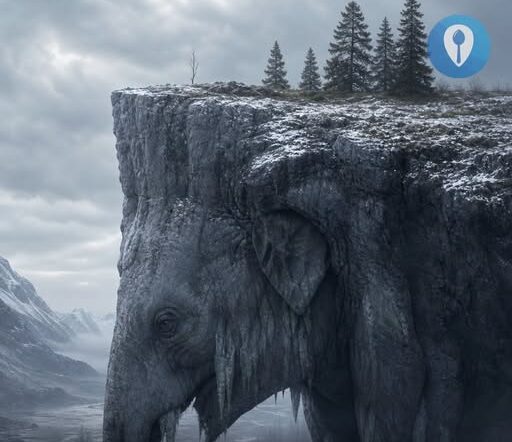
At first glance, some viewers immediately see a snake. Others are certain they see an elephant. A smaller group can switch between the two once they know both images are hidden inside the same design.
The appeal is obvious.
The picture asks a simple question: what did you notice first?
Then it attaches a personality meaning to the answer.
If the snake stands out first, the interpretation often presents you as cautious, alert and highly aware of hidden risks.
If the elephant appears first, the description tends to portray you as a broader thinker who looks beyond distractions and focuses on long-term possibilities.
Those explanations can feel surprisingly personal.
They can also make the image seem far more revealing than it really is.
Why the Result Feels So Accurate
People naturally look for meaning in ambiguous information.
When an image contains overlapping shapes, the brain tries to organize those lines into something recognizable as quickly as possible.
That first interpretation can feel automatic.
Because the choice happens so quickly, people may assume it reveals something deep about their personality.
The descriptions attached to these illusions often strengthen that feeling.
Traits such as being careful, thoughtful, ambitious, observant or future-focused are broad enough to apply to many people in at least some situations.
They are also usually presented in a flattering way.
That combination makes it easy for viewers to recognize themselves in the result.
Seeing the Snake First
People who immediately notice the snake are often told that they pay close attention to possible danger.
The interpretation may describe them as planners who prefer to think through consequences before acting.
It can also suggest that they are good at noticing small details that other people miss.
For someone who already considers themselves careful or analytical, that description may feel remarkably accurate.
But seeing the snake first does not establish a fixed personality type.
It simply means that, in that particular moment, the snake pattern became the most noticeable interpretation of the image.
Another viewer with very similar habits and values could easily notice the elephant first.
Seeing the Elephant First
The elephant interpretation usually carries a different message.
Viewers who notice it first may be described as big-picture thinkers who focus on larger goals rather than minor distractions.
The result might portray them as imaginative, confident or willing to look beyond immediate problems.
Again, the description can feel highly specific even though it applies comfortably to a wide range of people.
Most people sometimes focus on details and sometimes think broadly.
Which approach they use depends heavily on the situation.
A person can be cautious at work, spontaneous with friends and visionary when thinking about long-term plans.
One picture cannot capture all of those differences.
The More Interesting Part Is How Perception Works
The real fascination of the image comes from perception rather than prediction.
Two people can look at exactly the same collection of lines and immediately organize them in completely different ways.
Neither person is necessarily seeing the image incorrectly.
Their attention is simply being captured by different features.
Once someone points out the second animal, many viewers are suddenly able to see it too.
Nothing in the picture has changed.
Only the viewer’s attention has shifted.
That small change demonstrates how flexible perception can be.
Mood and Expectation Can Influence What We Notice
What people notice first is not always determined by one permanent characteristic.
Current mood can influence attention.
So can memory, expectation and previous experience.
If someone has recently been thinking about snakes, the snake shape may become easier to identify.
If elephants are already more familiar or emotionally meaningful, the larger animal may stand out instead.
Even knowing that an image contains two hidden figures can change the way a person examines it.
Instead of accepting the first interpretation, the viewer begins searching deliberately for another possibility.
Culture and Experience Also Shape Perception
People do not approach visual information with completely empty minds.
Years of experience shape what patterns feel familiar.
Different environments, memories and cultural associations can affect which features attract attention first.
That does not mean a simple illusion can map a person’s entire background.
It means perception is influenced by far more than the lines in front of the eyes.
The brain constantly compares new information with things it has already learned.
That process happens rapidly, often before a person consciously thinks about what they are seeing.
Why People Defend Their Answer So Strongly
One entertaining part of these illusions is how strongly people can disagree about what seems obvious.
A viewer who sees the snake immediately may struggle to understand how anyone could miss it.
Someone who sees the elephant may feel exactly the same way.
That reaction happens because once the brain has settled on one interpretation, it can become difficult to imagine the image any other way.
The first pattern starts to feel like the natural or correct one.
Then someone points out the second possibility.
Suddenly, what seemed impossible becomes easy to see.
Some People Can Switch Between Both Images
A particularly interesting group of viewers can move between the snake and elephant with little difficulty.
They may see one animal first, then intentionally shift their focus until the second figure appears.
That ability does not automatically prove greater intelligence or creativity.
It simply shows that their attention can move between different interpretations of the same visual information.
The process is a useful reminder that what appears obvious can depend heavily on where attention is directed.
A different focus can completely change the meaning assigned to the same lines.
The Image Works Better as a Mirror Than a Test
Rather than treating the illusion as a personality verdict, it may be more useful to treat it as a mirror.
The image shows something about how quickly the mind commits to an interpretation.
Some people naturally begin with smaller features.
Others notice the larger outline first.
Some continue staring until they find every possible interpretation.
Others are satisfied with the first answer and move on.
Those reactions can be interesting to observe without turning them into permanent labels.
Detail-First and Big-Picture Thinking Are Both Useful
People often talk about thinking styles as though one is better than another.
In reality, detail-focused attention and broad thinking can both be useful.
A person who notices small risks may catch problems before they become serious.
A person who steps back and looks at the larger picture may recognize opportunities that are easy to miss when attention is fixed on tiny details.
Most people use both approaches at different times.
The challenge is knowing when to zoom in and when to step back.
Perception Is a Habit, Not a Prison
One of the most useful lessons from the illusion is that seeing something one way does not mean you are trapped in that perspective.
Attention can be redirected.
A person who initially sees only the snake can learn to identify the elephant.
Someone who sees only the elephant can search for the smaller shape.
The same idea can apply beyond visual puzzles.
People can reconsider first impressions, examine overlooked details and question assumptions that initially felt certain.
The ability to change perspective can often be more valuable than the first interpretation itself.
Why These Personality Illusions Spread So Quickly
Images like this are almost perfectly designed for social media.
They are fast, visual and easy to understand.
People can answer within seconds.
They can compare results with friends and family.
They can argue about what they saw first.
Most importantly, the result feels personal.
A simple picture becomes a conversation about personality, habits and identity.
That emotional connection encourages people to share the image even when they know the interpretation is mainly for entertainment.
The Real Lesson Is About Certainty
The snake-or-elephant illusion does not need to predict someone’s personality to be interesting.
Its strongest lesson may be much simpler.
People can look at the same thing and sincerely experience it differently.
Our first interpretation can feel completely certain even when another interpretation is sitting directly in front of us.
A small change in attention can suddenly make that hidden alternative obvious.
That is why the image remains so engaging.
It is not really revealing whether someone is destined to be cautious or visionary.
It is demonstrating how quickly the mind creates meaning from incomplete or ambiguous information.
So, Snake or Elephant?
If you saw the snake first, it may be fun to think about whether you often notice risks and smaller details before the bigger picture.
If you saw the elephant first, you might consider whether you usually focus on larger patterns and long-term possibilities.
If you can easily switch between both, the most interesting part may be how quickly your perception changes once you know what to look for.
None of those answers determines who you are.
The picture cannot forecast your future or define your personality from a single glance.
What it can do is remind you that perception is more flexible than it often feels.
Sometimes the biggest discovery is not whether the hidden figure is a snake or an elephant.
It is realizing how confidently the mind can insist on one answer before noticing that another was there all along.