
The Towel Detail Many People Overlook After Every Shower
A Small Strip With a Bigger Purpose
The moment someone steps out of the shower, the towel usually feels like the simplest object in the room.
It is soft, familiar, and trusted without a second thought. Most people reach for it automatically, wrap it around themselves, and use whatever part of the fabric their hands find first.
Yet one detail near the ends of many towels often goes unnoticed, even though it plays an important role in how the towel is made and how it performs over time.
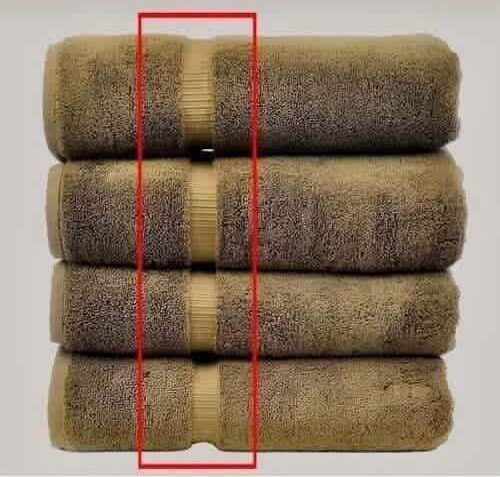
Those neat horizontal bands close to the edge are known as dobby borders. They may look like a decorative finish, but they are not placed there only for appearance.
Their purpose is structural. They help the towel keep its shape, protect the edges, and support the rest of the fabric through repeated use and washing.
What Dobby Borders Actually Do
A towel is not one uniform piece of fabric from end to end. The soft, raised area in the center is made to absorb water, while the tighter bands near the ends serve a different function.
Dobby borders are woven more firmly than the fluffy middle section. That tighter construction helps reinforce the towel where wear and pulling often begin.
Without that reinforced area, the edges of a towel would be more likely to fray, stretch, or lose their original shape after being washed many times.
The dobby border acts almost like a frame. It does not do the main drying work, but it helps the towel remain stable while the rest of the fabric handles moisture and daily use.
This is why the bands often feel flatter, firmer, and less plush than the towel’s center. Their texture is different because their job is different.
Why the Border Feels Less Absorbent
The center of a towel usually contains soft terry loops. These loops create more surface area, allowing the fabric to pick up and hold water more effectively.
The dobby border does not have the same fluffy structure. Because it is tightly woven, it cannot absorb water as efficiently as the looped section in the middle.
That difference matters during everyday use. When someone rubs their skin with the border area, the towel may feel less effective because that part was not designed to soak up water quickly.
It may still feel clean and sturdy, but it is not the working heart of the towel. The real drying power is found in the soft, looped center.
For many people, this is the hidden mistake. They assume every part of the towel works the same way, when the towel is actually built with separate areas for separate purposes.
The Common Mistake People Make
After a shower, most people do not think about which part of the towel they are using. They simply grab, rub, wrap, and move on.
That habit can lead to using the dobby border as if it were the most absorbent part of the towel. In reality, it is the least suitable area for drying the skin.
Using the border repeatedly for drying may not ruin the towel immediately, but it does make the towel feel less effective in the moment.
The tighter band can glide over damp skin without absorbing as much moisture as the soft center. That can leave the skin feeling wetter than expected, even after several passes.
The better approach is simple. Use the center of the towel for drying and allow the dobby border to do what it was designed to do: support the towel’s shape and finish.
Why Towels Are Built This Way
Towels go through frequent stress. They are pulled from hooks, wrapped around bodies, tossed into laundry baskets, spun in washing machines, and dried again and again.
Over time, that routine can weaken fabric edges. The ends are especially vulnerable because they are handled often and exposed to movement during washing.
The dobby border helps reduce that damage. Its tighter weave gives the towel extra strength where it needs reinforcement.
This is why the bands often stay flatter and firmer than the rest of the towel. They are designed to resist distortion, not to feel as plush as the center.
The feature is practical, even if many people notice it only as a visual pattern. It combines structure and style in one area of the towel.
How to Use a Towel More Effectively
The most effective way to dry off is to use the soft, looped center of the towel first.
That middle section is where the towel’s absorbency is strongest. It is designed to pull moisture from the skin and hold it within the fabric.
The dobby border should be treated more like a support zone. It can help the towel hang neatly, maintain its shape, and resist wear at the ends.
It is not harmful to touch or use the border, but relying on it as the main drying surface can make the towel feel less useful than it really is.
By paying attention to the difference, a person can get better performance from the same towel without changing anything else in their routine.
A Detail Hidden in Plain Sight
The dobby border is easy to overlook because it has become a normal part of towel design.
Many people see the bands and assume they are there to make the towel look finished or more elegant. That is partly true, but it is not the full reason they exist.
The design also helps the towel survive repeated washing and daily handling. It gives the fabric a stronger edge and helps prevent the towel from twisting or losing its shape.
That small detail quietly protects the towel while the plush center does the absorbent work.
Once the difference is understood, the towel becomes less of a simple rectangle of fabric and more of a carefully designed household item.
Better Drying Starts With the Center
For everyday use, the most important rule is to let the soft middle section do the drying.
That area is built for contact with wet skin. The terry loops provide the texture and absorbency that make a towel feel comfortable and effective after a shower.
The border should not be treated as the main drying surface. Its tighter weave makes it stronger but less absorbent.
This does not mean the border is a flaw. It means the towel is doing two jobs at once: absorbing moisture in the center and staying durable at the edges.
Understanding that difference can help people use their towels the way they were intended to be used.
Why This Matters Over Time
A towel that keeps its shape and resists fraying can last longer and remain more comfortable through repeated use.
The dobby border contributes to that durability by holding the ends together and giving the towel a stable finish.
At the same time, using the center for drying helps the towel perform better each time it is used.
The result is a small change in habit that can make the towel feel more efficient without requiring any special care.
It is not about avoiding the border entirely. It is about recognizing that the towel has different sections with different purposes.
The Simple Lesson Behind the Lines
The lines near the edge of a towel are not just decoration.
They are dobby borders, and they help reinforce the towel so it can better withstand washing, pulling, and daily use.
They also remind users that the soft center and the tighter ends are not meant to work the same way.
The fluffy middle is the part made for drying. The border is the part made for structure, shape, and style.
That small distinction can change how someone uses a towel after every shower.
A Familiar Item With a Hidden Design
The towel may seem ordinary, but its construction is more thoughtful than many people realize.
Every part has a role. The center absorbs, the edges hold, and the dobby border gives the towel a stronger, cleaner finish.
When used correctly, the towel can feel more comfortable and more effective.
The next time those quiet bands appear near the edge, they may no longer look like simple decoration.
They are a built-in reminder that the best place to dry is the soft center, while the dobby border quietly keeps the towel together.