
What First-Impression Personality Tests Reveal About the Way We See Others
Why Simple Visual Personality Tests Capture Attention
Personality tests built around first impressions have become a familiar form of online entertainment because they combine curiosity, self-reflection, and quick visual decision-making. Instead of requiring long questionnaires or formal psychological assessments, these tests ask people to make a simple choice based on what they notice first.
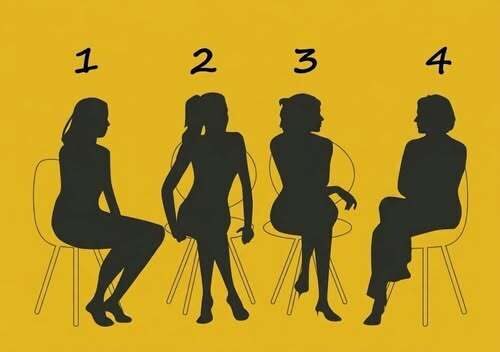
One common example involves looking at a group of women and deciding which one appears to be the oldest. At first, the question seems straightforward, but the answer often depends less on the image itself and more on how each viewer interprets visual clues.
These tests are appealing because they feel personal. A single choice can seem to reveal something about perception, instinct, or hidden assumptions, even when the result is meant for entertainment rather than serious psychological evaluation.
How the Brain Forms Quick Impressions
The human brain processes visual information extremely quickly. Before a person has time to think carefully, the mind begins identifying patterns, comparing details, and forming judgments based on past experiences.
This fast reaction is shaped by many influences, including emotional state, cultural background, personal memories, and subconscious bias. As a result, two people can look at the same image and reach completely different conclusions.
When someone is asked to choose which woman looks the oldest, the decision may be influenced by posture, body language, stance, or perceived confidence. These details may feel meaningful, even though they are not reliable indicators of actual age.
Why Different People Choose Different Figures
People often connect certain visual cues with age because the mind uses shortcuts to make sense of limited information. A calm or still posture may suggest maturity to one viewer, while another person may associate a strong or assertive stance with experience.
These interpretations do not come from the image alone. They are shaped by personal history, media exposure, and cultural ideas about how older or younger people are expected to look or behave.
Because the image provides limited details, the brain fills in the gaps. This process allows people to create meaning from incomplete information, but it also explains why their conclusions can vary so widely.
The Role of Perceptual Inference
When visual information is unclear or incomplete, the brain uses perceptual inference to make a judgment. This means the mind builds an interpretation based on available clues, even when those clues do not provide a definite answer.
In a test involving silhouettes or simplified figures, the viewer may not have access to facial details, skin texture, or other obvious signs of age. Instead, the brain relies on indirect signals, such as posture or movement, to form an impression.
This does not mean the choice reveals an objective truth. It shows how the mind organizes visual information and creates a conclusion based on limited evidence.
Personality Tests and Cognitive Bias
From a psychological point of view, first-impression personality tests often reflect cognitive bias and pattern recognition more than stable personality traits. A person’s answer may reveal the assumptions they bring to the image rather than a fixed part of who they are.
Someone who values calmness may interpret a quiet posture as maturity. Someone who values confidence may see direct body language as a sign of age, authority, or life experience.
These reactions are not necessarily random. They are connected to mental shortcuts known as heuristics, which help the brain make fast decisions without analyzing every detail deeply.
Why the Results Can Feel Accurate
Many people enjoy these tests because the results can feel surprisingly accurate. This feeling often comes from recognition rather than scientific measurement.
When a result describes a familiar way of thinking or reacting, the person may feel that the test has identified something true. In reality, the answer may simply reflect common patterns of self-perception or interpretation.
This is why visual personality tests should be treated as light entertainment. They may encourage reflection, but they should not be viewed as clinical tools or formal psychological profiles.
How Mood Can Affect a Quick Choice
A person’s emotional state can also influence how they interpret an image. Mood can shape attention, focus, and the meaning assigned to body language or visual posture.
Someone who feels cautious or introspective may interpret certain figures as more serious or older. A person in a more energetic or positive mood may respond to the same image in a completely different way.
The image itself does not change, but the viewer’s internal state can change the way it is understood. This is one reason first impressions can shift depending on timing and context.
The Influence of Cultural Background
Cultural background also plays an important role in perception. In some environments, age may be closely connected with wisdom, authority, and respect. In others, it may be associated with vulnerability, seriousness, or decline.
These cultural ideas can quietly guide how people interpret visual clues. A posture that one viewer sees as dignified may seem tired or reserved to another.
Because people learn different associations throughout life, their responses to the same image can reflect cultural conditioning as much as personal instinct.
Why These Tests Remain Popular
Even though first-impression personality tests are not scientifically rigorous, they remain popular because they are quick, simple, and easy to share. They invite people to pause for a moment and think about how they make judgments.
The appeal is not only in the answer but in the act of choosing. People enjoy comparing responses and discovering that others may see the same image in a completely different way.
This difference in perception can feel surprising, but it also highlights something important about human thinking. People do not observe the world in a completely objective way.
What These Tests Actually Show
The real value of these tests is not in assigning personality labels. Their value lies in showing how quickly the mind forms impressions and how much those impressions depend on memory, emotion, expectation, and experience.
When someone chooses which woman looks the oldest, they may be revealing how they interpret maturity, confidence, stillness, or seriousness. The choice may say more about their perceptual habits than about the actual figures in the image.
This makes the exercise interesting, even if it is not scientifically exact. It turns a simple visual decision into a small reflection on how people see and judge others.
First Impressions Are Often Incomplete
One of the broader lessons behind these tests is that first impressions are limited. The mind often forms quick conclusions before all the facts are available.
In everyday life, people may make assumptions based on appearance, posture, tone, or behavior. These assumptions can feel natural, but they may not always be accurate.
A visual test can serve as a reminder that immediate judgments are often shaped by invisible influences. Deeper understanding usually requires more time, more context, and more conscious reflection.
Why There Is No Definitive Correct Answer
In a question such as “which woman looks the oldest,” there may be no definitive correct answer. The image is open to interpretation, and each person brings a different psychological lens to the task.
One viewer may see maturity in a calm figure. Another may see age in a confident stance. A third may focus on posture, balance, or overall energy.
Because the visual information is limited, the answer depends on how the viewer completes the picture in their own mind. This is what makes the test engaging and subjective.
A Light Exercise in Self-Reflection
Personality tests based on first impressions should be understood as entertainment with a reflective quality. They are not designed to diagnose personality or measure psychological traits with precision.
However, they can still encourage people to notice their own assumptions. They can make viewers more aware of how quickly they assign meaning to visual information.
That awareness can be useful. It reminds people that perception is not just about what is seen, but also about what the mind expects, remembers, and believes.
The Larger Lesson About Human Perception
Ultimately, these tests reveal more about perception than personality. They show how the brain constructs meaning from incomplete information and how personal experience shapes interpretation.
The question of which woman appears oldest is less about finding an objective truth and more about understanding how different people read the same visual scene. Each response reflects a unique blend of instinct, memory, culture, and emotional framing.
That is why these exercises continue to attract attention. They are simple enough to be fun, yet open-ended enough to make people think about how they see the world.
In the end, first-impression personality tests work because they turn ordinary perception into a moment of curiosity. They remind us that the way we interpret others is deeply personal, often automatic, and rarely as simple as it first appears.