
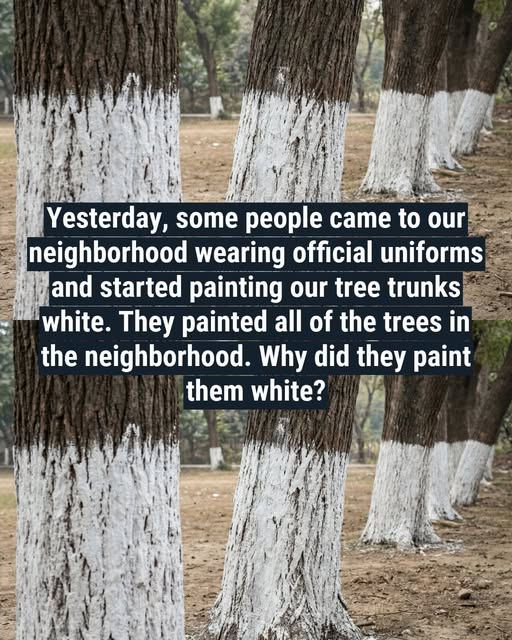
Why Some Tree Trunks Are Painted White in Winter
A Detail Many People Notice but Rarely Understand
White-painted tree trunks often stand out during colder months. Along streets, in orchards, and in gardens, they can look unusual or decorative at first glance.
Many people assume the paint is meant for appearance or to mark certain trees. In reality, the purpose is practical and protective.
The white coating is commonly used to help trees endure harsh winter conditions. It serves as a barrier against sudden temperature changes that can damage bark.
How Winter Sunlight Can Harm a Tree
Even on cold days, direct sunlight can warm the outer layer of a tree trunk. Dark bark absorbs heat quickly, especially during bright afternoons.
When temperatures fall sharply after sunset, the warmed bark cools rapidly. That repeated expansion during the day and contraction at night places stress on the surface.
Over time, the pressure can lead to splitting or cracking. These injuries may become serious enough to weaken the tree.
The Problem of Bark Splits
When bark opens, the tree loses part of its natural protection. Exposed inner layers become more vulnerable to moisture and environmental stress.
Cracks can also create openings where insects or disease may develop more easily. Once damage begins, recovery may take time.
Younger trees and trees with thinner bark are often more sensitive to these winter conditions. They may benefit the most from preventive care.
Why White Paint Helps
White surfaces reflect sunlight instead of absorbing as much heat. By bouncing light away, the trunk stays cooler and more stable during sunny winter days.
That means the bark experiences smaller temperature swings between day and night. With less expansion and contraction, the risk of splitting is reduced.
The goal is not to warm the tree. It is to keep temperatures steadier so the bark remains protected.
What Kind of Paint Is Usually Used
Tree care workers often choose diluted, water-based latex paint. It is applied in a light coating rather than a thick layer.
The mixture is commonly brushed or sprayed onto the lower trunk. A thin coat is usually enough to create the reflective surface needed for winter protection.
Using appropriate materials matters. Heavy or unsuitable coatings may interfere with the bark, so careful application is important.
Where This Practice Is Most Common
White-painted trunks are frequently seen in orchards where young fruit trees need consistent care. Protecting bark damage can help support long-term growth.
It is also common in landscaped properties, farms, parks, and gardens where owners want to reduce winter stress on vulnerable trees.
In regions with sunny winter days followed by freezing nights, the method can be especially useful.
Not a Warning Mark
People sometimes confuse painted trunks with color-coded forestry markings. In some places, bright colors may indicate boundaries, maintenance plans, or restricted areas.
White paint on trunks often has a different meaning entirely. Instead of signaling removal or ownership, it is commonly tied to preservation.
Rather than marking the end of a tree’s life, it is often part of helping the tree remain healthy.
A Quiet Form of Seasonal Care
Because the coating can look simple, the effort behind it is easy to overlook. Yet it reflects planning that began long before spring returns.
Someone noticed the needs of the tree, understood the risks of winter weather, and acted before damage appeared. That small decision can prevent larger problems later.
It is a reminder that maintenance often happens quietly, without drawing attention.
What It Means in Spring
If winter passes without major bark injury, the tree enters the growing season in stronger condition. Healthy bark supports the movement of water and nutrients through the plant.
That can help leaves emerge normally and support steady development in warmer months. Prevention during winter may influence growth long after the cold season ends.
The white coating may fade with time, but the benefit can remain.
Seeing Painted Trees Differently
Once the purpose becomes clear, a painted trunk looks less mysterious. It is no longer a random patch of color along a roadside or garden path.
It represents a practical response to changing weather and the challenges trees face in winter. The paint is simple, but the reason behind it is thoughtful.
What appears to be an ordinary coat of white is often a quiet effort to help a tree stay strong, protected, and ready for another season of growth.