
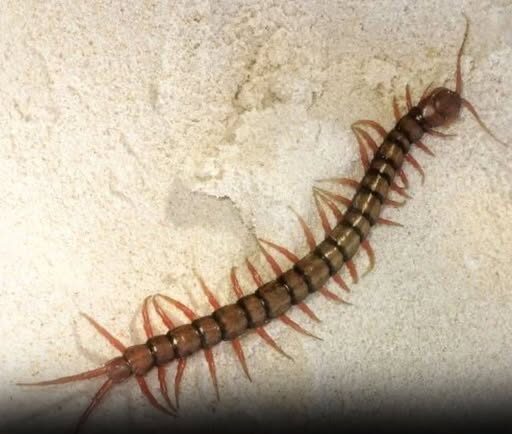
What It Means When You Find a Centipede Inside Your Home
A Fast-Moving Visitor That Often Causes Alarm
It is late at night, the house is quiet, and you step into the bathroom expecting nothing unusual.
Then, as soon as the light comes on, something races across the floor with startling speed.
It has long legs, a narrow body, and moves so quickly that many people react before they even understand what they are seeing.
For a lot of homeowners, the first instinct is fear or disgust.
The next instinct is usually to find a shoe, a tissue, or anything nearby to get rid of it immediately.
But the sudden appearance of a centipede inside the home may mean more than a random insect encounter.
While centipedes can look unsettling, their presence often points to conditions in the home that deserve attention.
The creature itself is usually not the main issue.
Instead, it may be a sign that something in the home is attracting it.
Why Centipedes Come Indoors
Centipedes do not usually enter houses because they are drawn to people.
They enter because they are looking for what they need to survive.
That usually means food, moisture, shelter, or a combination of all three.
Many people assume that a centipede indoors is simply a random accident.
In reality, centipedes often move into homes because the environment provides something useful to them.
A dark bathroom, damp basement, laundry room, crawl space, or area beneath a sink can become an attractive hiding place.
These areas often offer moisture, cover, and access to small insects.
For that reason, spotting a centipede should not only raise the question of how it got inside.
It should also raise the question of what made the space appealing in the first place.
Centipedes Are Hunters, Not Household Scavengers
One of the most important things to understand about centipedes is that they are predators.
Unlike cockroaches, which may feed on scraps, crumbs, or waste, centipedes hunt other small creatures.
Their diet can include spiders, ants, silverfish, cockroaches, termites, and other household pests.
To a centipede, a home with plenty of insects is not simply a shelter.
It is a food source.
This is why indoor centipedes are often viewed as indicators rather than the root problem.
If they are appearing regularly, they may be following another hidden pest population.
In that sense, centipedes can reveal an issue that might otherwise go unnoticed.
They may be alarming to see, but they are also feeding on pests that many homeowners would want removed anyway.
This does not mean people should ignore them entirely.
It means their presence should be understood as a clue.
A Sign of Hidden Pest Activity
Seeing one centipede does not always mean there is a major infestation inside the home.
Occasional sightings can happen, especially when weather conditions change.
However, repeated sightings may suggest that other insects are present nearby.
Centipedes go where prey is available.
If a home has ants, silverfish, cockroaches, spiders, or other pests, centipedes may remain in the area because food is easy to find.
This is why simply removing one centipede may not solve the problem.
If the conditions that attracted it remain, more may appear later.
The better approach is to look beyond the centipede itself.
A homeowner who sees them often should consider whether insects are hiding in damp rooms, cluttered storage areas, cracks, or quiet corners.
Once the food source is reduced, the home becomes less inviting to centipedes.
Moisture Is One of the Biggest Attractions
Another major reason centipedes enter homes is moisture.
Centipedes thrive in damp environments because their bodies lose moisture easily.
This makes humid areas especially appealing to them.
Bathrooms, basements, laundry rooms, crawl spaces, and spaces beneath sinks can all provide the kind of damp conditions they prefer.
Rooms with poor ventilation may also become attractive.
If centipedes repeatedly appear in the same part of the home, that area may have a moisture issue.
The problem could be a leaking pipe, trapped humidity, damp flooring, poor airflow, or a wet storage space.
These conditions can create more serious concerns than the centipedes themselves.
Excess moisture can contribute to mold growth, wood damage, and gradual structural deterioration.
In some cases, centipedes may act as an early warning sign that a damp area needs attention.
Why Bathrooms and Basements Are Common Spots
Bathrooms are among the most common places where people notice centipedes.
They often contain moisture, warmth, and small hiding places.
Water around tubs, sinks, drains, and floors can help create a favorable environment.
Basements can attract centipedes for similar reasons.
They are often darker, cooler, and more humid than other parts of the house.
Storage boxes, old cardboard, unused items, and quiet corners can provide hiding places.
Laundry rooms can also become attractive when moisture builds up around machines, drains, or poorly ventilated spaces.
Centipedes prefer places where they can stay hidden during the day and hunt at night.
That is why many sightings happen suddenly and unexpectedly.
They may have been nearby for some time before being noticed.
Weather Can Push Centipedes Inside
Weather changes can also influence centipede activity indoors.
Periods of heavy rain, intense heat, or freezing temperatures may push centipedes to search for safer shelter.
A home offers stable temperatures, protection from outdoor conditions, and places to hide.
To a centipede, entering a building may simply be a survival response.
This is one reason sightings may increase during certain seasons or after sudden changes in weather.
Heavy rain can disturb outdoor habitats and drive small creatures toward dry shelter.
Extreme heat can push them toward cooler spaces.
Cold weather can send them searching for protection.
Even when weather is the trigger, the same basic attractions still matter.
If the home also has moisture, insects, and easy entry points, centipedes are more likely to stay.
Are Centipedes Dangerous?
Despite their appearance, centipedes are generally not considered dangerous household pests.
They do not spread disease through the home in the way rodents can.
They do not contaminate food as a normal habit.
They do not damage furniture.
They also do not usually seek contact with people.
Most centipedes prefer to avoid humans and escape when disturbed.
This is why many encounters end with the centipede racing away toward a wall, baseboard, drain area, or dark hiding place.
Their speed can make them seem aggressive, but their movement is usually an attempt to flee.
For most homeowners, the biggest problem is not physical danger.
It is the discomfort of seeing such a fast-moving creature indoors.
Centipede Bites Can Happen, But They Are Uncommon
Centipedes can bite, although bites are uncommon in normal household encounters.
Their front legs are modified into venom-delivering appendages that help them subdue prey.
They use these appendages mainly for hunting small insects and similar creatures.
A bite is more likely if a centipede is handled, trapped, or pressed against the skin.
Most people are not bitten simply because they see one crossing the floor.
When bites do occur, the symptoms are usually mild.
A person may experience redness, swelling, tenderness, or a burning feeling similar to a bee sting.
In most cases, the discomfort resolves without serious complications.
However, stronger reactions are possible for individuals with allergies to insect venom.
Significant swelling, breathing difficulty, severe pain, or other concerning symptoms should be evaluated by a medical professional.
How to Make Your Home Less Attractive to Centipedes
The best way to reduce centipede activity is to address the conditions attracting them.
The first step is moisture control.
Leaking pipes should be repaired promptly.
Bathrooms should be ventilated well after showers or baths.
Damp basements may benefit from dehumidifiers.
Wet areas should be dried quickly instead of being left to sit.
When moisture becomes less available, the home becomes less appealing to centipedes.
This step is especially important in rooms where centipedes appear repeatedly.
Reducing humidity may also help prevent other moisture-related problems.
That makes it one of the most practical actions a homeowner can take.
Sealing Entry Points Matters
Centipedes can enter through very small openings.
Cracks around windows, gaps beneath doors, openings around utility lines, and foundation cracks can all provide access.
Even small spaces may be enough for them to slip inside.
Sealing these areas can reduce the number of centipedes and other pests entering the home.
Door sweeps, weatherstripping, caulking, and repairs around exterior openings can all help limit access.
This does not only apply to centipedes.
Many insects use the same small gaps to get indoors.
By closing entry points, homeowners reduce the movement of multiple unwanted pests at once.
This is especially useful when combined with moisture reduction and pest control.
Decluttering Removes Hiding Places
Centipedes prefer dark, quiet, and undisturbed spaces.
Clutter gives them more places to hide.
Stacks of cardboard, piles of clothing, stored boxes, and unused storage areas can all create shelter.
Reducing clutter makes the environment less comfortable for them.
It also makes it easier to notice other pest activity.
When storage areas are organized and kept dry, centipedes have fewer protected spaces to occupy.
Cardboard is especially worth watching in damp areas because it can hold moisture and create hiding places.
Keeping floors clear and storage areas tidy can make a noticeable difference.
This approach works best as part of a broader prevention plan.
By removing shelter, moisture, and food sources together, homeowners make the home much less inviting.
Controlling Other Pests Is Essential
Because centipedes are hunters, controlling other pests is one of the most important steps.
If their prey disappears, centipedes have much less reason to remain inside.
Ants, cockroaches, spiders, silverfish, termites, and similar pests can all attract them.
Reducing these insects can naturally reduce centipede activity as well.
This is why a centipede sighting should not be viewed in isolation.
The real issue may be the hidden insects that brought it there.
Cleaning food debris, managing moisture, sealing cracks, and reducing clutter can help control those pests too.
When the overall pest environment improves, centipedes usually become less common.
In many homes, the long-term solution is not only removing centipedes.
It is making the home less supportive of the insects they hunt.
Natural Deterrents and Simple Removal Methods
Some homeowners use natural deterrents as part of their prevention efforts.
Diatomaceous earth placed along baseboards and entry points can discourage crawling insects.
Certain essential oils, including peppermint, eucalyptus, and tea tree oil, are also believed by some people to help repel centipedes when used properly.
Results can vary, and these methods work best when combined with moisture control, sealing, and pest reduction.
If a centipede is already inside, removal is usually simple.
Vacuuming can quickly remove it.
Sticky traps may catch centipedes moving through common pathways.
Careful capture and release can also be used by those who prefer not to kill them.
Harsh chemicals are not always necessary for an occasional sighting.
The larger goal should be to correct the conditions that made the home attractive.
The Real Message Behind a Centipede Sighting
Centipedes may be unpleasant to encounter, but they often serve as signs of a larger household condition.
They may point to moisture, hidden pests, structural gaps, or cluttered areas that provide shelter.
In that sense, they can function almost like tiny inspectors moving through the home.
Their presence does not always mean there is a serious problem.
But repeated sightings should encourage a closer look at the environment.
Instead of focusing only on getting rid of the centipede in front of you, it is more useful to ask why it appeared there.
Was the room damp?
Are there other insects nearby?
Are there gaps around doors, windows, pipes, or the foundation?
Are there dark, cluttered storage areas that provide hiding places?
Answering those questions can help solve the problem more effectively.
How to Respond the Next Time You See One
The next time a centipede darts across a bathroom floor or basement wall, panic is not necessary.
The creature is usually trying to escape, not attack.
It is also likely following food, moisture, or shelter.
Removing the centipede may solve the immediate problem, but it does not always solve the reason it entered.
A better response is to inspect the area where it appeared.
Look for dampness, leaks, poor ventilation, clutter, cracks, and signs of other pests.
Those clues can reveal what needs to be fixed.
In many cases, reducing moisture, sealing openings, clearing hiding spots, and controlling insects will lower centipede activity naturally.
The centipede may not be the biggest issue in the home.
It may simply be the messenger.
Understanding what attracted it in the first place is often the key to keeping it from returning.