
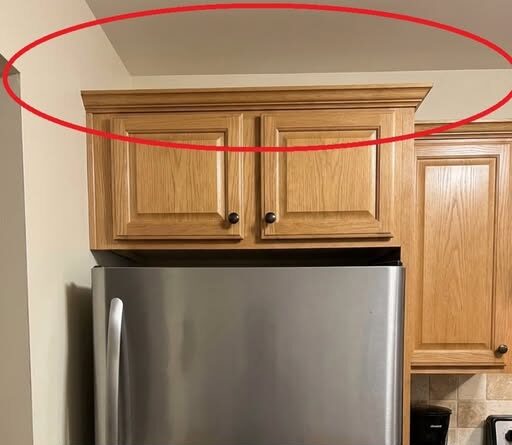
How to Turn the Cabinet Above Your Refrigerator Into Useful Kitchen Storage
The Most Overlooked Storage Space in the Kitchen
The cabinet above the refrigerator is often one of the least-used areas in the kitchen. It may be difficult to reach, unusually deep, or partly blocked by the appliance below it.
Because of its awkward position, many homeowners either leave it empty or fill it with random items they rarely remember owning. Over time, the cabinet becomes cluttered, disorganized, and almost impossible to use efficiently.
However, this space does not have to remain forgotten. With a clear purpose and a few simple organizational changes, the cabinet above the refrigerator can become a valuable storage zone.
The key is to avoid treating it like an ordinary kitchen cabinet. Instead of storing frequently used items there, reserve it for belongings that are important but not needed every day.
Give the Cabinet One Clear Purpose
A disorganized cabinet usually develops because it has no specific role. Items are pushed inside whenever another drawer or shelf becomes crowded, creating a mixture of unrelated objects.
Assigning the cabinet a clear purpose makes it easier to keep organized. It also helps everyone in the household remember what belongs there.
The space can be dedicated to small appliances, baking equipment, bulk supplies, serving dishes, seasonal items, or kitchen backups. Choosing one main category prevents the cabinet from becoming a general hiding place for clutter.
Before organizing it, remove everything and examine what has accumulated inside. Items that are damaged, expired, duplicated, or no longer used should not be returned to the cabinet.
Starting with an empty space makes it easier to understand the cabinet’s depth, height, and accessibility.
Store Appliances You Do Not Use Every Day
The area above the refrigerator can be an effective place for small kitchen appliances that are used occasionally rather than daily.
Blenders, hand mixers, food processors, sandwich makers, and similar appliances may occupy valuable counter or lower-cabinet space. Moving them above the refrigerator can free up room for items used more frequently.
This approach works best for appliances that are lightweight enough to lift safely. Very heavy equipment may be difficult to remove from a high cabinet, especially when using a step stool.
Keep power cords secured so they do not become tangled around neighboring objects. Accessories can be placed in a labeled container beside the appliance so that all necessary parts remain together.
Before storing an appliance, clean it thoroughly and make sure it is completely dry. This prevents food residue, moisture, and odors from building up while the item is not in use.
Organize Baking Sheets, Cutting Boards, and Pot Lids
Flat cookware accessories can be difficult to organize in traditional cabinets. Baking sheets, serving trays, cutting boards, cooling racks, and pot lids often become stacked in unstable piles.
The cabinet above the refrigerator may provide enough width and depth to store these items vertically. An adjustable rack or divider can keep each piece upright and easy to remove.
Vertical storage eliminates the need to lift an entire stack to reach the item at the bottom. It also makes it easier to see everything inside the cabinet.
Group similar items together, such as baking trays in one section and cutting boards in another. Keep the largest pieces toward the back and smaller pieces closer to the front.
Pot lids can also be stored in a divided rack, reducing clutter in lower cabinets where pots and pans are kept.
Use Baskets to Control Deep Cabinet Space
One of the biggest problems with above-fridge cabinets is their depth. Items placed near the back can disappear from view and remain forgotten for months.
Baskets and handled storage bins solve this problem by turning several loose items into one removable group. Instead of reaching blindly into the cabinet, you can pull down an entire container.
Choose baskets that fit comfortably through the cabinet opening and are not too heavy when filled. Handles are especially helpful when the cabinet is above eye level.
Each basket should contain related items. One might hold baking accessories, while another could contain appliance attachments, reusable food-storage supplies, or serving utensils.
Simple labels can make the contents easy to identify without pulling every basket down. Large, clear wording is easier to read from below.
Avoid overfilling the containers. A basket that is too heavy or packed with unstable objects can be difficult to lower safely.
Add Shelves to Use the Cabinet’s Full Height
Many cabinets above refrigerators contain more vertical space than their contents require. Without an additional shelf, the upper half may remain completely unused.
A shelf insert can divide the cabinet into two levels. This allows shorter containers to be stacked without placing them directly on top of one another.
Adjustable racks are useful when the stored items have different heights. They can be repositioned whenever the cabinet’s purpose changes.
The lower level should contain objects that are heavier or used more often. Lightweight and rarely needed items can be placed on the upper shelf.
Before installing an organizer, measure the inside of the cabinet carefully. Check the width, depth, and height, as well as the position of door hinges.
An organizer that fits poorly can block the doors or make the cabinet more difficult to use.
Create a Storage Area for Bulk Purchases
The above-fridge cabinet can also hold backup household supplies that do not fit comfortably in the pantry.
Extra paper towels, napkins, food-storage bags, disposable plates, and unopened packages can be stored there until needed.
This location is particularly useful for lightweight bulk items. It keeps them out of sight while preventing them from occupying everyday pantry shelves.
Large cereal boxes or other oversized packages may also fit in the cabinet, depending on the available height. However, food should remain properly sealed and stored away from excessive heat.
Keep older supplies toward the front so they are used before newly purchased items. This simple rotation prevents products from remaining forgotten in the back of the cabinet.
Do not turn the space into an overflowing stockpile. Leave enough room to remove items without knocking other packages down.
Store Seasonal and Holiday Dishes
Holiday plates, seasonal mugs, decorative serving bowls, and special table linens are ideal candidates for above-fridge storage.
These items may only be used a few times each year, yet they often occupy valuable space in cabinets needed for everyday dishes.
Place fragile items inside protective containers or wrap them carefully before storage. Avoid stacking delicate pieces too high, as removing them from an elevated cabinet may be difficult.
Group dishes by occasion so the entire set can be removed together. A labeled container marked for a specific holiday or season can simplify decorating and meal preparation.
Store heavier plates on the lowest level of the cabinet and lighter decorations above them. This arrangement improves stability and reduces lifting risks.
Keep Extra Linens Neat and Accessible
Kitchen towels, cloth napkins, table runners, and spare dishcloths can quickly overcrowd drawers. The cabinet above the refrigerator offers another place to store items that are not needed every day.
Fold or roll the linens neatly before placing them in a basket. Rolled towels can be easier to see and remove individually.
Separate everyday backups from special-occasion linens. This prevents holiday napkins or decorative fabrics from becoming mixed with frequently used kitchen towels.
Only store clean, completely dry linens. Any remaining moisture can create unpleasant odors inside a closed cabinet.
A small container or shelf divider can prevent folded stacks from falling over when one item is removed.
Avoid Storing Unsafe or Impractical Items
Not every kitchen item belongs above the refrigerator. The location can become warm, difficult to reach, and inconvenient during an emergency.
Avoid storing anything that is extremely heavy, unstable, or likely to spill. Large glass containers and bulky cast-iron cookware can be dangerous to lift from above shoulder height.
Frequently used ingredients should also remain in a more accessible location. Repeatedly climbing onto a stool to reach daily items makes the kitchen less efficient.
Do not place loose objects near the front edge where they could fall when the doors are opened. Small pieces should be stored inside bins.
Children should not be encouraged to climb onto counters or appliances to reach the cabinet. Items intended for children should be kept at a safer height.
Use a Stable Step Stool
Even a well-organized cabinet can be difficult to use without safe access. A sturdy step stool should be available whenever items need to be added or removed.
Avoid standing on chairs, boxes, countertops, or the refrigerator itself. These surfaces may shift or become slippery.
Place the step stool on a dry, level section of the floor. Keep one hand free whenever possible to maintain balance.
Remove one basket or object at a time rather than trying to carry several items while stepping down.
Storing the heaviest belongings near the bottom of the cabinet also reduces the amount of lifting required.
Maintain the Cabinet With Regular Checks
Once the cabinet has been organized, occasional maintenance will prevent it from returning to its previous condition.
Review the contents every few months. Return misplaced items to their proper locations and remove anything that is no longer needed.
Wipe the shelves before returning the containers. Dust and grease can collect in high kitchen cabinets even when the doors remain closed.
Check stored food packages for damage and inspect appliances before using them again. Seasonal items should be cleaned before being placed back into storage.
Maintaining the cabinet requires only a few minutes when every category has a designated place.
Small Changes Can Improve the Entire Kitchen
Organizing the cabinet above the refrigerator may seem like a minor household project, but it can create noticeable improvements throughout the kitchen.
Moving occasional-use items out of lower cabinets frees space for cookware, dishes, and ingredients used every day.
Clearing appliances from countertops can make the room feel larger and easier to clean. Organizing backup supplies may also reduce pressure on pantry shelves and kitchen drawers.
The goal is not to fill every available inch. The goal is to use the space intentionally so that each stored item can be found and removed safely.
With baskets, shelf inserts, clear categories, and regular maintenance, the once-ignored cabinet can become one of the most practical storage areas in the room.
What once seemed like awkward dead space can quietly support a cleaner, calmer, and more functional kitchen.