
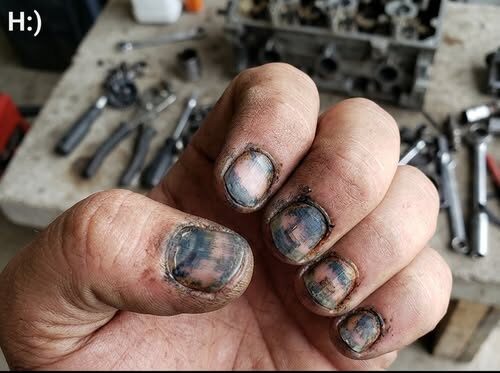
Why People Judge Hands and Nails Before Knowing the Real Story
First Impressions Can Be Misleading
People often form opinions quickly, especially when they notice small details about someone’s appearance. Hands and nails are among the first things people see during conversation, work, meals, or everyday interactions.
Because hands are so visible, many people connect them with cleanliness, discipline, and personal habits. Nails that look rough, stained, unpolished, or marked can sometimes lead others to make unfair assumptions before they understand the person’s life or circumstances.
These quick reactions are often shaped by social conditioning. Over time, family expectations, workplace standards, advertising, and cultural messages teach people to associate neat appearance with responsibility and rough appearance with neglect.
Hands Often Reflect Work, Not Character
In reality, the condition of a person’s hands often reflects what they do every day. Someone who gardens, repairs machines, paints, cooks, farms, builds, cleans, or works with tools may naturally have stained nails, rough skin, or visible marks.
Grease, soil, paint, dust, ink, chemicals, and other materials can remain on the hands even after proper washing. What some people see as “dirty” may actually be evidence of effort, skill, and hard work.
Many essential jobs leave visible signs on the body. Mechanics, gardeners, construction workers, artists, cleaners, and food workers often use their hands constantly to support homes, workplaces, and communities.
Cultural Expectations Shape Judgment
Different societies attach different meanings to physical appearance. In some places, soft and polished hands may be associated with success or luxury, while rough hands may be respected as a sign of resilience and practical contribution.
This shows that appearance-based judgment is not universal. A gardener’s marked nails, a mechanic’s stained fingers, or an artist’s paint-covered hands can mean very different things depending on who is looking.
When people forget this, they may confuse learned social expectations with truth. A quick glance can become a judgment about someone’s lifestyle, values, or discipline, even when that judgment is incomplete.
Why the Brain Makes Quick Assumptions
Human beings often rely on mental shortcuts to understand the world quickly. These shortcuts can be useful, but they can also create bias when people fill in missing information with assumptions.
When someone sees unpolished or stained nails, the brain may connect that image with old ideas about hygiene or carelessness. That reaction may happen automatically, even if it is unfair or inaccurate.
Once a first impression forms, people may notice only the details that support it and ignore anything that challenges it. This can cause someone with rough hands to be judged before they even have a chance to speak.
A More Thoughtful Way to Look at Others
A fairer approach is to pause before making conclusions. Instead of assuming visible marks mean poor hygiene, it is more respectful to consider what the person may have been doing that day.
Those hands may have repaired a car, planted vegetables, cleaned a difficult space, built furniture, prepared food, or supported a family through demanding work. Marks on the hands can represent responsibility, creativity, sacrifice, or survival.
Looking beyond appearance allows people to see effort instead of imperfection. It also reminds us that no person can be fully understood through one visual detail.
Appearance Is Only Part of the Story
Hands, nails, clothing, and grooming choices can provide small clues, but they do not reveal a person’s full life. Work, stress, environment, finances, family duties, hobbies, and daily responsibilities all shape how someone appears.
Judging too quickly can reinforce stereotypes and create distance between people. A more compassionate view begins with curiosity, patience, and humility.
In the end, a person’s character cannot be measured by a single glance. Thoughtful observation and empathy reveal far more than any quick judgment about hands or nails ever could.