
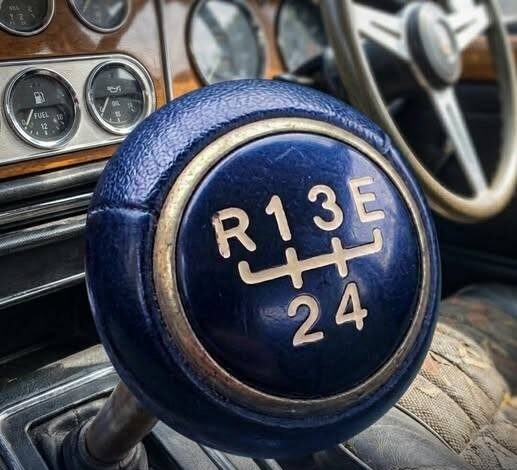
The Forgotten Meaning Behind the “E” on Older Car Gear Selectors
Modern cars are packed with technology that quietly controls almost every aspect of driving. Engines constantly adjust fuel delivery, transmissions calculate the perfect shift points, and computers monitor everything from traction to throttle response without drivers ever noticing.
Most of those systems work silently in the background. Drivers simply press the accelerator and let the vehicle handle the rest.
But decades ago, cars communicated their personalities much more openly. Drivers could often feel every adjustment happening beneath them. One small letter sitting beside P, R, N, and D on the gear selector could completely change how a car behaved on the road.
That letter was “E.”
The Mystery Behind the Letter
For many drivers seeing it for the first time, the meaning was not immediately obvious. Some assumed the “E” stood for “extra,” while others believed it activated hidden power or some advanced mechanical feature.
In reality, the meaning was far simpler.
The “E” stood for “Economy,” a driving mode created to help conserve fuel during a period when fuel efficiency suddenly became extremely important.
At a glance, it looked like just another letter on the gear selector. But once activated, drivers quickly realized the car felt entirely different.
How Economy Mode Changed the Car
Unlike many modern fuel-saving systems that operate invisibly through software, Economy mode in older cars created noticeable physical changes in the driving experience.
The moment drivers selected “E,” the transmission adjusted its behavior. Instead of holding lower gears longer for stronger acceleration, the vehicle shifted into higher gears earlier.
The engine stayed quieter. RPMs dropped sooner. The entire car seemed calmer.
Acceleration became softer and more gradual. Pressing the gas pedal no longer produced the same aggressive surge forward that drivers experienced in normal driving modes.
Many people described the sensation as though the car had suddenly become more patient.
The vehicle still functioned normally, but its priorities had changed. Instead of focusing on performance, it concentrated on reducing fuel consumption whenever possible.
A Different Era of Driving
To understand why Economy mode mattered so much, it helps to remember the atmosphere surrounding driving during the late twentieth century.
Fuel prices had become a growing concern for families and commuters. Oil shortages and rising fuel costs forced both automakers and drivers to rethink long-standing assumptions about cars.
For decades, power and speed had dominated automotive culture. Larger engines, faster acceleration, and higher horsepower numbers often defined what people wanted in a vehicle.
But as fuel concerns increased, efficiency suddenly became part of the conversation.
Automakers began searching for ways to help drivers reduce fuel use without completely sacrificing comfort or drivability.
The “E” mode became one of the clearest symbols of that transition.
Drivers Could Feel the Difference
One reason the feature became memorable was because drivers could physically feel it working.
Modern fuel-saving systems often make adjustments so subtle that most people never notice them. Computers quietly optimize efficiency behind the scenes without requiring any action from the driver.
Older Economy modes were much more direct.
The steering feel, acceleration response, and engine sound all seemed slightly altered once “E” was selected.
Drivers immediately recognized that the car was encouraging smoother, less aggressive driving habits.
The experience created a stronger connection between driver and machine because people could sense how their choices affected the vehicle’s behavior.
Instead of software making invisible decisions, drivers actively participated in the process.
The Psychology Behind Economy Mode
The feature also represented something larger than simple fuel savings.
For many people, the “E” mode introduced a new way of thinking about driving. It asked drivers an important question: did they want maximum performance, or did they want maximum efficiency?
That question reflected a broader cultural shift happening at the time.
Cars were no longer viewed only as symbols of speed and power. Practicality and responsibility were becoming increasingly important as well.
Selecting “E” became a conscious decision to prioritize conservation over excitement.
It was one of the first times many drivers felt that a vehicle openly encouraged moderation rather than constant performance.
Simple Technology With Lasting Influence
Compared to today’s advanced driving systems, the technology behind early Economy modes was relatively simple.
There were no massive touchscreens, complicated digital interfaces, or sophisticated artificial intelligence systems constantly analyzing road conditions.
Yet the feature still managed to influence driving behavior in a meaningful way.
Drivers often became more aware of acceleration habits, engine speed, and fuel use simply because the mode made those changes easier to notice.
In many ways, the “E” setting was an early step toward the efficiency-focused automotive technologies seen in modern vehicles today.
Features like automatic start-stop systems, eco driving indicators, adaptive transmissions, and hybrid power management all continue the same basic goal: helping vehicles use less fuel while maintaining comfortable everyday driving.
Why the Feature Still Feels Nostalgic
For people who drove cars during that era, the “E” on the gear selector remains a memorable detail because it represented a time when vehicles felt more mechanical and transparent.
Drivers could hear engines working harder, feel transmissions shifting, and notice how different settings changed the car’s personality.
That direct feedback created a stronger sense of connection between the driver and the machine.
Today’s vehicles are often smoother, quieter, and more efficient than ever before, but much of their intelligence remains hidden beneath layers of software.
The old Economy mode felt different because the change was visible, physical, and immediate.
A single letter transformed the experience in a way drivers could instantly recognize.
A Small Letter That Represented a Bigger Change
Although it appeared small and simple, the “E” on older gear selectors reflected an important moment in automotive history.
It showed that efficiency was becoming just as important as speed and performance.
Automakers were beginning to acknowledge that drivers cared not only about how fast a car could go, but also about how responsibly it could travel.
The feature quietly helped reshape expectations around everyday driving.
Even as automotive technology continued evolving, the basic idea behind Economy mode never disappeared. Modern systems still aim to reduce fuel use, lower engine strain, and encourage smoother driving habits.
The difference is that today most of those adjustments happen silently through software.
Decades ago, drivers experienced that transformation through one small, unforgettable letter sitting beside the shifter.
For many motorists, “E” was more than just a setting. It was the moment cars first began balancing performance with efficiency in a way drivers could truly feel.